
You are using an out of date browser. It may not display this or other websites correctly.
You should upgrade or use an alternative browser.
You should upgrade or use an alternative browser.
Plane crashes in D.C.'s Potomac River with 64 on board after midair collision with Army helicopter — live updates
- Thread starter searcher
- Start date
Welcome to the Precious Metals Bug Forums
Welcome to the PMBug forums - a watering hole for folks interested in gold, silver, precious metals, sound money, investing, market and economic news, central bank monetary policies, politics and more.
Why not register an account and join the discussions? When you register an account and log in, you may enjoy additional benefits including no Google ads, market data/charts, access to trade/barter with the community and much more. Registering an account is free - you have nothing to lose!


- Messages
- 19,440
- Reaction score
- 11,590
- Points
- 288
This is absolutely unreal!
A sole survivor of Air India flight AI171 crash.
Air India said the 12-year-old Boeing 787-8 aircraft departed from Ahmedabad at 1338 hours, carrying 230 passengers and 12 crew.
The aircraft crashed shortly after take-off.
Air India confirms of the 242 aboard, there are 241 confirmed fatalities. The sole survivor is being treated in a hospital.
The passengers comprised 169 Indian nationals, 53 British nationals, 7 Portuguese nationals and 1 Canadian national. The survivor is a British national of Indian origin.
The sole survivor jumped out of the planes emergencyy exit. The 40-year-old man said he was traveling to Britain with his brother after visiting family in India.
- Messages
- 19,440
- Reaction score
- 11,590
- Points
- 288
Other brother didn't make it...
- Messages
- 19,440
- Reaction score
- 11,590
- Points
- 288
787 Crash India What's a RAT? When does it deploy?
8in comments below vid:
There’s actually more conditions
Here’s the full list.
• Loss of all engines
• Both engines are at less than minimum idle RPM (Revolutions Per Minute)
• Loss of all hydraulic power - left, right, and center systems detect low pressure
• Loss of all electrical power
• BPCU (Bus Power Control Unit) detects loss of power to C1 and C2 TRU (Transformer Rectifier Unit)s
• On approach, loss of all four EMP (Electric Motor Pump) hydraulic pressures and loss of either the left or right flight controls ACE (Actuator Control Electronics)
• Rotor burst on takeoff that causes loss of both PECS (Power Electronics Cooling System) primary cooling loops.
Hope this helps Captain

Captain Steve (don't have a link) also got a firsthand video (not a phone video of a computer monitor) of the moments before the crash.
He described the sound the RAT makes when deployed - a bit like a single-engine plane. THAT sound was very much in evidence on that phone vid. What was NOT there was the thundering roar of jet engines on full power.
Nor was there any appreciable exhaust discharge. All this points to, probably a power interruption that took out the engines and all systems.
He described the sound the RAT makes when deployed - a bit like a single-engine plane. THAT sound was very much in evidence on that phone vid. What was NOT there was the thundering roar of jet engines on full power.
Nor was there any appreciable exhaust discharge. All this points to, probably a power interruption that took out the engines and all systems.
Nice Narrative.
Cruising speed, of about 500 mph, is not the same as the speed a plane STALLS losing lift. That's 184 mph, for a 747. Less for a more-modern plane.
Dropping ONTO a three-story building is not the same as slamming into the SIDE of a skyscraper. The dynamics of penetration are in effect. A fireball on the roof of a building, open above where the heat can escape, is not the same as a fireball trapped inside a concrete structure the plane fragmented burrowing a tunnel into.
- Messages
- 19,440
- Reaction score
- 11,590
- Points
- 288
Hangar Talk with Captain Steve: Air India Crash & Pilot Ethics
In this first episode, I sit down with fellow airline pilot and YouTuber Captain Steve to break down what we know so far about the Air India 787 crash, and we dive into a bigger questions.We talk about:
-The latest info and footage from the Air India incident
-Why the gear and flap positions might matter
-The responsibility pilots have when speaking publicly online
-What “hangar talk” becomes when it's broadcast to millions
Whether you're a pilot, an aviation fan, or just curious how professionals think behind the scenes — this one's for you.
31

- Messages
- 37,047
- Reaction score
- 6,373
- Points
- 288
Update - has pics
Northeast Philadelphia was promised relief after the plane crash damaged homes and businesses. Some families are still waiting for help.
Rupert Street in Northeast Philadelphia was uncharacteristically quiet on a recent sunny Saturday afternoon: No kids playing outside. No sizzling grills. No neighbors on stoops listening to music.A blue tarp fluttered on the roof of a vacant rowhouse. Plywood covered its windows and those at four other homes on the short block. A parked car sat with a spiderweb crack etched in the windshield and a busted front bumper.
Surveying the damage, resident Joyce Aner gestured at the abandoned house: “I gotta be reminded every time I see that blue tarp on top of her roof that a body went through her roof.”
More:
https://www.msn.com/en-us/news/us/n...waiting-for-help/ar-AA1Hjgq6?ocid=socialshare
- Messages
- 19,440
- Reaction score
- 11,590
- Points
- 288


Viking
Yellow Jacket
The aircraft achieved the maximum recorded airspeed of 180 Knots IAS at about 08:08:42
UTC and immediately thereafter, the Engine 1 and Engine 2 fuel cutoff switches transitioned
from RUN to CUTOFF position one after another with a time gap of 01 sec. The Engine N1
and N2 began to decrease from their take-off values as the fuel supply to the engines was cut
off.
In the cockpit voice recording, one of the pilots is heard asking the other why did he cutoff.
The other pilot responded that he did not do so.

NDTV Decodes: Engines Shut, Fuel Cut Off - Inside Doomed Air India Flight
Air India Crash: According to data extracted from the aircraft's Enhanced Airborne Flight Recorder (EAFR), commonly referred to as the black box, Flight 171 carried out a routine takeoff.
 www.ndtv.com
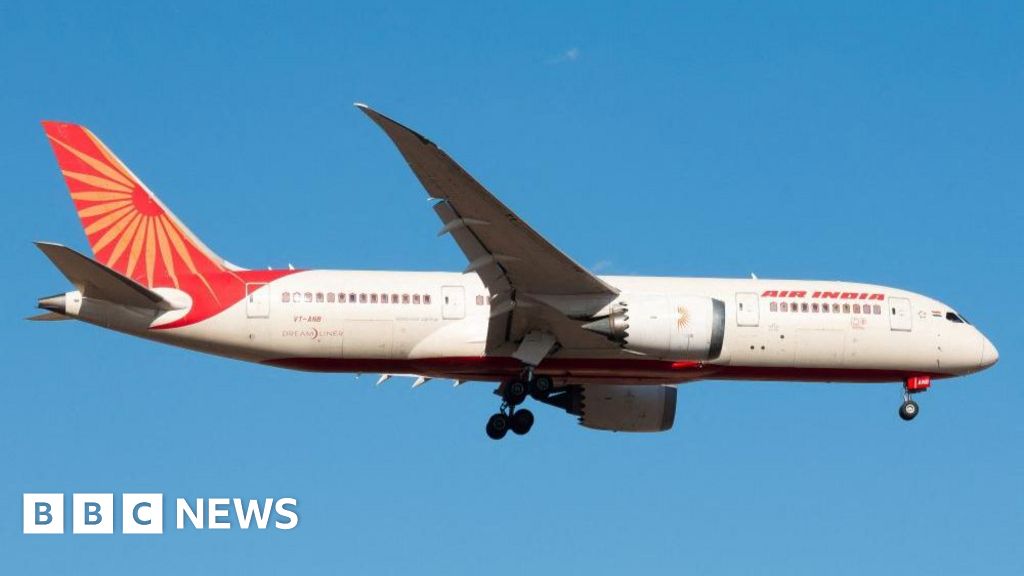
Air India crash investigation: Cockpit audio deepens mystery of Flight 171 accident
Fuel cut-off switches flipped seconds after takeoff in Air India crash, preliminary report finds.
 www.bbc.com
- Messages
- 19,440
- Reaction score
- 11,590
- Points
- 288
Air India 171 Update: Fuel Cutoff Switches in 'Cutoff' Position according to WSJ
Jul 11, 2025
The Official Preliminary Report is out, and confirms the fuel cutoff switch directly after takeoff: https://aaib.gov.in/What's New As...
The Wall Street Journal has just released a report that changes the direction of the Air India 171 investigation. According to sources familiar with the black box data, both fuel cutoff switches were found in the “cutoff” position—meaning the engines were intentionally shut down.
This is a sobering and deeply troubling revelation. In this video, Captain Steeeve takes a measured approach as he walks through what this switch position means, how it affects the engines, and what it might suggest about the final moments of the flight.
As always, our goal is to honor the truth, respect those affected, and help viewers understand complex aviation systems in moments of crisis.
The Air Current: https://theaircurrent.com/aviation-sa...
The Wall Street Journal: https://www.wsj.com/business/airlines...
20
- Messages
- 19,440
- Reaction score
- 11,590
- Points
- 288
- Messages
- 37,047
- Reaction score
- 6,373
- Points
- 288

At least 7 dead after UPS plane crashes during takeoff at Louisville airport
The aircraft with three aboard crashed near Louisville Muhammad Ali International Airport about 5:15 p.m. The governor warned the death toll could grow.
 www.nbcnews.com
- Messages
- 19,440
- Reaction score
- 11,590
- Points
- 288
couple of videos - sure to be more
In this video, we cover:
What we know so far about the aircraft and the flight path
Eyewitness reports and initial footage of the crash scene
What this means for cargo aviation safety and the legacy of the MD-11 freighter fleet
A look at upcoming investigation by the FAA / NTSB
He explains how pilots are trained to handle situations like this, what emergency procedures were likely followed, and how incidents like this are investigated to make flying safer for everyone. Whether you’re a pilot, an aviation student, or someone who just wants to understand what happened, his goal is to provide clarity without sensationalism.
This channel exists to educate and help viewers understand aviation with real insight from a professional. More updates will be added as official information is released.
UPS MD-11 Air Crash | Engine Explosion, Fire | Initial Analysis
On 4 November 2025, a McDonnell Douglas MD-11 cargo aircraft operated by UPS crashed shortly after take-off from Louisville Muhammad Ali International Airport (SDF), bound for Honolulu. At least three people have died and eleven are injured, with the death toll expected to rise. A large area around the crash site was placed under shelter-in-place orders as emergency crews responded to a massive blaze and dense smoke plume.In this video, we cover:
What we know so far about the aircraft and the flight path
Eyewitness reports and initial footage of the crash scene
What this means for cargo aviation safety and the legacy of the MD-11 freighter fleet
A look at upcoming investigation by the FAA / NTSB
What Happened in Louisville? Pilot Reacts to Crash Footage
Captain Steeeve breaks down the recent plane crash in Louisville, carefully reviewing the known facts and the footage that has surfaced so far. In this episode, he walks through the sequence of events, what investigators will be looking at, and the factors that may have contributed to the accident. As always, he avoids speculation and focuses on verified information, pilot training, and aviation safety.He explains how pilots are trained to handle situations like this, what emergency procedures were likely followed, and how incidents like this are investigated to make flying safer for everyone. Whether you’re a pilot, an aviation student, or someone who just wants to understand what happened, his goal is to provide clarity without sensationalism.
This channel exists to educate and help viewers understand aviation with real insight from a professional. More updates will be added as official information is released.
- Messages
- 19,440
- Reaction score
- 11,590
- Points
- 288
CVR RECORDED CRASH And More: NTSB Day 2 UPDATE On UPS MD-11 Crash.
NTSB DAY 2 UPDATE: Clean CVR recovered. 83 Hours of Data. Engine And Parts, And MUCH More News. Member Todd Inman briefs the media on the November 4, 2025, crash of the UPS MD-11 cargo aircraft, Flight 2976, near Louisville, Kentucky.0:00 - Opening Statement (Day 2)
3:47 - ADSB Data - 400 Feet, 183 Knots
4:37 - FOD Walk: #1 Engine, Fan Blades And More
5:18 - CVR Flown To DC “A Good Extraction”
6:00 - 83 Hours Of Data Recovered!
6:45 - CVR 2 Hours Of Audio “Including Crash”
7:50 - Reporter Q&A
- Messages
- 19,440
- Reaction score
- 11,590
- Points
- 288
MSM making hay as they usually do...
Early video footage shows the number 1 engine completely torn off the aircraft, and there have been numerous discussions about what may have caused the engine to come off of the airplane.
New video angles suggest that the number 3 engine suffered a compressor stall, causing that engine to also fail.
As Captain Steeeve explains, losing both engines 1 and 3 completely changes the dynamics of the accident. With only one remaining engine online, the aircraft’s controllability, performance, and climb capability are drastically reduced. What looks like a routine takeoff problem becomes a life-or-death scenario incredibly fast.
This was a terrifying situation for everyone involved, and our thoughts and prayers are with the families, crew, passengers, and first responders.
Why Dual Engine Failure Changes Everything — Louisville Crash Update
In today’s video, Captain Steeeve takes a closer look at the UPS plane crash in Louisville, Kentucky.Early video footage shows the number 1 engine completely torn off the aircraft, and there have been numerous discussions about what may have caused the engine to come off of the airplane.
New video angles suggest that the number 3 engine suffered a compressor stall, causing that engine to also fail.
As Captain Steeeve explains, losing both engines 1 and 3 completely changes the dynamics of the accident. With only one remaining engine online, the aircraft’s controllability, performance, and climb capability are drastically reduced. What looks like a routine takeoff problem becomes a life-or-death scenario incredibly fast.
This was a terrifying situation for everyone involved, and our thoughts and prayers are with the families, crew, passengers, and first responders.
- Messages
- 19,440
- Reaction score
- 11,590
- Points
- 288
The End of the MD-11? FAA Steps In After Louisville Crash
The FAA has now taken the rare step of issuing an Emergency Airworthiness Directive and grounding every MD-11 operating in the United States. This came just days after the tragic crash in Kentucky, and today Captain Steeeve is reacting to this major development and explaining exactly what this means for the aviation world.In the episode, Steeeve breaks down what an Emergency Airworthiness Directive actually is, why the FAA uses it so sparingly, and what criteria must be met before regulators can shut down an entire aircraft type with no warning. He then explains how this grounding affects passenger flights, overnight cargo networks, and global logistics—because the MD-11 is heavily used by freight operators around the world.
With this action from the FAA, Steeeve believes we may be looking at the permanent end of the MD-11 era. Even though the aircraft has a long service history, this directive signals that the risks now outweigh the benefits, and airlines are unlikely to invest in repairing, modifying, or re-certifying a fleet that is already aging.
This is a major moment in aviation safety and a turning point for both passenger and cargo operations. Steeeve walks through the facts, the impact, and what may happen next.
A flawed design - the tailfin engine layout - from a second-rate company - McDonnell Douglas was dubious from the time defense-contractor McDonnell purchased Douglas Aircraft in the 1960s. The problems Boeing is having, now? Woked-up and incompetent, office politics, engineering ignored? That's the McD-D culture there. Boeing bought them but their people took over from the inside. Alan Mullaly, who later kept Ford alive for 15 years, was pressured out of Boeing (when in line for the passenger-aircraft division presidency) by the incoming McDonnell people. There wasn't room for engineer-managers in this new Politics-Is-Our-Product, Boeing.
But, anyway. The three-engine design was a compromise from the start - to comply with (of course!) FAA regulations that prohibited twin-engine jets from flying ocean routes. The logic being, a measure of safety - one engine lost, was only one of three, not half the power, with three engines.
We see how that margin of safety worked out, here.
Anyway, the regulations have changed, and pre-McDonnell Boeing and Airbus had figured out how to keep engine failure to a minimum, and how to ensure a measure of safety - enough lift off the design that one engine could keep the plane aloft. So the three-engine plan was abandoned. Even quad engines were preferable to this engine in the tail. Boeing's version, which was not as popular, had a convoluted S-curve exhaust and thrust route. I cannot imagine how that worked.
Passenger airlines had already dumped the DC-10/MD-11 aircraft. FuddHex and Useless Parcel Smashers, probably bought/converted these planes to cargo barges because they were cheap to buy.
You buy cheap, you get cheap. Now their value is scrap. I cannot imagine Boeing-boeing engineering a fix on these...they'll recommend scrapping.
But, anyway. The three-engine design was a compromise from the start - to comply with (of course!) FAA regulations that prohibited twin-engine jets from flying ocean routes. The logic being, a measure of safety - one engine lost, was only one of three, not half the power, with three engines.
We see how that margin of safety worked out, here.
Anyway, the regulations have changed, and pre-McDonnell Boeing and Airbus had figured out how to keep engine failure to a minimum, and how to ensure a measure of safety - enough lift off the design that one engine could keep the plane aloft. So the three-engine plan was abandoned. Even quad engines were preferable to this engine in the tail. Boeing's version, which was not as popular, had a convoluted S-curve exhaust and thrust route. I cannot imagine how that worked.
Passenger airlines had already dumped the DC-10/MD-11 aircraft. FuddHex and Useless Parcel Smashers, probably bought/converted these planes to cargo barges because they were cheap to buy.
You buy cheap, you get cheap. Now their value is scrap. I cannot imagine Boeing-boeing engineering a fix on these...they'll recommend scrapping.
- Messages
- 19,440
- Reaction score
- 11,590
- Points
- 288
- Messages
- 19,440
- Reaction score
- 11,590
- Points
- 288
UPS Crash Preliminary Report | Pilot Reacts to UPS Crash Report
The NTSB just released the preliminary report for the UPS MD-11 crash in Louisville — and the findings are significant. In today’s video, Captain Steeeve breaks down what investigators discovered, why the left engine separated from the wing during takeoff, and what the early data tells us about the moments leading up to the crash.We’ll talk about the fatigue cracks found in the engine pylon, how a structural failure like this can happen, and what this means for the MD-11 fleet going forward. We’ll also look at what the crew likely experienced, why the takeoff roll looked normal until the very end, and how the aircraft ended up impacting a warehouse after losing the engine.
This is just the first phase of the investigation — no probable cause yet — but the early details are already painting a clearer picture of what went wrong. As always, we’ll walk through the facts calmly and clearly so you can better understand how these investigations work and why structural failures are taken so seriously.
- Messages
- 37,047
- Reaction score
- 6,373
- Points
- 288
Outta the ashes................

10-year-old burned in Philadelphia plane crash closer to coming home after almost 1 year of treatment: "He's strong."
After 90% of his body was burned in the Northeast Philadelphia plane crash, 10-year-old Ramesses is close to getting out of the hospital.
 www.cbsnews.com
- Messages
- 37,047
- Reaction score
- 6,373
- Points
- 288
Interesting.
NTSB Chair Jennifer Homendy: "The NTSB vehemently opposes section 373 of the National Defense Authorization Act or NDAA…it does not in any way enhance safety, in fact, it reverses safety changes made after the midair collision..." Full video here: https://www.c-span.org/program/news-c...
4:15
NTSB "Vehemently Opposes" Section of NDAA
Dec 10, 2025 #cspanNTSB Chair Jennifer Homendy: "The NTSB vehemently opposes section 373 of the National Defense Authorization Act or NDAA…it does not in any way enhance safety, in fact, it reverses safety changes made after the midair collision..." Full video here: https://www.c-span.org/program/news-c...
4:15
- Messages
- 19,440
- Reaction score
- 11,590
- Points
- 288
all the body cam videos from the UPS crash