2026 Crypto trading and market thread

Welcome to the Precious Metals Bug Forums

Welcome to the PMBug forums - a watering hole for folks interested in gold, silver, precious metals, sound money, investing, market and economic news, central bank monetary policies, politics and more.

Why not register an account and join the discussions? When you register an account and log in, you may enjoy additional benefits including no Google ads, market data/charts, access to trade/barter with the community and much more. Registering an account is free - you have nothing to lose!

Sure, so things slow down and it gets less usable. Understand that part, but how does that make it less secure.

When miners stop mining (because it is unprofitable and they are bleeding cash), mining hash power (activity) concentrates amongst a smaller pool of miners. Security is threatened when one miner accumulates too high a threshold of the total mining pool. That miner then has the power to control the blockchain (effecting "51%" attacks or other manipulations). Too much centralization of the mining pool = security risk.
 
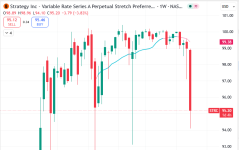
Here's a hint, Mr Saylor, do like the other shadiest companies and just move it off balance sheet and pretend its Gone... poof.
 
crypto anyone?

You WON’T BELIEVE What We Found In The Epstein Files​

From the hijacking of bitcoin to the passing of the GENIUS Act, a deep dive in the Epstein files reveals Epstein's fingerprints are all over the transformation of the global economy and our digital currency enslavement. Aaron Day joins us today to discuss "The Hijacking of Bitcoin," his detailed and well-documented breakdown of how and why Epstein hijacked bitcoin.
 
This is a pretty deep dive by a Redditor on the Gamestop thing. However, it dives into how they setup and use crypto for Liquidity, much as I have surmised by just watching them move prices around.


Most relevant to crypto bits...

I found them in an unlikely place: FTX's "Tokenized Stocks." Starting in October 2020, FTX sold crypto tokens claiming each one was backed 1:1 by real GME shares held at a tiny German broker called CM-Equity AG. A U.S. prime broker could use that German attestation as a locate without checking whether the physical shares actually existed. Reg SHO only requires a "reasonable belief." Not proof.

The loop feeds itself: Tether mints create Treasuries, Treasuries become repo collateral, repo cash becomes margin for equity shorts. When the system needs a drink, it triggers another mint.

When the equity desk needs cash, the crypto desk liquidates. When the crypto desk needs compliance cover, the options algo generates synthetic close-outs. The layers aren't independent systems. They're one machine with six moving parts, and BNY Mellon is the common nerve center.

On a bigger scale I think this pretty much points to the FED themselves. Obviously a bad bank to keep an eye on.

Both Citadel and Jane Street manage their London derivative books through the same custodian: BNY Mellon. Jane Street's ISDA Credit Support Annex charge was filed in April 2022, right when the Fed started hiking rates. BNY Mellon isn't a passive vault. It simultaneously generates the cash (Dreyfus money market funds), manages the collateral, clears the trades (Pershing), custodies the positions ($52.1 trillion in AUC/A as of Dec 2024), and controls the DTCC (Depository Trust & Clearing Corporation) settlement layer. One institution touches every link in the chain.
 

Bitcoin community weighs in on reports of Iran's crypto toll for oil ships​

The Bitcoin (BTC) community is discussing the feasibility and implications of the Iranian government accepting BTC for tolls paid by oil tankers crossing the Strait of Hormuz, a critical shipping lane through which about 20% of the global oil supply passes.

The reactions were sparked by a Financial Times report, published on Wednesday, which said that the Iranian government was considering BTC payments for oil tolls to avoid sanctions imposed by the United States.

Several conflicting reports have been published since the Financial Times article, which suggest that the tolls are payable in stablecoins or Chinese yuan, according to Alex Thorn, the head of firmwide research at crypto investment firm Galaxy.

More:

https://www.msn.com/en-us/money/mar...ll-for-oil-ships/ar-AA20CqdM?ocid=socialshare
 

Trump issues bold warning on Clarity Act to bankers​

On Apr. 25, President Donald Trump hosted an exclusive gathering at his Mar-a-Lago club in Florida, where he issued a stern warning to the banking industry.

Speaking to a few hundred top holders of the $TRUMP memecoin, the president made it clear that he would not allow traditional financial institutions to hinder the progress of new cryptocurrency laws.

More:

https://www.msn.com/en-us/news/poli...y-act-to-bankers/ar-AA21QdqY?ocid=socialshare
 

The Biggest Banking Change in 100 Years is About to Hit Your Wallet​

A massive shift out of traditional banks into gold-backed crypto and stablecoins could trigger the biggest bank run in a century, warns Garrett Goggin. “The US financial system used to be supported by the financial ministers of the G7... now it's being decentralized to millions of end users using Tether Dollar.”
 
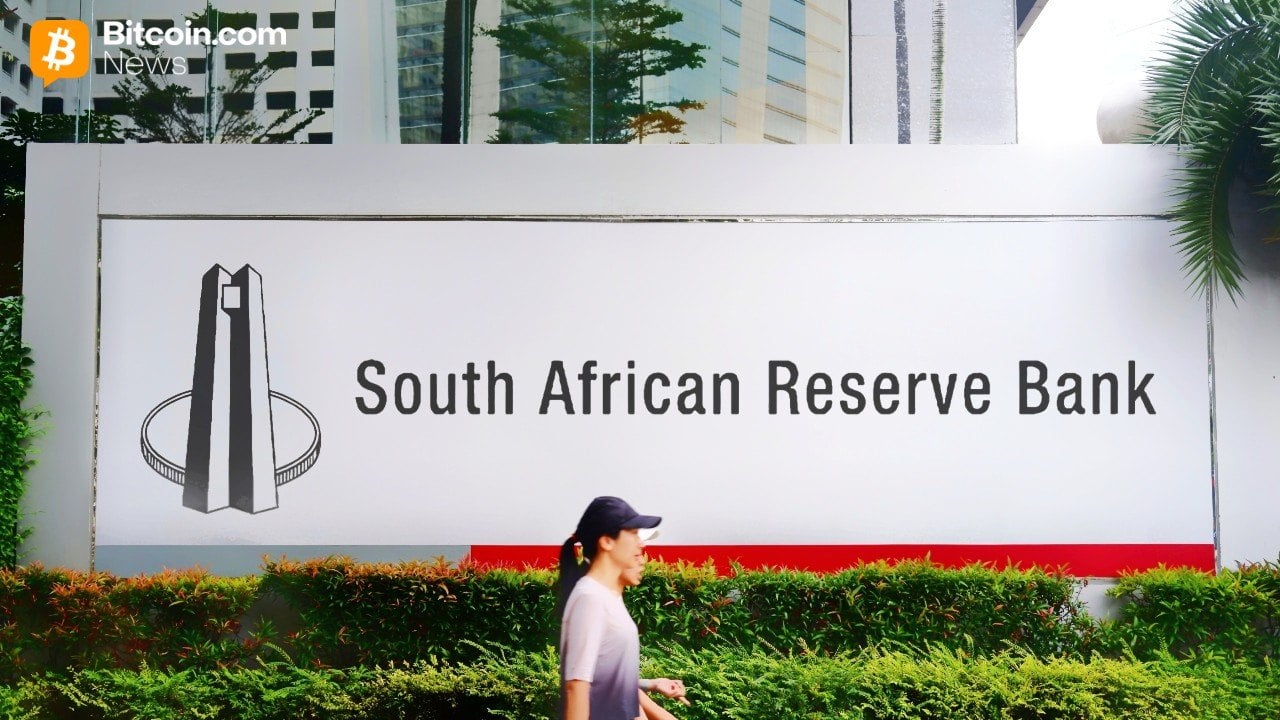
The South African government published draft regulations that would criminalize self-custody of Bitcoin. Border agents could demand your private keys. Treasury could force you to sell your Bitcoin back to rand. All holdings must be declared within 30 days. This happened by ministerial decree without a parliamentary vote.

Murray Rothbard described the state as nothing more than a gang of thieves writ large, legitimized through the mythology of democratic consent. South Africa's National Treasury demonstrates this perfectly. They are using a 93-year-old law from 1933 to regulate technology that didn't exist until 2009, overriding court rulings that said crypto assets fall outside exchange controls. The rand has lost 90% of its value in thirty years, and now they want to trap you inside their sinking currency.

They are doing this because of what economists call the Impossible Trinity. Any government can only maintain two of three things: stable exchange rates, free capital movement, or independent monetary policy. South Africa chose capital controls plus monetary independence, sacrificing your freedom to move money. Bitcoin breaks that equation. When you can custody your own wealth outside their system, their capital controls become meaningless.

Eleven million South Africans remain unbanked. For them, self-custodied Bitcoin is their bank. The same government claiming to care about financial inclusion just moved to criminalize the only viable savings technology these people can access. Bastiat would recognize the paradox: what is seen is "investor protection," what is unseen is the destruction of the only escape route from monetary theft.

The comment window closes May 16th. They are betting you won't notice until it's too late.


Actor Ben McKenzie Warns of the Dangers of Crypto: It's a “House of Cards” | Amanpour and Company​

May 12, 2026 #amanpourpbs
Cryptocurrency has evolved from a fringe phenomenon to a powerful politico-economic force in Washington. This week the Senate will consider a long-awaited bill that could hand the industry a major regulatory win. The consequences could be "deeply troubling," says Ben McKenzie. His new documentary "Everyone Is Lying to You for Money" takes a deep dive into the complicated world of crypto. The writer, director and producer joins the show to explain why he believes the risks are far greater than many realize.


17:57
 
This one is 47 mins long. May want to listen in segments, if interested.

The Wolves of Fraud Street: Crypto’s Enron Era With Ben McKenzie

May 12, 2026 The Lincoln Project Podcast
Actor-turned-crypto-whistleblower Ben McKenzie joins Rick Wilson for a brutal, no-bullshit takedown of the crypto industry just as Congress barrels toward two major crypto bills hitting the floor this week on Capitol Hill. From meme coins and “decentralized finance” scams to billion-dollar rugpulls, political bribery, and money laundering dressed up in Patagonia vests and TED Talk jargon, Rick and Ben break down how crypto became the preferred playground for grifters, oligarchs, libertarian weirdos, and every guy who says “bro” before pitching financial collapse. They unpack why Washington suddenly wants to legitimize the casino after years of fraud, who’s cashing in, and why the American taxpayer always seems to end up holding the empty bag while crypto bros flee to Dubai. It’s the great Ponzi scheme of our time — powered by hype, corruption, influencer cults, and vibes-based economics — and the wheels may finally be coming off in public.


47:06
 
Back
Top Bottom