
You are using an out of date browser. It may not display this or other websites correctly.
You should upgrade or use an alternative browser.
You should upgrade or use an alternative browser.
2026 Lunatic Fringe - Market and Trade Chat
- Thread starter pmbug
- Start date
Welcome to the Precious Metals Bug Forums
Welcome to the PMBug forums - a community supported watering hole for folks interested in gold, silver, precious metals, sound money, investing, market and economic news, central bank monetary policies, politics and more.
Register a free account to join the discussions. When you register an account and log in, you may enjoy additional benefits including access to market data/charts and additional members only rooms (including one for trade/barter with the community).


All bonds trade, prices go up inversely with the yields. You can however, just hold most to maturity and they pay you the principal back. Which differs from stocks of course.
My coworker does some loan underwriting and had him try to price a 30-year with a good credit score. Nearly 7.5% today
My coworker does some loan underwriting and had him try to price a 30-year with a good credit score. Nearly 7.5% today
Last edited:


Shit i've given way more than that back this year.
You lost more than $3M this year? Damn!
Sure, cause she lost 3 million Won or about $2,000

Lancers32
Often Wrong Never In Doubt
- Messages
- 2,035
- Reaction score
- 2,277
- Points
- 298
6.5% Navy FederalAll bonds trade, prices go up inversely with the yields. You can however, just hold most to maturity and they pay you the principal back. Which differs from stocks of course.
My coworker does some loan underwriting and had him try to price a 30-year with a good credit score. Nearly 7.5% today

Viking
Yellow Jacket

- Messages
- 22,485
- Reaction score
- 12,658
- Points
- 288
What's with the eyeglasses with no lenses look?
Viking
Yellow Jacket
 Gold, Silver, & Oil Stocks Set To EXPLODE? Here's Why | Rick Rule
- Messages
- 22,485
- Reaction score
- 12,658
- Points
- 288
The sensible voice in the room.
According to their theory, Washington feared that a collapsing yen would force Japan to liquidate its massive holdings of U.S. Treasury securities to defend its currency.
That narrative falls apart once you understand who actually owns those Treasuries.
The majority of the US debt holdings are not owned by the Japanese government. They are held by Japanese corporations and private institutions that use U.S. Treasuries as a hedge against the fiscal recklessness of their own government.
Also, a sharply weaker yen gives Japan a significant competitive advantage by making its exports cheaper, widening the U.S. trade deficit, and allowing Japanese manufacturers to undercut American producers.
According to their theory, Washington feared that a collapsing yen would force Japan to liquidate its massive holdings of U.S. Treasury securities to defend its currency.
That narrative falls apart once you understand who actually owns those Treasuries.
The majority of the US debt holdings are not owned by the Japanese government. They are held by Japanese corporations and private institutions that use U.S. Treasuries as a hedge against the fiscal recklessness of their own government.
Also, a sharply weaker yen gives Japan a significant competitive advantage by making its exports cheaper, widening the U.S. trade deficit, and allowing Japanese manufacturers to undercut American producers.
- Messages
- 22,485
- Reaction score
- 12,658
- Points
- 288
My wife left me today. She said it was because I “never stop talking.” I said the yen carry trade is a $20 trillion leveraged bet that the Bank of Japan will never normalize rates and she said “I’m taking the dog.”
Let me explain to you what I was trying to explain to her.
For thirty years Japan ran rates at zero. Zero. Free money. So the entire planet borrowed yen for nothing and bought literally anything with yield. Treasuries, Mexican peso bonds, Nasdaq, your uncle’s crypto. That’s the carry trade. It’s not a strategy. It’s a short volatility position wearing a business casual outfit.
Then in August 2024 the BOJ raised rates 15 basis points. FIFTEEN. And the yen ripped, the Nikkei fell 12% in a day, and the VIX printed 65. That was the tremor. That was the trailer.
She said “you said this last year.” I said YES AND I WAS RIGHT, THE MARKET JUST FORGOT, and she started packing.
Japan’s debt-to-GDP is roughly 250%. The BOJ owns over half the JGB market. They are the market. There’s no price discovery, there’s a guy in Tokyo with a printer and a dream. Every basis point higher on the long end costs them real money on debt they can never actually repay in real terms. So what do you do when you can’t default and you can’t pay? You inflate. You always inflate. It’s the only tool that doesn’t require anyone to vote.
She said “our marriage counselor thinks you have anxiety.” I said your marriage counselor doesn’t know what the 30-year JGB is doing and she said “NOBODY KNOWS WHAT THE 30-YEAR JGB IS DOING, THAT’S THE POINT, PAUL.”
My name isn’t Paul. That’s how far gone we are.
Anyway I’ve got canned goods, a Kagoshima yield curve chart laminated above the bed, and nobody left to explain it to. So it’s you now. Buckle up.
The sensible voice in the room....
He apparently has never heard of the Yen carry trade or if he has, he is ignoring the impact of it unwinding chaotically.
6.5% Navy Federal
Probably has points being paid... If you read the fine print. Or an old quote, like I said they are going up.
- Messages
- 22,485
- Reaction score
- 12,658
- Points
- 288
Bill’s Commentary:
“The US Treasury intervenes for the first time in 28 years because…Japan, the largest holder of Treasuries would be forced into selling. How convenient!”
Tokyo has grown increasingly wary of the yen’s decline, which recently dropped to its weakest level against the dollar in nearly four decades. The yen had been hovering at multi-decade lows, sliding to 163.73 per dollar last Thursday before rebounding to 157.57 on Friday.
The coordinated intervention was the first U.S.-Japan joint operation to buy yen since 1998, and the first coordinated intervention involving the two countries since the G7 acted to weaken the yen after the 2011 earthquake.

 www.cnbc.com
“The US Treasury intervenes for the first time in 28 years because…Japan, the largest holder of Treasuries would be forced into selling. How convenient!”
Why the U.S. stepped in after decades to prop up Japan’s yen — and what’s at stake
Washington’s decision to join Japan in supporting the battered yen has prompted questions over what motivated the rare coordinated intervention, with analysts pointing to concerns over U.S. Treasury markets and Japan’s financial system.Tokyo has grown increasingly wary of the yen’s decline, which recently dropped to its weakest level against the dollar in nearly four decades. The yen had been hovering at multi-decade lows, sliding to 163.73 per dollar last Thursday before rebounding to 157.57 on Friday.
The coordinated intervention was the first U.S.-Japan joint operation to buy yen since 1998, and the first coordinated intervention involving the two countries since the G7 acted to weaken the yen after the 2011 earthquake.
Why the U.S. stepped in after decades to prop up Japan's yen — and what's at stake
Washington's decision to join Japan in supporting the battered yen has prompted questions over what motivated the rare coordinated intervention.
- Messages
- 22,485
- Reaction score
- 12,658
- Points
- 288
This will be the harbinger of things to come... worth listening to at 1.25X
01:33 Sovereigntists vs globalists: phase one was the cartels
03:16 The City of London's dirty secret: shadow banks
05:04 Japan: how the carry trade works
06:25 Reversing the trade: Bessent's $7bn yen buy
08:03 The squeeze, translated
10:01 Don't get caught in the crossfire
11:17 The bag holders: HSBC, Citi, Chase — and Blue Owl
12:34 One spark: crisis, emergency, new money
14:27 Bank runs and the rush to hard money
16:08 The next shoe: a new financial system
17:10 Derivatives, explained with a kilo of gold
18:20 CLOs: 2008 with the letters changed
20:25 Credit default swaps and the AI debt race
22:18 No bailout this time — and Europe breaks
23:16 Only probabilities, no certainties
Trump Just Did This... And the Euro Crumbled
00:00 The war on the globalists' money01:33 Sovereigntists vs globalists: phase one was the cartels
03:16 The City of London's dirty secret: shadow banks
05:04 Japan: how the carry trade works
06:25 Reversing the trade: Bessent's $7bn yen buy
08:03 The squeeze, translated
10:01 Don't get caught in the crossfire
11:17 The bag holders: HSBC, Citi, Chase — and Blue Owl
12:34 One spark: crisis, emergency, new money
14:27 Bank runs and the rush to hard money
16:08 The next shoe: a new financial system
17:10 Derivatives, explained with a kilo of gold
18:20 CLOs: 2008 with the letters changed
20:25 Credit default swaps and the AI debt race
22:18 No bailout this time — and Europe breaks
23:16 Only probabilities, no certainties
Viking
Yellow Jacket
- Messages
- 22,485
- Reaction score
- 12,658
- Points
- 288
The global landscape is entering what we have long identified as the “Panic Cycle” of 2026, a period where the structural weaknesses in the Western financial system converge with escalating multi-front geopolitical conflict with a significant global trend shift in 2027 taking the world into a significant economic low in 2028 infected by stagflation accelerated by rising conflicts that are unwinnable on many fronts.
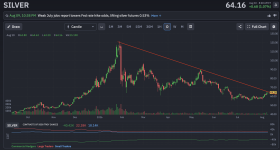
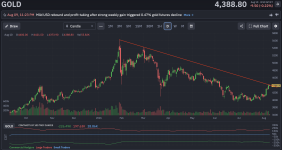
Frell No, lol.
- Messages
- 22,485
- Reaction score
- 12,658
- Points
- 288
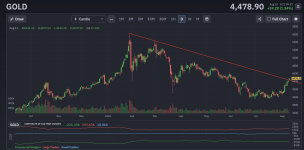
Viking
Yellow Jacket
- Messages
- 22,485
- Reaction score
- 12,658
- Points
- 288
 Japan's 10 year yield jumped to 2.88% today and appears ready to go vertical.
So far the Bank of Japan (BoJ) and
 U.S. Treasury interventions in the yen have failed.
 History has proven purchasing yen is ineffective at preventing its further devaluation. The only solution is to dramatically raise interest rates.
Doing so narrows the gap between U.S. yields and the Japanese yield, which effectively destroys the $20 trillion yen carry trade that has been supporting global asset prices and U.S. bonds.
If the BoJ loses control of the 10 year yield and it suddenly rises to 4%, emergency measures will be needed to prevent a Dollar shortage and global sovereign debt crisis... unless that's the plan.

 ISS musings on gold and silver (because helicopters don't go high enough)
 Gold
Yesterday both the COMEX and MCX reported zero vault activity. That's the second day in a row the MCX reports zero activity for the gold vault stock. Meanwhile, the Indian market discounts to LBMA spot are contracting from recent ranges. It looks like India will need to open the import doors for gold soon IMO.
Additionally, China's SGE is no longer holding a consistent premium to LBMA spot. It looks like LBMA spot is on the rise as global demand catches up with China's appetite.
Silver
India's MCX exchange has posted inflows for seven consecutive days with a cumulative total of 34 metric tons. If we assume that demand for silver is the same as it was in late July (~3t/day), we can estimate that the MCX may have accounted for ~55 metric tons (of the ~90 that was reported as being imported by Bloomberg). Meanwhile, India's MCX futures and IBJA spot premiums over LBMA spot are still holding steady.
China's SGE premium over LBMA spot is also holding steady above $6/ozt (and as high as $8/ozt recently). While China's SFE futures market vault stock has been increasing, their SGE market has been draining. I'm honestly not entirely sure what to make of that dynamic.
London based ETFs are increasing their vault stock led by SLV. I'm expecting the 1 month lease rate to start climbing again as I think the LBMA's silver free float vault stock is likey starting to run low again.
Meanwhile, the COMEX silver futures market must be a ghost town, because withdrawals so far in August remain pathetically low compared to recent history. I would say I'm expecting withdrawals to pick up as the LBMA vault stock duress grows, but I suspect there may be some political barriers with the critical minerals spotlight hindering the export of silver. That's pure speculation on my part though. It just seems to me that there must be a reason (more than just lack of market interest) for depressed activity at the COMEX over the last couple of months. I think bullion banks may have been given some ... informal guidance.