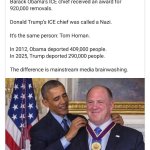
Black Jesus did things a bit differently than T.
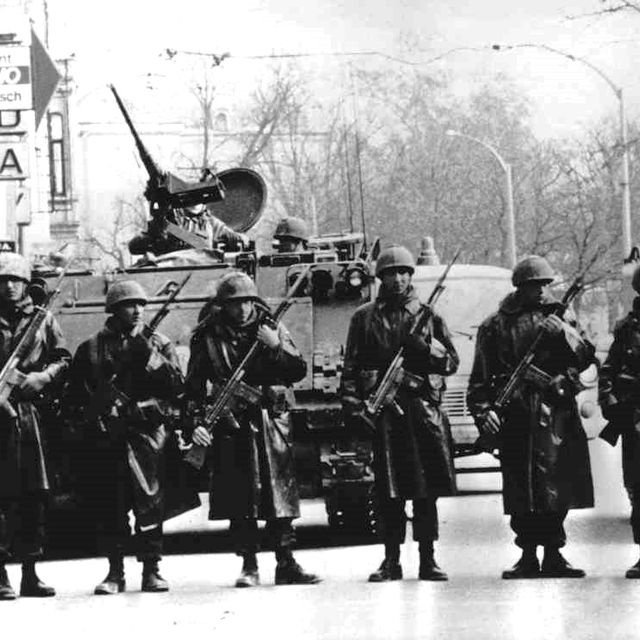
BJ didn't have masked storm troopers with very little training running amuck in the streets.
Like you, I'd like to see the actually illegals deported, just not the way it's happening under T's watch.
Let's see what Grok has to say about BJ versus T methodology when it comes to deportations.:
Question
How many illegal aliens did President Obama deport while he was in office and what is the difference between Obama and Trump as to how the deportations were and are being carried out?
Answer
During his presidency from 2009 to 2017, President Obama oversaw approximately 3.1 million formal removals (the official term for deportations, which involve a legal order to leave the U.S.) of unauthorized immigrants.
migrationpolicy.org
This number does not include voluntary returns (around 2.2 million during the same period), which are quicker turnarounds at the border without formal legal consequences and were sometimes lumped into broader "deportation" counts in media discussions.
migrationpolicy.org
Obama's administration shifted enforcement toward more formal removals over returns compared to prior presidents, focusing heavily on border apprehensions (which rose as a share of total actions) while interior removals declined significantly—from about 182,000 in FY 2009 to 65,000 in FY 2016.
migrationpolicy.org
By the end of his term, over 90% of interior removals targeted individuals with serious criminal convictions, and 85% of all removals and returns involved recent border crossers.
migrationpolicy.org
The key differences in how deportations were carried out under Obama versus Trump (across Trump's first term from 2017-2021 and his ongoing second term starting in 2025) center on enforcement priorities, scope, and focus areas:
- Priorities and Hierarchy: Obama's approach used a strict, tiered system established in 2014, prioritizing national security threats, serious criminals (based on convictions for felonies or significant misdemeanors), and recent border crossers, while deprioritizing long-term residents without criminal records or those with family ties through prosecutorial discretion.
bipartisanpolicy.org
Trump's policies eliminated this hierarchy, broadly targeting nearly all unauthorized immigrants as priorities, including those with minor offenses (e.g., traffic violations), individuals merely charged with crimes (not necessarily convicted), or those perceived as risks by officers.
bipartisanpolicy.org
- Prosecutorial Discretion: Under Obama, agents had guidelines to exercise discretion, often sparing individuals with deep U.S. ties, and decisions required supervisory review.
bipartisanpolicy.org
Trump's framework empowers frontline agents with minimal constraints or oversight, leading to a more decentralized, "bottom-up" enforcement that targets "low-hanging fruit" without exemptions based on residency length or minor infractions.
bipartisanpolicy.org
- Focus on Border vs. Interior: Obama's enforcement increasingly emphasized border removals (e.g., quick processing of recent entrants), which reduced recidivism but limited interior actions.
migrationpolicy.org
Trump shifted toward more aggressive interior enforcement, expanding arrests away from the border, including in communities and workplaces, though border deportations remain significant (e.g., about half of the roughly 540,000 total deportations in the first year of his second term).
nytimes.com
This change in nature—rather than just volume—has led to more disruptions in established immigrant communities under Trump.
nytimes.com
Overall, Obama's strategy aimed to channel limited resources toward high-threat cases, resulting in higher formal removal numbers but with protections for certain groups. Trump's approach is more expansive and less selective, aiming for broader deterrence through increased interior operations and fewer safeguards.
Source