


...
Most electric cars are powered by lithium-ion batteries, a type of battery that is recharged when lithium ions flow from a positively charged electrode, called a cathode, to a negatively electrode, called an anode. In most lithium-ion batteries, the cathode contains cobalt, a metal that offers high stability and energy density.
...
About six years ago, Dincă’s lab began working on a project, funded by Lamborghini, to develop an organic battery that could be used to power electric cars. While working on porous materials that were partly organic and partly inorganic, Dincă and his students realized that a fully organic material they had made appeared that it might be a strong conductor.
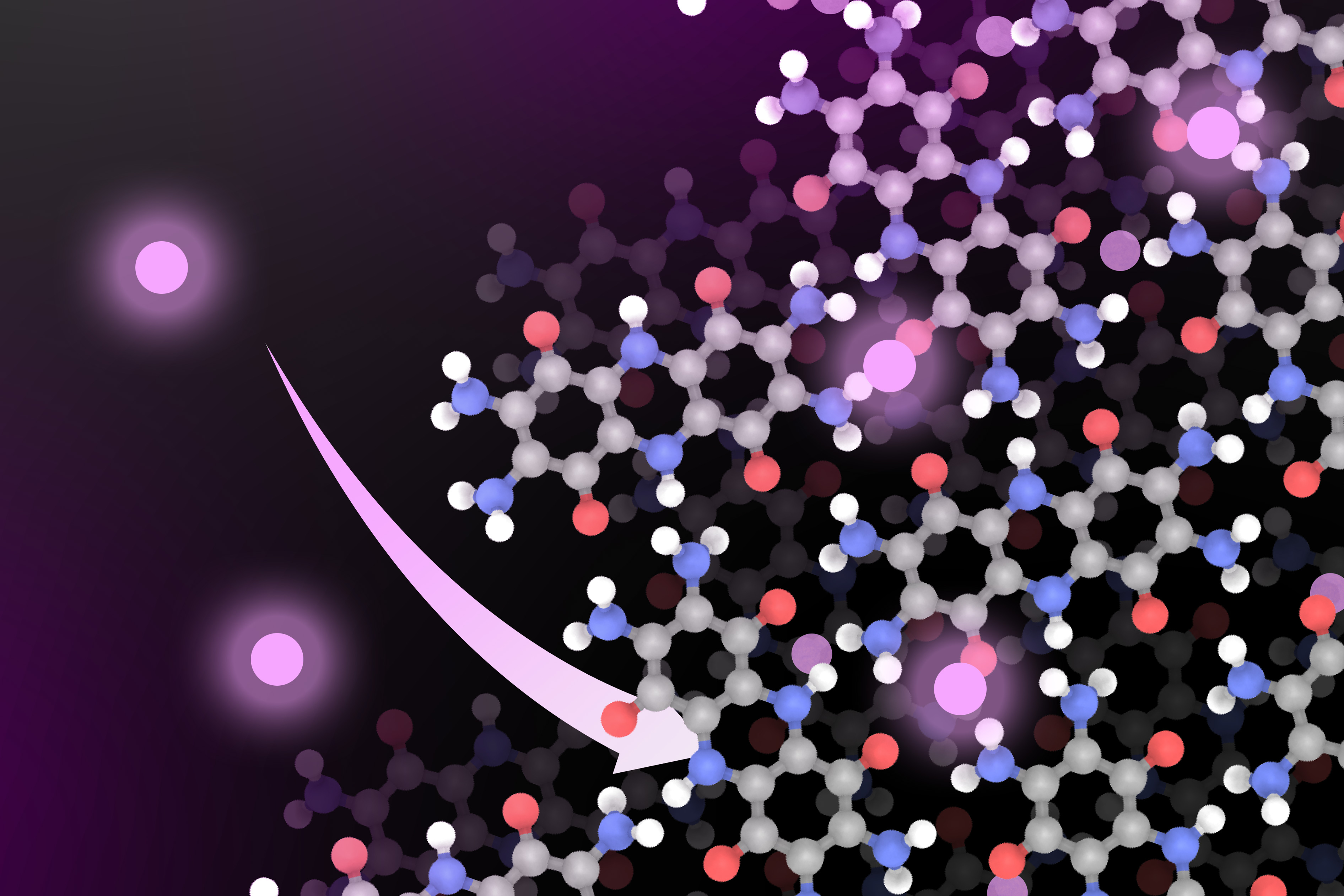
This material consists of many layers of TAQ (bis-tetraaminobenzoquinone), an organic small molecule that contains three fused hexagonal rings. These layers can extend outward in every direction, forming a structure similar to graphite. Within the molecules are chemical groups called quinones, which are the electron reservoirs, and amines, which help the material to form strong hydrogen bonds.
Those hydrogen bonds make the material highly stable and also very insoluble. That insolubility is important because it prevents the material from dissolving into the battery electrolyte, as some organic battery materials do, thereby extending its lifetime.
...
Tests of this material showed that its conductivity and storage capacity were comparable to that of traditional cobalt-containing batteries. Also, batteries with a TAQ cathode can be charged and discharged faster than existing batteries, which could speed up the charging rate for electric vehicles.
...
More:
Cobalt-free batteries could power cars of the future
An MIT battery material could offer a more sustainable way to power electric cars. The lithium-ion battery includes a cathode based on organic materials, instead of cobalt or nickel.
Link to study: