
You are using an out of date browser. It may not display this or other websites correctly.
You should upgrade or use an alternative browser.
You should upgrade or use an alternative browser.
Cresthaven Jet Crash
- Thread starter nickndfl
- Start date
Welcome to the Precious Metals Bug Forums
Welcome to the PMBug forums - a community supported watering hole for folks interested in gold, silver, precious metals, sound money, investing, market and economic news, central bank monetary policies, politics and more.
Register a free account to join the discussions. When you register an account and log in, you may enjoy additional benefits including access to market data/charts and additional members only rooms (including one for trade/barter with the community).


- Messages
- 22,966
- Reaction score
- 12,813
- Points
- 288
Why Learjet 60 Elevator Broke Mid-Flight, Why It Nosedived
Jeff Ostroff analyzes the Learjet 60 crash in West Palm Beach on Nov. 1, 2026, using ADS-B flight telemetry data to pinpoint the exact moment a rear elevator detached from the tail's horizontal stabilizer, and exactly where it fell, to help determine where the jet was and what conditions it was seeing when the tail piece ripped apart mid-flight.Also, the principles of Mach Tuck and Coffin Corner will be explained to determine what role either may have had in the jet crash.
This forensic breakdown maps the aircraft's final flight path to evaluate how aerodynamic principles and shifts in the center of pressure influenced the fatal downward pitch. We examine the specific flight conditions that led to structural failure, helping those interested in aviation safety understand the mechanics behind this tragic event.
By reviewing the Learjet 60 flight data, we pinpoint the state of the aircraft when the critical component failed. This analysis provides a clearer picture of the physics involved in high-speed descent incidents and the variables that NTSB investigators typically prioritize when examining such catastrophic losses.
- Messages
- 22,966
- Reaction score
- 12,813
- Points
- 288
Learjet Engine Found in Crater, What Went Wrong With Radar?
Analyzing the Learjet crash in Palm Beach to determine why the flight encountered a catastrophic stall and structural failure. New drone video shows a massive NTSB undertaking the search for the Learjet 60 crash debris.This investigation examines new drone footage and cockpit instrument data to reconstruct the final moments of the flight. We focus on why the pilot may have missed thunderstorm activity on radar and how the horizontal stabilizer detached from the tail during the descent. By reviewing the flight path and weather conditions, we clarify the physics behind this tragic event for those interested in aviation safety.
Our forensic breakdown maps the wreckage site and crater to evaluate how aerodynamic shifts influenced the fatal nose-dive. We also review the role of icing and weather radar limitations to understand why the Learjet 60 lost control. This analysis provides a clear look at the specific variables investigators prioritize when examining high-speed descent incidents.
- Messages
- 22,966
- Reaction score
- 12,813
- Points
- 288
Vid shows a 3d rendering of the weather radar, clouds and storm tops around the doomed plane.
That was a really good explanation!!
If you liked that one, you'll like this one too.That was a really good explanation!!
The Physics of a Learjet Crash - Made Ridiculously Simple
Edited to add the top comment in the vid:
For the first time, I get it. I’ve watched a ton of air disaster docs over the years but your visuals and explanation were so excellent and simple that I think I’ll comprehend the lingo now. Thank you.
- Messages
- 22,966
- Reaction score
- 12,813
- Points
- 288
What I've gleaned from this thread is basically a Lear jet is a high speed missile.If you liked that one, you'll like this one too.
As long as you pilot it precisely you can get someplace quickly. Make a mistake either side of being perfect and you become a bomb dropping to Earth.
Hard to believe they haven't reinforced the tail section to resist breaking up, or figured some other way to compensate for errors in judgement.
To my way of thinking it doesn't seem that the pilot made any mistakes in judgement. I think the captain knew the tail was gone which is why he was saying the Lord's prayer. The co-pilot was just along for the ride, as co-pilots do and didn't comprehend the gravity of the situation. I think she expected the captain to pull out at any moment. That's why she exclaimed "We're out of time!"
The ice wasn't the problem. Being buffeted 700ft up and down by rising air and the shockwave was.
- Messages
- 22,966
- Reaction score
- 12,813
- Points
- 288
Could This Learjet Still Have Been Saved?
Could anyone have saved Learjet N722BD? We put a fictional captain, Captain Lane, in the left seat: same jet, same storm, same afternoon. Thirty years in business jets, an upset-recovery instructor, flying exactly by the FAA's own guidance. And he knows how the day ended.At every point where the real flight made a decision, we stop and ask what he would do: from the weather briefing in Austin, through the descent to 35,000 feet and the radar picture inside the storm, to the climb request and the 77-second fall. Then we take his hindsight away and run the flight one last time.
This is a theory, not a reconstruction. The NTSB has not determined what brought this jet down, and it has not found fault with anyone. Nothing in this video says what the real crew did or did not do. Captain Lane is not a real person. Cockpit scenes with him are illustrations.
The radio calls you hear are the real recordings. Everything else is built on the published weather, flight-tracking data, NTSB statements and the guidance pilots train on.
In memory of the nine people on board.
CHAPTERS
0:00 Cold open
1:43 The real flight
2:54 Decision one: the briefing
4:47 Decision two: "Looks pretty bad"
6:05 Decision three: 35,000 feet
7:07 Decision four: reading the radar
8:45 Decision five: inside the storm
10:28 Decision six: the climb 12:00
Decision seven: 77 seconds
13:53 The limits of skill
16:04 The last test
18:16 The answer
19:36 What comes next
That too.If they stopped in Naples as suggested by ATC they would be akive today

Viking
Yellow Jacket
If they never left Texas, they would also be alive today.If they stopped in Naples as suggested by ATC they would be akive today
- Messages
- 22,966
- Reaction score
- 12,813
- Points
- 288
Good news
 UPDATE: BLACK BOX RECOVERED FROM DEADLY FLORIDA PLANE CRASH - NEW DETAILS EMERGE
The National Transportation Safety Board (NTSB) has confirmed that investigators recovered the cockpit voice recorder from the Learjet 60 that crashed near Greenacres, Florida, on November 1st, killing all nine aboard.
The recorder was discovered at the aircraft’s initial impact site and has now been transported to the NTSB’s Vehicle Recorders Laboratory in Washington, D.C., where investigators are examining it. Despite the devastating impact and fire, investigators were able to recover the device. However, it is not yet known whether the audio can be successfully retrieved.
Investigators discovered THREE pieces of the aircraft’s left elevator, a critical flight-control surface located on the tail, scattered between approximately 1.3 and 3.8 MILES from the main crash site. This indicates that portions of the aircraft separated before it struck the ground.
Flight-tracking analysis also suggests the aircraft was descending at a staggering rate of more than 30,000 FEET PER MINUTE at certain points. The jet had been flying above 35,000 feet before its catastrophic descent unfolded in roughly a minute.
Shortly before the crash, the flight crew reported moderate turbulence, light clear icing, and altitude fluctuations of approximately 700 feet. They requested clearance to climb to 37,000 feet. Less than 30 seconds after receiving clearance, a transmission announced a descent, followed by a Mayday call.
The aircraft’s 20-year-old copilot, Nathalia Gadelha Filgueiras, had also reportedly texted her boyfriend about turbulence and icing shortly before the crash.
Investigators have recovered major sections of both wings, both engines, the flight deck, and portions of the tail. Additional wreckage was found scattered across nearby properties and rooftops. The excavation of the impact site is now complete.
UPDATE: BLACK BOX RECOVERED FROM DEADLY FLORIDA PLANE CRASH - NEW DETAILS EMERGEThe National Transportation Safety Board (NTSB) has confirmed that investigators recovered the cockpit voice recorder from the Learjet 60 that crashed near Greenacres, Florida, on November 1st, killing all nine aboard.
The recorder was discovered at the aircraft’s initial impact site and has now been transported to the NTSB’s Vehicle Recorders Laboratory in Washington, D.C., where investigators are examining it. Despite the devastating impact and fire, investigators were able to recover the device. However, it is not yet known whether the audio can be successfully retrieved.
Investigators discovered THREE pieces of the aircraft’s left elevator, a critical flight-control surface located on the tail, scattered between approximately 1.3 and 3.8 MILES from the main crash site. This indicates that portions of the aircraft separated before it struck the ground.
Flight-tracking analysis also suggests the aircraft was descending at a staggering rate of more than 30,000 FEET PER MINUTE at certain points. The jet had been flying above 35,000 feet before its catastrophic descent unfolded in roughly a minute.
Shortly before the crash, the flight crew reported moderate turbulence, light clear icing, and altitude fluctuations of approximately 700 feet. They requested clearance to climb to 37,000 feet. Less than 30 seconds after receiving clearance, a transmission announced a descent, followed by a Mayday call.
The aircraft’s 20-year-old copilot, Nathalia Gadelha Filgueiras, had also reportedly texted her boyfriend about turbulence and icing shortly before the crash.
Investigators have recovered major sections of both wings, both engines, the flight deck, and portions of the tail. Additional wreckage was found scattered across nearby properties and rooftops. The excavation of the impact site is now complete.
- Messages
- 22,966
- Reaction score
- 12,813
- Points
- 288
Chilling New Questions in Florida Learjet Crash
Newly released 911 calls are revealing new details about the moments surrounding a devastating Learjet crash in Palm Beach County, Florida, that claimed the lives of all nine people on board. As federal investigators continue their search, Law&Crime’s Jesse Weber breaks down the latest findings alongside former NTSB board member and aviation safety expert John Goglia.
- Messages
- 22,966
- Reaction score
- 12,813
- Points
- 288
NTSB Finds Learjet Cockpit Voice Recorder! More Updates
We analyze the Learjet 60 as the NTSB finds the Cockpit Voice Recorder and wraps up its debris evidence collection operations at the West Palm Beach crash site on Military Trail. Once data is released, we will be using recovered flight data to explain why the aircraft suffered a fatal structural failure.This forensic breakdown examines the flight telemetry to reconstruct the final moments of the flight. By reviewing the descent path and speed, we clarify the aerodynamic forces that caused the jet to enter a terminal nose-dive over West Palm Beach. We focus on the specific variables investigators prioritize, including how the horizontal stabilizer detached during the descent and the impact of weather radar limitations on pilot decision-making.
Our investigation maps the wreckage site and crater to evaluate the physics behind this tragic event. We examine how icing conditions and potential aerodynamic shifts influenced the flight path, providing a clear look at why the aircraft lost control. This analysis helps those interested in aviation safety understand the mechanics behind catastrophic high-speed incidents.
Viking
Yellow Jacket
Voice recorder won't give much. Too bad they didn't have data recorder.
I know, right?Voice recorder won't give much. Too bad they didn't have data recorder.
It seems that in this day and age one should be in every plane that can carry passengers for hire.
Knowing exactly what (or if anything) went wrong with the controls during and just before a crash is a big part of what's allowed air transport safety to be at the high level that it is.
It you don't know exactly what was going on with the plane before a crash, how could you know what practice(s) to change so that it never happens again?
Having a flight data recorder just seems like a no-brainer on any passenger plane.
The rainy weather in Florida was unusually bad. They may have skated around a tupical thunderstorm
That would require actually going around it though.
They went right through it.
but this time there was masdive flooding. It would have been dangerous to drive too.
You can drive to Freeport from Florida?
- Messages
- 22,966
- Reaction score
- 12,813
- Points
- 288
I think it was the video in post #49 above...That would require actually going around it though.
They went right through it.
Remember, they're flying in the clouds using radar to guide them.
When they made the turn the storm wasn't on their radar. The storm came up under them. Apparently, the radar can be pointed down as well as forward.
Making a SWAG here: there's was forward.
It reminds me of the price of gold recently. They dropped the price to engage all the stops that were set at support and yes, they (brokers) definitely can SEE the stops! They do a clean sweep and buy them on the cheap before letting the market find its 'level'.
This happened to me 20 years ago when I had 10K shares of DROOY. I set a stop ridiculously low and they dropped it down until my stop was activated. Another reason I don't play on wall street!
"If you don't hold it, you don't own it." Ponce
Were they?Remember, they're flying in the clouds using radar to guide them.
Normally thunderstorms tower up above any surrounding cloud deck.
At 35,000', you don't typically get solid clouds. That happens in the Troposphere.
- Messages
- 22,966
- Reaction score
- 12,813
- Points
- 288
In... above... they couldn't see the ground especially after the tail went away!Were they?
Normally thunderstorms tower up above any surrounding cloud deck.
At 35,000', you don't typically get solid clouds. That happens in the Troposphere.
I read where they (she) was reading off the instruments and radar which to my way of thinking they were in the clouds. Especially after they went into that cell...
Either way, when you're up that high there's nothing to judge where you are in space without an altimeter. Looking out the window you just see you are 'up' in the sky. Drop 4k feet and you're still 'up' in the sky...
You don't have to be able to see the ground to be able to see a thunderstorm towering (or building) up through the lower cloud deck.In... above... they couldn't see the ground especially after the tail went away!
Something along the lines of this. From my experience, there usually isn't a thick deck of clouds at that altitude, but storms will build up higer through that altitude due to the relatively hotter air rising within the storm cloud itself.
BTW, the reason storms top out around 60,000 feet is due to the fact that the air warms with altitude in the stratosphere.
Ie: exactly the opposite as it does in the Troposphere.
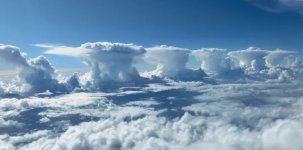
Whether or not they were in conditions like that or not, is still yet to be determined.
Of course they were in a cloud when they went through the top of that storm. I think it built up to them as they tried to fly over it, and they suddenly found themselves in an icing condition that started building up fast. Like they flew into freezing rain.I read where they (she) was reading off the instruments and radar which to my way of thinking they were in the clouds. Especially after they went into that cell...
- Messages
- 22,966
- Reaction score
- 12,813
- Points
- 288
Florida Plane Crash (Learjet 60): Mortician Explains What's Left
DUCATIONAL PURPOSES ONLY. MORTUARY SCIENCE DISCUSSIONS AND STORIES. My goal is to help answer difficult questions surrounding death, recovery, and the science behind what happens to the human body, while maintaining the utmost respect for the people and families involved.On November 1, 2026, a private Learjet 60 traveling from Austin, Texas, to the Bahamas crashed in South Florida. All nine people aboard, including two young children, lost their lives. The catastrophic crash and resulting fire raised questions about what investigators and medical examiners may be able to recover.
As a mortician and embalmer, I wanted to approach this tragedy from a mortuary science perspective.
In this episode, we’re diving into the science of human remains recovery, skeletal fragmentation, commingling, forensic identification, DNA analysis, jet fuel fires, fire temperatures, and the differences between an uncontrolled fire and cremation inside a crematory retort.
We’ll also briefly look back at historical tragedies involving similar recovery challenges and discuss what those cases have taught us about identifying human remains following catastrophic events.
I’ll also share some of my personal experiences working alongside medical examiners and explain why recovery and identification can be far more complicated than most people realize.
Thank you for being here, Coffin Crew.


Well...first, it's not a common-carrier; it's a company that operates charter planes. Plane for hire.Having a flight data recorder just seems like a no-brainer on any passenger plane.
That matters, in terms of the customer base. It's not cheap; and often times, the persons hiring the plane don't want to be known to be on it. Don't want data recorded. Don't want any surveillance over-and-above what the FAA requires.
So, no recorders, probably will be seen (probably has been seen in the past) as a plus. It leaves a lot of things open, including arguments with the pilot over course, time, even destination (wealthy clods love to give orders) and even, hypothetically, a spoiled arsehole playing pilot in one of the seats.
And I'm sure the thinking, along potential clientele, would be...if I'm dead, I'm dead. I don't GAF what they can learn after I'm dead.
Exactly. A plane for hire to the general public is different than a private plane.Well...first, it's not a common-carrier; it's a company that operates charter planes. Plane for hire.
A Greyhound bus has a higher standard to meet than your private car.
Planes for hire, whether commercial or charter are too.
All I'm saying is that in cases where the public is involved, it would be a good idea to have a data recorder so just in case there is an accident, investigators can know things like how the flaps were set, or the speed of the plane, etc etc.
The thing already had a voice recorder.That matters, in terms of the customer base. It's not cheap; and often times, the persons hiring the plane don't want to be known to be on it. Don't want data recorded. Don't want any surveillance over-and-above what the FAA requires.
So, no recorders, probably will be seen (probably has been seen in the past) as a plus. It leaves a lot of things open, including arguments with the pilot over course, time, even destination (wealthy clods love to give orders) and even, hypothetically, a spoiled arsehole playing pilot in one of the seats.
And I'm sure the thinking, along potential clientele, would be...if I'm dead, I'm dead. I don't GAF what they can learn after I'm dead.
....and a voice recorder would be far more invasive than a recorder that merely let you see data about the plane itself.
A data recorder just seems like a no brainer kind of thing on any plane carrying people as cargo.
Heck, your train had a data recorder, and you were only hauling freight.
How many cameras, trackers, and recorders are there on an Amtrak locomotive? Id bet there's a bunch.
[/QUOTE]Exactly. A plane for hire to the general public is different than a private plane.
A Greyhound bus has a higher standard to meet than your private car.
Planes for hire, whether commercial or charter are too.
All I'm saying is that in cases where the public is involved, it would be a good idea to have a data recorder so just in case there is an accident, investigators can know things like how the flaps were set, or the speed of the plane, etc etc.
Of course it's a good idea. Lots of good ideas are opposed by oligarchs and people in power.
Like, it's a good idea for people who wholesale-traffic in little girls, to go to prison. Or worse.
And their customers - especially when those are known.
Somehow, it's not happening, though - and lots of people the MAGA leaders told us would fix it, have joined in in fixing the investigation.
All that's lacking is the will.The thing already had a voice recorder.
....and a voice recorder would be far more invasive than a recorder that merely let you see data about the plane itself.
A data recorder just seems like a no brainer kind of thing on any plane carrying people as cargo.
And the will isn't there because the POWERFUL have communicated, backchannel, THEIR will.
Their will is no.
Believe it or not, the Event Recorder had only been installed in about 65-percent of locomotives when I got my card. Occasionally, an accident would happen with a leading loco that wasn't equipped.Heck, your train had a data recorder, and you were only hauling freight.
How many cameras, trackers, and recorders are there on an Amtrak locomotive? Id bet there's a bunch.
When I quit working for Class 1s (measured in terms of revenue; but the requirements are different than for Class 2 regionals or short lines) they were only beginning the food-fight over inside-facing cameras and voice recorders. We had had near-universal penetration of dash cams, and that, IMHO, was a good thing; but looking at crews and recording their every word, for twelve hours at a stretch...that's a bridge too far, IMHO. You say a lot of things in twelve hours - political things, stuff about your wife, other wives, girlfriends at your "away-terminal" you're going to. Past girlfriends. How much you drank, years ago or last week. Close calls you might have had to being caught half-in-the-bag, the morning after the night before.
Maybe your partner goes into the second unit, while you're rolling along at 60 mph (illegal except in emergencies) to go heat his lunch. Because some Canadian units had microwaves, and no American units do, or did.
Maybe you, the engineer, did it, and left the train in control of the conductor. Who's fully qualified, as an old-head, except that he doesn't have an FRA card. Again, illegal.
EVERY DAY you gotta watch your mouth and think of your (non-operational) actions.
I'm glad I'm out. And I got off Class 1s just in time, too. Because they now do have all those cameras.
Of course it's a good idea. Lots of good ideas are opposed by oligarchs and people in power.
Like, it's a good idea for people who wholesale-traffic in little girls, to go to prison. Or worse.
And their customers - especially when those are known.
Somehow, it's not happening, though - and lots of people the MAGA leaders told us would fix it, have joined in in fixing the investigation.
I doubt any of that is why. A data recorder wouldn't interfere with anyone's privacy. Although a voice recorder might.All that's lacking is the will.
And the will isn't there because the POWERFUL have communicated, backchannel, THEIR will.
Their will is no.
The reason ya need a data recorder is that there are usually no direct witnesses as to what happened. The recorder is often the only "witness".

I've always thought; why don't they make the whole airplane out of the same stuff they make the data recorders out of?
Prolly because it'd end up too heavy to get off the ground?I've always thought; why don't they make the whole airplane out of the same stuff they make the data recorders out of?
....but it would certainly become a safer vehicle.
What it needed, was an Apollo-style parachute system.
The same thinking went into the "Smart" car. One reason we never saw Euro-Asian-style little bug cars before it, was, crash standards, which engineers met with "crumple zones" that used the carbody, front and rear, as a shock absorber.
The Smart car is built like a brick. Or like a Superball. It doesn't crush.
What DOES happen, is, the g-forces on impact are so severe, you're likely to die of them. Even allowing for the airbag.
So, to me, the answer is: Even if it were possible to make such an airframe light enough to work...the plane might survive.
Not persons inside.