


Welcome to the PMBug forums - a community supported watering hole for folks interested in gold, silver, precious metals, sound money, investing, market and economic news, central bank monetary policies, politics and more.
Register a free account to join the discussions. When you register an account and log in, you may enjoy additional benefits including access to market data/charts and additional members only rooms (including one for trade/barter with the community).


They’ve detected sulfur-based molecules in the atmosphere of exoplanet K2-18b that, on Earth, are only produced by living organisms. While the evidence isn’t conclusive yet, it matches predictions for a “Hycean” world — one potentially covered in oceans and capable of hosting microbial life. If further observations confirm these findings, it could mark a turning point in our search for extraterrestrial life.
...
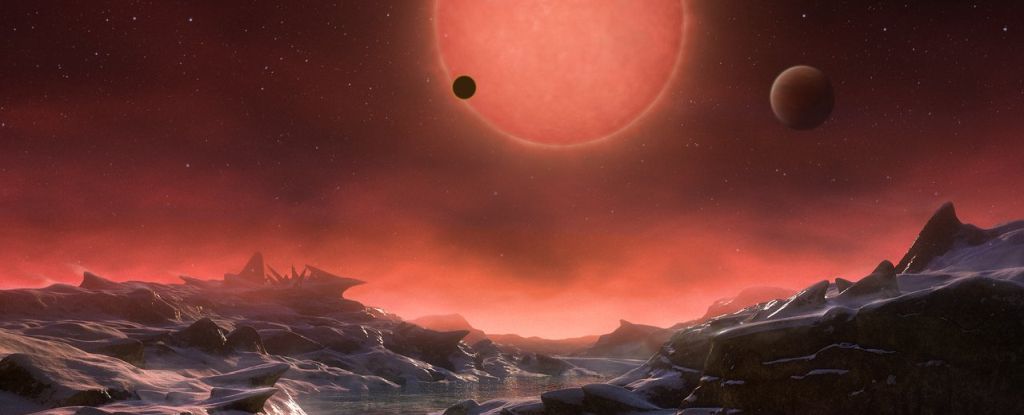
One of the worlds in the TRAPPIST-1 system, a mere 40 light-years away, just might be clad in a life-supporting atmosphere.
In exciting new JWST observations, the Earth-sized exoplanet TRAPPIST-1e shows hints of a gaseous envelope similar to our own, one that could facilitate liquid water on the surface.
Although the detection is ambiguous and needs extensive follow-up to find out what the deal is, it's the closest astronomers have come yet in their quest to find a second Earth.
"TRAPPIST-1e remains one of our most compelling habitable-zone planets, and these new results take us a step closer to knowing what kind of world it is," says astronomer Sara Seager of the Massachusetts Institute of Technology (MIT), co-author on one of two papers detailing the findings.
...
 www.sciencealert.com


