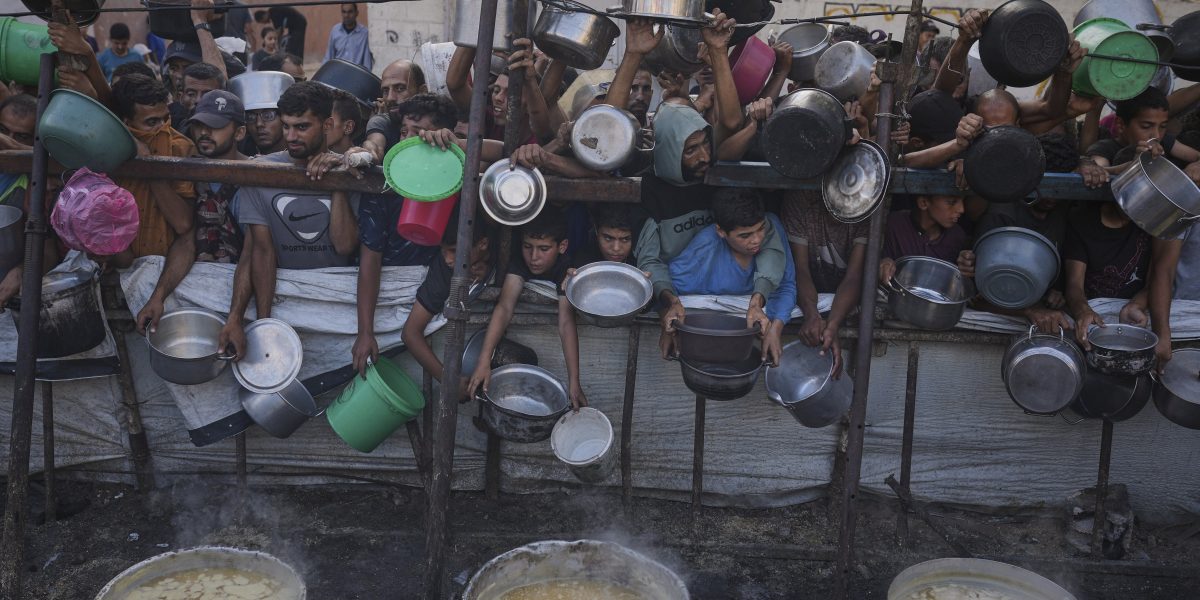
Food Insecurity / Hunger As A Weapon

Welcome to the Precious Metals Bug Forums

Welcome to the PMBug forums - a watering hole for folks interested in gold, silver, precious metals, sound money, investing, market and economic news, central bank monetary policies, politics and more.

Why not register an account and join the discussions? When you register an account and log in, you may enjoy additional benefits including no Google ads, market data/charts, access to trade/barter with the community and much more. Registering an account is free - you have nothing to lose!

searcher

morning
Moderator
Benefactor
Messages
34,379
Reaction score
5,828
Points
288
**Note: The original video that I posted here was pulled - and labeled as private. Here's a new video.

How Putin is weaponizing hunger | The Breadbasket Under Siege​

Aug 2, 2024
Russia's Weaponization of Food: Global Impacts and Urgent Solutions 🌾

In this eye-opening video, we delve into Russia's strategic weaponization of food amid the conflict, targeting Ukraine's vital agricultural sector and blockading its ports. Discover the far-reaching global consequences on food security, particularly in developing countries across the Middle East, Africa, and Asia that heavily rely on Ukrainian grain. We examine the catastrophic food emergencies in nations like Lebanon, Yemen, and Somalia, and the urgent need for international intervention to address this manufactured crisis. Learn about Egypt's struggle with soaring wheat prices and its social stability dilemma, emphasizing the critical need for diversifying food sources and strengthening local production.


12:11
 
Last edited:
I am hungry for some Truth.
 

Eating Leaves, Knee-Deep in Water: Inside Sudan’s Man-Made Famine​

Every day, emaciated children are dying from lack of food, clean water and medicine. Aid groups are rationing malnutrition treatments. Desperate mothers are feeding their children with leaves, while others are sheltering in knee-deep water as floods worsen.

These are the dystopian conditions inside the Zamzam displacement camp in Sudan’s Darfur region, home to more than 500,000 people and now the site of the world’s first confirmed famine since 2017.

Two international panels monitoring hunger around the world made the official declaration that famine had taken hold in Zamzam last week, nearly 16 months after war broke out between Sudan’s military and its former ally, the paramilitary-turned-rebel Rapid Support Forces.

Zamzam and other displacement camps around the Darfur city of El Fasher—set up after the genocide of the early 2000s—are ground zero of a starvation crisis that has swept through Sudan since the start of the war last year. Some 26 million Sudanese, about half the country’s population, are suffering crisis levels of hunger, according to the Integrated Food Security Phase Classification, or IPC, which brings together experts from the United Nations, relief agencies and research groups.

Aid groups and the U.S. government say the crisis is entirely man-made.

More:

 
Nie możemy odwracać wzroku, musimy działać! It's heartbreaking that in the 21st century wars are still causing famines. Rulers are using food as a weapon, and civilians are paying the ultimate price. We must pressure governments to provide humanitarian aid and protect civilians. Only united can we put an end to these tragedies. We can't look away, we must act:mad:!
 

Exclusive: WFP launches probe into its Sudan operations as famine spreads​

  • Inspector general examining two top WFP officials in Sudan -sources
  • Investigators looking at whether staff hid alleged role of Sudan’s army in blocking food aid
  • Probe also investigating disappearance of fuel supplies in Sudan
  • WFP, USAID confirm investigation of Sudan operation is under way
  • Famine watchdog IPC says 25 million facing food crisis in Sudan
NAIROBI/CAIRO, Aug 28 (Reuters) - The U.N. World Food Program is investigating two of its top officials in Sudan over allegations including fraud and concealing information from donors about its ability to deliver food aid to civilians amid the nation’s dire hunger crisis, according to 11 people with knowledge of the probe.

The investigation by the WFP’s Office of the Inspector General (OIG) comes as the U.N.’s food-aid arm is struggling to feed millions of people in war-plagued Sudan, now suffering one of the world’s most severe food shortages in years.

More:


Namibia plans to kill more than 700 animals including elephants and hippos — and distribute the meat​

Wed August 28, 2024

Namibia is planning to kill more than 700 wild animals, including elephants, zebras and hippos, and distribute the meat to the people struggling with food insecurity as the country grapples with its worst drought in 100 years.

The animals set to be culled include 83 elephants, 30 hippos, 60 buffalo, 50 impala, 100 blue wildebeest and 300 zebras, the country’s Ministry of Environment, Forestry and Tourism announced Monday.

They will come from national parks and communal areas with “sustainable game numbers” and will be killed by professional hunters, the ministry said in a press release.

More:


USDA chief admits ‘mistakes’ as food shortages hit tribal populations, low-income seniors​

Agriculture Secretary Tom Vilsack acknowledged his department made "mistakes" in awarding a contract to a single distributor to supply critical food aid programs, a change that has triggered food shortages among low-income populations in at least eight states.

Since the contract with distributor Paris Brothers Inc. began in April, tribes have reported delayed and missed deliveries as part of the Food Distribution Program on Indian Reservations. The same issue has plagued the Commodity Supplemental Food Program, which serves low-income seniors and food banks. That's left some of those program partners without key food staples, and many are now warning the shortages could get much worse in the next few months.

More:


America's Looming Food Bank Crisis​

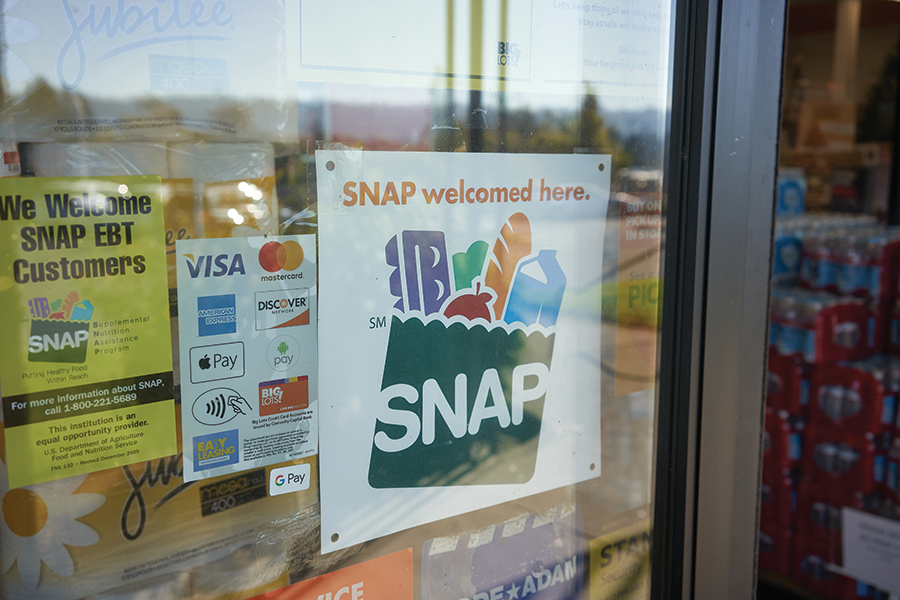
America's food banks are facing a looming crisis under President Donald Trump's administration as proposed changes to the Supplemental Nutrition Assistance Program (SNAP) benefits get closer to becoming a reality.

In the wake of the coronavirus pandemic, food banks have already experienced a surge in demand as Americans grapple with rising living costs. Despite low unemployment, inflation has outpaced wage growth, and grocery prices have surged nearly 28 percent over five years, straining household budgets.

More:

https://www.msn.com/en-us/money/mar...food-bank-crisis/ar-AA1Ddskk?ocid=socialshare
 
The Atlantic

The Trump Administration Is About to Incinerate 500 Tons of Emergency Food​

Five months into its unprecedented dismantling of foreign-aid programs, the Trump administration has given the order to incinerate food instead of sending it to people abroad who need it. Nearly 500 metric tons of emergency food—enough to feed about 1.5 million children for a week—are set to expire tomorrow, according to current and former government employees with direct knowledge of the rations. Within weeks, two of those sources told me, the food, meant for children in Afghanistan and Pakistan, will be ash. (The sources I spoke with for this story requested anonymity for fear of professional repercussions.)

More:

https://www.msn.com/en-us/news/worl...f-emergency-food/ar-AA1IBJzO?ocid=socialshare
 

How America's Most Popular Supermarkets Handle Their Unsold Groceries​

Walk through the automatic doors of your typical American grocery store and you'll be greeted by shelves brimming with fresh produce, meat, baked goods, and every dairy product imaginable. But have you ever wondered what happens to all the food that doesn't go home with customers? According to ReFED, a national nonprofit focused on food waste solutions, 63 million tons of food is thrown away in America every single year.

Food waste is a complex challenge. As food waste piles up in landfills, it contributes to irreversible environmental changes, including global warming. But there's another problem looming: 47 million people in our country don't have enough to eat, with one in 5 kids facing food insecurity.

More:

https://www.msn.com/en-us/foodanddr...unsold-groceries/ar-AA1IB5oB?ocid=socialshare
 

Trump ends annual report on U.S. hunger amid rising food insecurity​

The Trump administration is ending a decades-long effort to track food security at a time when many Americans are struggling to get proper nutrition or enough to eat.

The U.S. Department of Agriculture said Saturday it was terminating the annual Household Food Security reports, which were introduced in the 1990s to help state and federal officials decide on food assistance programs. The latest USDA report, published in September last year, found some 18 million U.S. households were food insecure at some time during 2023, a million more than in 2022.

More:

https://www.msn.com/en-us/news/us/t...-food-insecurity/ar-AA1MZqn4?ocid=socialshare
 
We all saw what happened in Gaza, Israelis/America starved the Palestinians out. It can happen to Americans too now that our government is turning against us...
 
Last edited:
I'm just amazed Israel is still getting paid no matter what, tells you who really matters...
 
I'm just amazed Israel is still getting paid no matter what, tells you who really matters...

Count up all the $$$$ we've given to both sides in the middle east and it's trillions. And they all hate America and would like to see our demise.

How much food and medical care could we have provided to American citizens?

Instead of that, the very people who literally beg us to vote them into office (both Rs & Ds) and promise us all sorts of good stuff shit all over us once in office.

Are there food lines in Europe? Are the people in Europe worried about their health insurance doubling? Do the people in Europe go bankrupt or lose houses over medical bills?

From Grok:

Total U.S. Foreign Aid to Middle East Countries (1985–2025)The United States has provided approximately $380–$400 billion (in current U.S. dollars) in total foreign aid to Middle East and North Africa (MENA) countries over the past 40 years (fiscal years 1985–2025). This figure encompasses bilateral economic, military, and humanitarian assistance, based on obligations (committed funds) tracked by the Congressional Research Service (CRS) and the U.S. Agency for International Development (USAID). It excludes multilateral aid (e.g., through the World Bank) and non-aid spending like direct military operations.Key Notes on the Estimate
  • Definition of "Middle East": Official U.S. data often uses "MENA," which includes the Middle East (e.g., Israel, Egypt, Jordan, Iraq, Syria, Lebanon, Yemen, Gulf states) plus North Africa (e.g., Morocco, Tunisia, Algeria). Core Middle East countries account for ~85–90% of the total, with North Africa receiving the rest (e.g., ~$10–15 billion over the period). If excluding North Africa, the total drops to ~$330–$350 billion.
  • Time Frame: FY1985–FY2025 covers the past 40 fiscal years (ending September 30 each year). FY2025 data is partial (through November 2025), estimated at ~$8–10 billion based on prior trends.
  • Sources and Methodology: Derived from CRS reports aggregating USAID's "Greenbook" data (historical obligations since 1946) and ForeignAssistance.gov. Total cumulative aid to MENA since 1946 is ~$350–$360 billion (as of FY2023–2024). Pre-1985 aid was ~$50–$60 billion (mostly 1970s post-Camp David surge for Israel/Egypt), leaving ~$300–$310 billion for 1985–2025, plus ~$80 billion in inflation adjustment from 1980s dollars to current values.
  • Types of Aid: 70% military/security (e.g., Foreign Military Financing), ~20% economic/development, ~10% humanitarian. Aid peaked in the 1980s ($15–20 billion/year) due to Cold War and peace efforts, dipped in the 1990s, and surged post-9/11 (~$10–15 billion/year) for counterterrorism and Iraq/Afghanistan stabilization.
  • Caveats: Figures are in nominal (current) dollars, not adjusted for inflation (~$250–$270 billion in 2025 dollars). Actual disbursements may lag obligations by 1–2 years. Recent events (e.g., Israel-Hamas war) added ~$20 billion in FY2024–2025 supplements.
Breakdown by Major RecipientsThe table below shows cumulative aid (FY1985–2025) for top recipients, which represent ~90% of the total. Data compiled from CRS and USAID sources.
Country/TerritoryCumulative Aid (Current $ Billion)Share of Total (%)Primary Focus
Israel~$180–$19048–50Military (e.g., $3.8B/year MOU since 2019)
Egypt~$80–$8521–22Military/economic (post-Camp David)
Jordan~$25–$307–8Security/economic stability
Iraq~$20–$256–7Post-2003 reconstruction/humanitarian
West Bank/Gaza (Palestinians)~$10–$153–4Humanitarian/development (fluctuated due to policy)
Lebanon~$5–$71–2Humanitarian/security
Syria~$15–$20 (mostly humanitarian since 2011)4–5Crisis response
Yemen~$5–$71–2Humanitarian
Other (e.g., Tunisia, Morocco, Gulf states)~$15–$204–5Development/counterterrorism
Total$380–$400100-
Trends Over Time
  • 1980s: ~$150 billion total (high due to Israel/Egypt peace aid; annual average ~$3.75 billion, peaking at $5–6 billion in 1985).
  • 1990s: ~$70 billion (post-Cold War cuts; focus on peace process).
  • 2000s: ~$100 billion (surge for Iraq/Afghanistan wars; ~$10 billion/year peak).
  • 2010s–2020s: ~$60–$80 billion (stabilization in Syria/Yemen; ~$8–12 billion/year, with 2024–2025 spikes for Gaza/Israel).
For the most granular data, consult ForeignAssistance.gov's historical dashboard or the latest CRS report (R46344, updated 2025). These figures support U.S. strategic goals like regional stability and counterterrorism, though debates persist on effectiveness and conditions.
 
^
All of this horse shit and the people running this country can't feed our own people?
 

Setting the Table to Address Food Insecurity​

Food insecurity comes about in several ways, including through a lack of reliable access to food and an absence of healthy foods that results in a nutritionally deficient diet. The Department of Defense (DoD), think tanks, and nonprofits have conducted surveys to assess food insecurity in the armed forces. While results vary, each has found food insecurity affects thousands of service members.

Factors contributing to a service member’s food security include paygrade, age, and number of dependents. Prudent leftover food policies could especially help active-duty personnel living off base, who have less access to government-subsidized meals via a military dining facility.

Despite food insecurity in the force, military dining facilities across the country throw away thousands of pounds of leftover food every day. Military regulations and federal law support the donation of leftover food, but these measures must be strengthened and better aligned to reduce food insecurity among service members.

More:

 
Back
Top Bottom