



...
Since August 2023, at least six papers have been published claiming to have observed altermagnetism in the lab. One, by Lee Suyoung of Seoul National University and her colleagues, and crediting Dr Smejkal as a co-author, was published last week in Physical Review Letters. They say they have observed altermagnetism in films of manganese telluride, a semiconductor long thought to be antiferromagnetic. Dr Smejkal expects to have more corroboration published in Nature next month. He also suspects that more than 200 other materials are altermagnets in disguise, based on data available in the literature. “I think it’s widely accepted in the community that this is a real phenomenon,” says Christopher Marrows, a condensed-matter physicist at the University of Leeds.
Applications may come in spintronics, which aims to represent data not as electrical charges, as most existing computers do, but as patterns of spin. The electrons within an altermagnet can be controlled from the outside, as they can in a ferromagnet. Those with one type of spin could be made to move in a different direction from those with another. But ferromagnets are awkward to use, since their magnetic fields interfere with those of their neighbours if they are packed too closely together. Altermagnets, without such a field, can be stacked more densely.
And this might not be the end of the story, says Dr Smejkal, who thinks yet more novel forms of magnetism may be lurking out there. ...
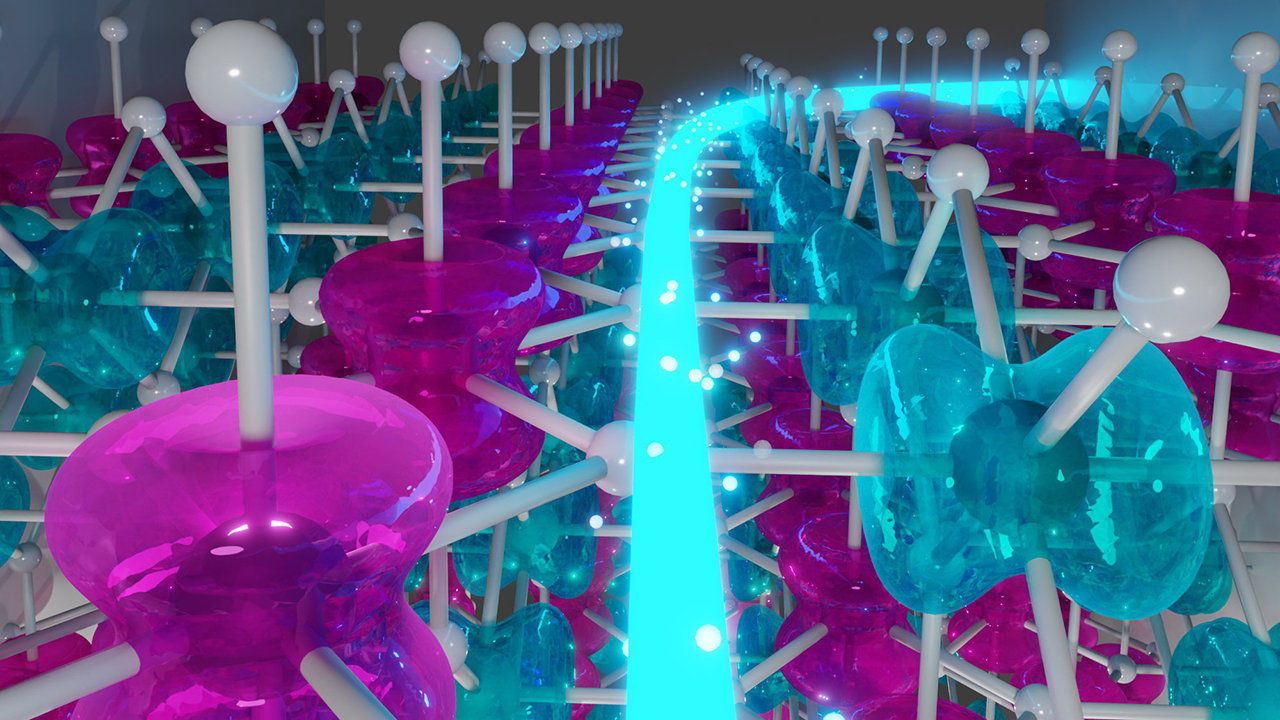
Scientists have found a new kind of magnetic material
“Altermagnets” have been hiding in plain sight for 90 years
Sounds like they might develop solid state memory for computers with this.