
You are using an out of date browser. It may not display this or other websites correctly.
You should upgrade or use an alternative browser.
You should upgrade or use an alternative browser.
Gov / Military Spending, DOD Contracts, National Defense $$$$
- Thread starter searcher
- Start date
Welcome to the Precious Metals Bug Forums
Welcome to the PMBug forums - a community supported watering hole for folks interested in gold, silver, precious metals, sound money, investing, market and economic news, central bank monetary policies, politics and more.
Register a free account to join the discussions. When you register an account and log in, you may enjoy additional benefits including access to market data/charts and additional members only rooms (including one for trade/barter with the community).

- Messages
- 46,543
- Reaction score
- 7,806
- Points
- 288

The Danger of Vibe Patriotism in Defense Tech
At conferences, in pitch decks, and increasingly in public writing, “service” is increasingly being used to describe the work of startup founders,
warontherocks.com
- Messages
- 46,543
- Reaction score
- 7,806
- Points
- 288
- Messages
- 46,543
- Reaction score
- 7,806
- Points
- 288
Over 5,000 Munitions Shot in the First 96 Hours of the Iran War
For three decades, American grand strategy has rested on what Barry Posen termed “Command of the Commons”: an unrivaled ability to project power across the globe. The opening 96 hours of Operation Epic Fury against Iran suggest this paradigm has shifted. The decisive factor in modern, high-end conflict has become more than just standoff strikes—it is about the industrial capacity to sustain those strikes and defend against adversarial attacks. The modern foundation of military power has become a problem that we refer to as the “Command of the Reload.” This is the result of industrial physics showing up to war like an unpaid invoice, and the bill is coming due in minerals, manufacturing, and strategic solvency.
Several organizations have published cost estimates for Operation Epic Fury’s opening phase. The Center for Strategic and International Studies (CSIS) places the first 100 hours at $3.7 billion; Anadolu Agency estimates $5.82 billion when asset losses are included; and the Penn Wharton Budget Model projects $40 to $95 billion for a two-month conflict. Those figures obscure a more uncomfortable reality. Our analysis, using a Payne Institute proprietary ledger that fuses open-source event tracking with expert validation (see Methods Box 1), reveals that the true story lies in the composition of the expenditure.
Read the full article here:
For three decades, American grand strategy has rested on what Barry Posen termed “Command of the Commons”: an unrivaled ability to project power across the globe. The opening 96 hours of Operation Epic Fury against Iran suggest this paradigm has shifted. The decisive factor in modern, high-end conflict has become more than just standoff strikes—it is about the industrial capacity to sustain those strikes and defend against adversarial attacks. The modern foundation of military power has become a problem that we refer to as the “Command of the Reload.” This is the result of industrial physics showing up to war like an unpaid invoice, and the bill is coming due in minerals, manufacturing, and strategic solvency.
Several organizations have published cost estimates for Operation Epic Fury’s opening phase. The Center for Strategic and International Studies (CSIS) places the first 100 hours at $3.7 billion; Anadolu Agency estimates $5.82 billion when asset losses are included; and the Penn Wharton Budget Model projects $40 to $95 billion for a two-month conflict. Those figures obscure a more uncomfortable reality. Our analysis, using a Payne Institute proprietary ledger that fuses open-source event tracking with expert validation (see Methods Box 1), reveals that the true story lies in the composition of the expenditure.
Read the full article here:
- Messages
- 46,543
- Reaction score
- 7,806
- Points
- 288
Inspector General Audit of the Navy’s Defective Parts and Contractor Restitution
The following is the Defense Department’s Inspector General audit of the Navy’s defective parts and contractor restitution. The report was published March 17, 2026.From the Report
ObjectiveThe objective of this audit was to assess the effectiveness of the Navy’s efforts to remove from the DoD supply chain defective spare parts provided by contractors and to obtain restitution (reimbursement) from contractors that provide defective spare parts. This report is one in a series of two reports on DoD defective spare parts and contractor restitution.
Full report:
- Messages
- 46,543
- Reaction score
- 7,806
- Points
- 288
Navy Creates New ‘Marketplace’ for Medium Unmanned Surface Vessels After Cancelling MASC Program
The Navy cancelled the Modular Attack Surface Craft program launched last year and is creating a new acquisition strategy for unmanned vessels, a service official told reporters Thursday.With the new Golden Fleet concept, the Navy wants a medium unmanned surface vessel that can perform multiple missions, a goal that the prior MASC program was too narrowly tailored to achieve, Portfolio Acquisition Executive for Robotics and Autonomous Systems Rebecca Gassler said during a media roundtable.
Gassler declined to specify the missions for the rebranded medium unmanned service vessel program, but said testing later this year will evaluate whether the proposed vessels can meet the Navy’s requirements.
More:
- Messages
- 46,543
- Reaction score
- 7,806
- Points
- 288
Inspector General Audit of Naval Supply Systems Command Management of Inventory Items with No Demand for 5 Years
The following is the Defense Department’s Inspector General audit of Naval Supply Systems Command Management of Inventory Items with No Demand for 5 Years or More. The report was published March 25, 2026.From the Report
ObjectiveThe objective of this audit was to assess the effectiveness of Naval Supply Systems Command (NAVSUP) management of inventory items with no demand for 5 years or more. An inventory item is an item of supply that includes reparable components, consumable repair parts and subsystems and assemblies of parts. Inventory items that were not requested or issued to customers are considered to have no demand.
More:
- Messages
- 46,543
- Reaction score
- 7,806
- Points
- 288

South Korean-owned U.S. shipyard gets first Navy contract
A Korean industrial giant will help design a new-generation supply ship for the U.S. Navy.
 www.freightwaves.com
- Messages
- 46,543
- Reaction score
- 7,806
- Points
- 288
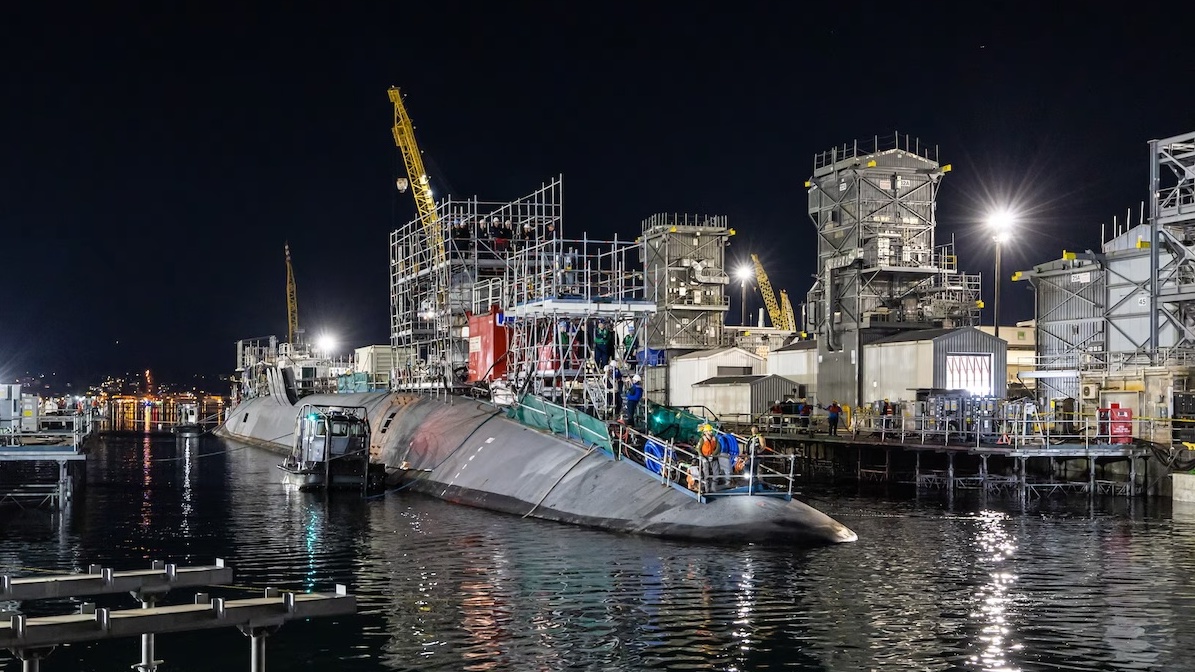
Trump budget boosts military shipbuilding by 242% to $65.8 billion
President Trump wants to increase federal spending for shipbuilding by 242%, to $65.8 billion, for battleships, submarines and other military vessels, according to documents released by the White House on Tuesday.
www.freightwaves.com
- Messages
- 46,543
- Reaction score
- 7,806
- Points
- 288
Pentagon’s Fiscal Year 2027 Budget Request for Procurement Programs
The following is the Pentagon’s Fiscal Year 2027 budget request for procurement programs, released April 3, 2026.Summary
This document outlines the Fiscal Year 2027 budget request for the Defense Department’s procurement programs. The document includes total obligational authority across Army, Navy and Marine Corps, and Air Force and Space Force accounts on the procurement programs of missiles, aircraft, ships and support programs.More:
- Messages
- 46,543
- Reaction score
- 7,806
- Points
- 288
New Navy Budget Wants $3B for New Tomahawks, $4.3B for SM-6s
The latest Pentagon budget request calls for massive purchase increases of two key missiles the Navy has relied on for the U.S.-Israeli war with Iran and the U.S. conflict with the Houthis in the Red Sea.Specifically, the new Fiscal Year 2027 budget is seeking a 1,200 percent increase in the number of Tomahawk Land Attack Missiles and a 225 percent increase in Standard Missile 6s over what Congress appropriated money for in Fiscal Year 2026.
The funding is split between a traditional budget request and reconciliation funding. Both of those weapons are primary munitions for the guided-missile destroyers that have been the backbone of the Navy’s current war effort in the Middle East.
More:
- Messages
- 46,543
- Reaction score
- 7,806
- Points
- 288

Here Is What Trump's Gargantuan $1.5T Defense Budget Has In It
The U.S. military is pushing to make huge investments in many programs in Fiscal Year 2027, but also some notable cuts.
 www.twz.com
- Messages
- 46,543
- Reaction score
- 7,806
- Points
- 288
Navy to Inactivate Attack Boat USS Boise After $1.6B Repair Effort
One of the youngest Los Angeles-class nuclear attack submarines will be inactivated after waiting more than a decade for an overhaul, the Navy announced on Friday.USS Boise (SSN-764), currently in a drydock at HII Newport News Shipbuilding, Va., has been scheduled for a regular overhaul since Fiscal Year 2016 but has spent years pierside waiting for repairs. While waiting for a slot at Norfolk Naval Shipyard, Va., the 34-year-old submarine lost its dive certification in 2017. After years at the pier, the Navy decided to enlist HII to repair the submarine at Newport News. The boat was towed to Newport News in 2018, back to Naval Station Norfolk and back again to Newport News in 2020. From then, Bosie waited until the service awarded a $1.2 billion contract to HII for the work in 2024. Combined, the Navy has invested about $1.6 billion Boise, based on Pentagon contract announcements.
More:
- Messages
- 46,543
- Reaction score
- 7,806
- Points
- 288
Inside The U.S. Navy’s $2.3 Billion Retail Business To Aid Military Servicemembers
Apr 11, 2026 #CNBCThe Navy Exchange, which is owned by the U.S. government, has long provided discounted, tax free goods to military members and their families. The profits all go back to helping to improve welfare programs for those enrolled in the Navy, but, in recent years, sales have declined and is now in the process of renovating its stores with planned investments of around $100 million across its fleet of stores to better compete with major e-commerce players.
12:21
- Messages
- 46,543
- Reaction score
- 7,806
- Points
- 288
A private equity billionaire mounts his biggest takeover yet: The Pentagon
On Wall Street, Steve Feinberg had a well-oiled sales pitch for investors thinking of betting billions on his corporate turnarounds.Now the Pentagon’s No. 2 official, the former private-equity boss faces the biggest sell of his career: persuading Congress to bless the Trump administration’s $1.5 trillion military budget.
The massive funding surge would pour into a military plagued by years of costly overruns and painful delays. Feinberg has told Trump administration officials he could avoid those pitfalls using a carrot-and-stick approach with companies on the receiving end of those dollars.
“Contractors that are willing to change with us will prosper and grow,” Feinberg told a crowd of executives from Lockheed Martin, Northrop Grumman and other major suppliers at the National War College in Washington, D.C. last year. “Those who don’t, and resist it, will be gone.”
The 66-year-old billionaire has been the Pentagon’s top weapons buyer for the past year after leaving his lucrative perch atop private-equity firm Cerberus Capital Management. He has spent much of that time sparring with contractors over progress ramping up output and how they’re investing their money.
More:
https://www.msn.com/en-us/money/com...yet-the-pentagon/ar-AA20ZAq3?ocid=socialshare
- Messages
- 46,543
- Reaction score
- 7,806
- Points
- 288
Gift link, free to read.
Pentagon Approaches Automakers, Manufacturers to Boost Weapons Production
https://www.wsj.com/politics/nation...7?st=2zQ4pU&reflink=desktopwebshare_permalink
- Messages
- 46,543
- Reaction score
- 7,806
- Points
- 288
The Pentagon’s Misguided Deal with Automakers
This week, Pentagon officials approached auto manufacturing companies with the request that they produce weapons, mostly munitions. Decreasing munition stockpiles and low production rates motivated the Pentagon to make this plea to automakers. This deal would harm Americans and would do little to address America’s security needs.More:
- Messages
- 46,543
- Reaction score
- 7,806
- Points
- 288

Everything New We Just Learned About The Trump Class Battleship Program
We are getting a clearer idea of how the Navy thinks it can use these ships, which have an estimated cost of $17B per vessel.
www.twz.com
- Messages
- 46,543
- Reaction score
- 7,806
- Points
- 288

Pentagon seeks funds for Golden Dome, drones, AI in largest-ever budget request
According to Pentagon officials, the president's key priorities include the Golden Dome, drones, AI, data infrastructure and the defense industrial base.
 www.navytimes.com

US Navy is reviewing cost of future Ford-class carriers to ensure they ‘make sense’
The service is looking at how superior Ford-class carriers are to Nimitz-class carriers, said the recently ousted Navy Secretary John Phelan.
www.navytimes.com

Navy ‘going to study’ possibility of building ships outside US, Phelan says
The Navy is exploring ways to alleviate pressure as U.S. shipbuilding faces issues with labor capacity, Navy Secretary John Phelan said.
www.navytimes.com
- Messages
- 46,543
- Reaction score
- 7,806
- Points
- 288

US Navy Wants to Spend $2B on Foreign Shipbuilding "Study and Procurement"
The U.S. Navy's next annual budget is going to contain an unheard-of line item: a pair of multibillion-dollar studies of foreign shipbuilding options...
 maritime-executive.com
Read the USNI article here:
- Messages
- 46,543
- Reaction score
- 7,806
- Points
- 288

From Slogan to Standard: How the Pentagon Should Define Affordable Mass
The term “affordable mass” entered public defense discourse in 2021 as a munitions concept, which the Air Force adopted in 2023 to describe its effort to
warontherocks.com
- Messages
- 46,543
- Reaction score
- 7,806
- Points
- 288
Trump’s Pentagon demands tax dollars for 'pointless bureaucratic chest-thumping'
The Trump administration is demanding that Congress step up to codify one of his many rebranding efforts, essentially asking for tax dollars to fund his defense chief's "pointless bureaucratic chest-thumping," according to a new analysis from MS NOW.Early on in his second term, Trump issued an executive order claiming to rename the Department of Defense to the much more antagonistic, "Department of War," foreshadowing the president's hard shift to a more belligerent foreign policy. A Cabinet-level agency, however, cannot be given a new name unless it is approved via an act of Congress, but despite that inconvenient fact, the administration has barrelled on ahead, using what MS NOW called "a secondary nickname" as if it were the real deal ever since.
More:
https://www.msn.com/en-us/news/poli...c-chest-thumping/ar-AA220PRJ?ocid=socialshare
- Messages
- 46,543
- Reaction score
- 7,806
- Points
- 288

Acquisition Reform Needs Its Own Wargame
One number buried in the Pentagon’s Fiscal Year 2027 budget request reveals a decade of acquisition decisions in a data point: The U.S. Navy is requesting
warontherocks.com
- Messages
- 46,543
- Reaction score
- 7,806
- Points
- 288
GAO Report on Determining Cost-of-Living Allowances for Military Personnel
U.S. Naval Institute StaffMay 6, 2026 12:05 PM
The following is the Government Accountability Office report, Military Personnel: DOD Should Improve Processes for Determining Cost-of-Living Allowances, published April 30, 2026.
From the Report
What GAO FoundThe Department of Defense (DOD) uses three key processes to determine service member cost-of-living allowances (COLA), with separate programs for service members living in the continental U.S. (CONUS) and outside the continental U.S. (OCONUS). These processes include data on military household spending from the Department of Labor’s Bureau of Labor Statistics, location-specific surveys of shopping patterns, and retail price data for the goods and services that service members typically buy. DOD uses these processes to develop comparative prices for locations where it stations service members. DOD uses average CONUS prices as a baseline for determining eligibility for COLA. Using these processes, DOD determines a COLA rate for each eligible location. Payments to service members in these locations vary based on their spendable income and number of dependents. The department also tracks foreign currency fluctuations relative to the dollar to help determine COLA payments in OCONUS locations.
DOD’s processes for determining COLA rates CONUS and OCONUS have several weaknesses. Additionally, information about COLA rates can be better communicated to service members. Specifically:
- DOD’s survey for determining service members’ shopping patterns does not use sound sampling practices.
- DOD does not consistently use existing processes to capture location-specific expenses.
- DOD has inconsistent processes for determining dependent-based COLA compensation in CONUS and OCONUS.
- DOD posts information about COLA on a publicly available website, but there are inconsistencies in the amount and type of information local commands provide to service members at locations that receive COLA. Further, some service members told GAO that they did not understand their COLA payments.
More:
- Messages
- 46,543
- Reaction score
- 7,806
- Points
- 288
GAO Report on Mariner Training
The following is the May 7, 2026, Government Accountability Office report, Mariner Training: Maritime Administration Should Share More Information About Financial Aid and Careers.From the report
What GAO FoundMariner students typically take training courses to begin or advance their careers, and many such courses are approved by the U.S. Coast Guard (USCG) to meet requirements for credentials to work on vessels. Institutions offering USCG approved courses include one national and six state maritime academies, colleges and universities, and other training institutions such as ones affiliated with maritime unions. Of non-academy institutions, the Maritime Administration (MARAD) has designated 47 as part of the Centers of Excellence program for domestic maritime workforce training. The eligibility of training institutions for federal financial aid varies. For example, maritime academies are eligible for aid from MARAD and the Departments of Education and Veterans Affairs (VA). In contrast, most other training institutions do not have the approvals required for mariner students to use available aid. Of the 197 non-academy institutions that offered USCG-approved courses as of August 2025, GAO’s analysis found that less than 20 percent of them were approved to accept aid through the Departments of Education, VA, or Labor.
More:
- Messages
- 46,543
- Reaction score
- 7,806
- Points
- 288
New Navy Shipbuilding Plan: Trump-class Battleship will be Nuclear-powered, Carrier Design is Under Review
The new Trump-class battleship will be powered by a nuclear reactor and is not a successor to the Arleigh Burke-class guided-missile destroyers, the Navy revealed Monday in its annual 30-year shipbuilding blueprint.The Navy’s shipbuilding plan officially acknowledges for the first time what naval observers have suggested for months –: that the potentially $17.5 billion battleship could be nuclear-powered.
“The nuclear-powered Battleship is designed to provide the Fleet with a significant increase in combat power by longer endurance, higher speed, and accommodating advanced weapon systems required for modern warfare,” reads the plan, published Monday.
“Adding capability at the highest end of the highlow mix, the Battleship’s primary role is to deliver high-volume, long-range offensive fires and serve as a robust, survivable forward command and control platform, it is not a destroyer replacement.”
More:
- Messages
- 46,543
- Reaction score
- 7,806
- Points
- 288

US Navy open to building ships overseas, new plan says
The new plan comes after President Donald Trump and previous Navy Secretary John Phelan reportedly disagreed over outsourcing construction on select ships.
www.navytimes.com
- Messages
- 46,543
- Reaction score
- 7,806
- Points
- 288
Trump's proposed 'Golden Dome' estimated to cost $1.2 trillion, far more than he initially said
President Trump's plan to put weapons in space — pitched as a “Golden Dome for America” missile defense program — is estimated to cost $1.2 trillion over a 20 year period, according to a new analysis from the Congressional Budget Office, a far heftier sum than the initial $175 billion price tag he gave last year.The nonpartisan CBO report, published Tuesday, is described as an analysis that reflects “one illustrative approach rather than an estimate of a specific Administration proposal.”
The futuristic system was ordered by Trump in an executive order during his first week in office. He said then that he expected the system to be “fully operational before the end of my term,” which wraps up in January 2029.
More:
https://www.msn.com/en-us/money/mar...e-initially-said/ar-AA231tfm?ocid=socialshare
- Messages
- 46,543
- Reaction score
- 7,806
- Points
- 288

Davie Defense Finalizes $3.5 Billion U.S. Coast Guard Arctic Security Cutter Deal
Explore the new Arctic Security Cutters as the U.S. Coast Guard enhances its Arctic fleet with a significant contract.
 gcaptain.com
- Messages
- 46,543
- Reaction score
- 7,806
- Points
- 288

10,000 Low-Cost Cruise Missiles In Three Years Procurement Plan Laid Out By Pentagon (Updated)
The U.S. military now also plans on buying 12,000 'cheap' hypersonic missiles as part of a larger push to bolster munitions inventories.
www.twz.com
- Messages
- 46,543
- Reaction score
- 7,806
- Points
- 288
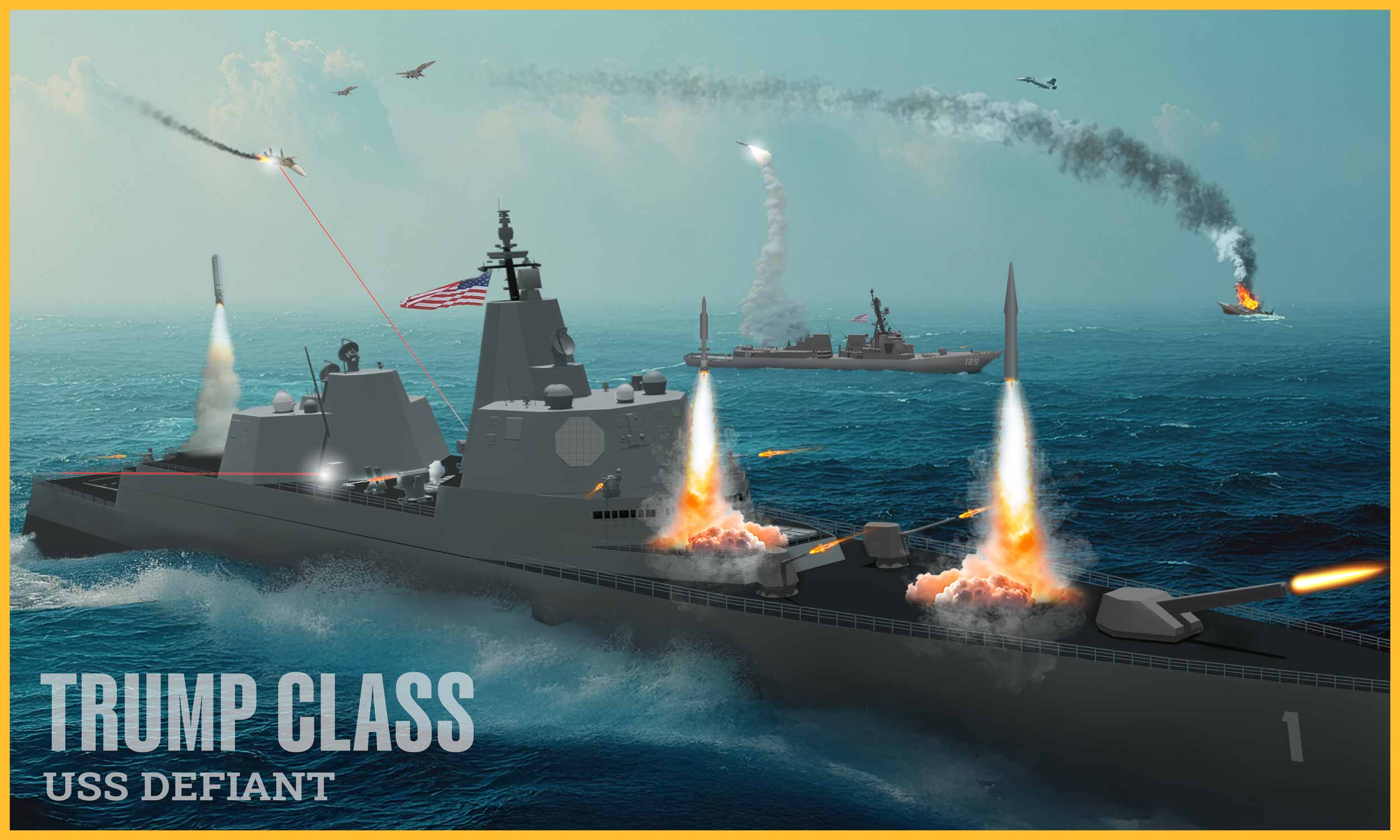
Details of Trump’s Nuclear Battleship Emerge in New Navy Shipbuilding Blueprint
Explore the Trump battleship program with the U.S. Navy’s FY2027 Shipbuilding Plan featuring hypersonic technology and nuclear power.
gcaptain.com
- Messages
- 46,543
- Reaction score
- 7,806
- Points
- 288
Middle East Conflict Costs Could Prevent Flow of Sailors to A-Schools, Reenlistment Bonuses Without Supplemental, Says CNO
The Navy may have to put up to 15,000 new enlisted accessions on hold without additional funding from a supplemental budget, the Chief of Naval Operations Adm. Daryl Caudle told the House Armed Services Committee Thursday.The ongoing cost of military action in the Middle East means the Navy may not have the needed dollars for permanent costs of station changes for Navy recruits and sailors required for sending them from boot camp to A-School, Caudle testified to Congress this week.
The FY 2027 budget was not built with Operation Epic Fury in mind, Caudle said.
More:
- Messages
- 46,543
- Reaction score
- 7,806
- Points
- 288

Barracks improvements, installation safety top priorities for military construction budget
The $21.5 billion budget request for military barracks would address a backlog of construction and repairs, logistics leaders said.
www.navytimes.com