

Survival of the fittest is driven by the need for a species to reproduce.
scienceAlert
The world's population is shifting. We're living longer than ever before, with elderly people taking up a greater proportion of the people on the planet. And those extra years aren't necessarily being enjoyed in good health.
Once the next generation has arrived how fit or otherwise we are matters much less in evolutionary terms. That impacts health in old age in a couple of ways. First, harmful genetic mutations that manifest themselves when we're elderly aren't being weeded out by evolution – at that stage, we've already had kids.
Second, genes that are helpful in youth and damaging in old age are also kept around, because evolution strongly favors the early benefits.
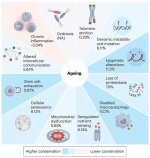 For example, if a gene or gene variant increases cancer risk in old age but helps you reproduce in your 20s and 30s, that's a good trade-off from an evolutionary perspective.
That's the theory anyway…
scienceAlert
The world's population is shifting. We're living longer than ever before, with elderly people taking up a greater proportion of the people on the planet. And those extra years aren't necessarily being enjoyed in good health.
Once the next generation has arrived how fit or otherwise we are matters much less in evolutionary terms. That impacts health in old age in a couple of ways. First, harmful genetic mutations that manifest themselves when we're elderly aren't being weeded out by evolution – at that stage, we've already had kids.
Second, genes that are helpful in youth and damaging in old age are also kept around, because evolution strongly favors the early benefits.
That's the theory anyway…


