

Magic mushrooms? You have gnome idea.
NewYork Post
Move over psilocybin — there’s a new psychoactive agent on the scene. A study published last month in Mycologia has unearthed new details on how one freaky fungus, the Lanmaoa asiatica, makes those who ingest it hallucinate teeny, tiny people all around them.
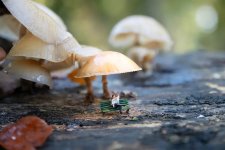
Most of those who eat it report that they can seem functionally sober and their surroundings remain largely unchanged — except for the miniature people. The gnome-like beings appear after about 12 to 24 hours and may stick around for several days to follow.

L. asiatica, a type of bolete mushroom, is native to pine forests in both southwestern China
NewYork Post
Move over psilocybin — there’s a new psychoactive agent on the scene. A study published last month in Mycologia has unearthed new details on how one freaky fungus, the Lanmaoa asiatica, makes those who ingest it hallucinate teeny, tiny people all around them.
Most of those who eat it report that they can seem functionally sober and their surroundings remain largely unchanged — except for the miniature people. The gnome-like beings appear after about 12 to 24 hours and may stick around for several days to follow.
L. asiatica, a type of bolete mushroom, is native to pine forests in both southwestern China