
You are using an out of date browser. It may not display this or other websites correctly.
You should upgrade or use an alternative browser.
You should upgrade or use an alternative browser.
Off grid living in remote places
- Thread starter searcher
- Start date
-
- Tags
- off grid orkney remote island
Welcome to the Precious Metals Bug Forums
Welcome to the PMBug forums - a community supported watering hole for folks interested in gold, silver, precious metals, sound money, investing, market and economic news, central bank monetary policies, politics and more.
Register a free account to join the discussions. When you register an account and log in, you may enjoy additional benefits including access to market data/charts and additional members only rooms (including one for trade/barter with the community).

Which mountains? And...given the high entry price in the Rockies, say...why would it be worth it when TSHTF?I am still leaning toward the mountains. Florida is getting too crazy after 55 years. It's too busy.
What's the difference between the Front Range of Colorado, and Siberia? How about, the economic freedom to develop the infrastructure - energy; paved roads; public services such as snowplowing, water/sewerage, emergency personnel.
Siberia was a death sentence. Aspen, also, was hard living, until the Industrial Revolution finally scaled the hills. Round about 1946, when the ghost town was reborn as a winter-sports center.
If you plan for someplace less populated - and you'll almost have to - expect living to be proportionately hard. Out here, I'm not far from Garnet, Montana - a ghost town. It's only been 30 years or so since the last residents died off...of course, living in modern areas, in their old age. But the tales they told, were not pleasant, of the life, expecially winters. One story I remember, of a young father with a sick daughter...took off by sled, that he had to pull, the 60 miles to Missoula (mostly downgrade) and stayed there while the hospital did what they could.
And continued to stay. Never returning.
That was then...? Well, if we get to where mountains matter...yeah, it may keep some of the zombies at bay. Mother Nature has her own way.

- Messages
- 47,948
- Reaction score
- 7,944
- Points
- 288

Curmudge inn Alaska
Welcome to the Curmudge Inn. We are Sarah, Rob, Mishka and Zeus. We live remote and off grid on a small homestead and soon to be B&B/cabin rental Located 13 miles north of the frontier town of Talkeetna Alaska. Our goal is to share our daily life with you all. We will show you the different...
 www.youtube.com


Southern Appalacians in NE TN population 1200.Which mountains? And...given the high entry price in the Rockies, say...why would it be worth it when TSHTF?
What's the difference between the Front Range of Colorado, and Siberia? How about, the economic freedom to develop the infrastructure - energy; paved roads; public services such as snowplowing, water/sewerage, emergency personnel.
Siberia was a death sentence. Aspen, also, was hard living, until the Industrial Revolution finally scaled the hills. Round about 1946, when the ghost town was reborn as a winter-sports center.
If you plan for someplace less populated - and you'll almost have to - expect living to be proportionately hard. Out here, I'm not far from Garnet, Montana - a ghost town. It's only been 30 years or so since the last residents died off...of course, living in modern areas, in their old age. But the tales they told, were not pleasant, of the life, expecially winters. One story I remember, of a young father with a sick daughter...took off by sled, that he had to pull, the 60 miles to Missoula (mostly downgrade) and stayed there while the hospital did what they could.
And continued to stay. Never returning.
That was then...? Well, if we get to where mountains matter...yeah, it may keep some of the zombies at bay. Mother Nature has her own way.

- Messages
- 858
- Reaction score
- 711
- Points
- 268
Buying is the first step. But it is important to move there and become part of the community. You can't just buy your way into a community. Just by buying the land. You can buy some acceptance by freely donating to high-profile causes. But I think the best approach is to just fit in and be good. That takes time.Southern Appalacians in NE TN population 1200.
- Messages
- 47,948
- Reaction score
- 7,944
- Points
- 288
Why James and Camille are living on a deserted island (right now) | Focus on Europe
Sep 25, 2025For Camille and James, a dream job has come true. In summer 2025 they become caretakers of Great Blasket, a remote island off Ireland's west coast. Not an easy task without electrical power, medical facilities or WIFI.
4:47
00:00 Kapitel 1: How did Camille and James on the island
01:01 Kapitel 2: This is Great Blasket
01:32 Kapitel 3: Daily life
02:31 Kapitel 4: what do Camille and James miss the most?
04:01 Kapitel 5: and what have they learned during their stay?

MrLucky
Homeless
- Messages
- 193
- Reaction score
- 252
- Points
- 198

I lived there in the early 70's, went back for a visit last year. Florida is horrible now. Off to the open spaces.I am still leaning toward the mountains. Florida is getting too crazy after 55 years. It's too busy.
I am ready now.Buying is the first step. But it is important to move there and become part of the community. You can't just buy your way into a community. Just by buying the land. You can buy some acceptance by freely donating to high-profile causes. But I think the best approach is to just fit in and be good. That takes time.
Attachments
- Messages
- 47,948
- Reaction score
- 7,944
- Points
- 288
18 Years Living Off-Grid on a Remote Island in a Solo-Built House & Homestead
Oct 19, 2025 #selfsufficiency #offgrid #livingoffthelandTim Coertze has been living off-grid on a remote island in the Straight of Georgia (in Canada) for 18 years. He is solo building his own retirement home using local materials from his own land, like rock, sand, and wood, as well as concrete for the foundation, rockwool for the insulation and tin for the roof. He generates electricity with solar panels, he collects rainwater from his roof, he heats his home with firewood that he cuts down himself, and burns it in three different wood stoves: a monolithic masonry stove, a cast iron wood stove, or a rocket stove under his bathtub. He also grows a lot of his own fruits and vegetables, sprouts seeds, bakes bread, and is raising a pair of Thai river water buffalo for milk.
The island where Tim lives is completely off-grid, and can only be accessed by a pedestrian ferry (there is no car ferry), which makes it difficult to bring materials onto the island unless you can do it by barge, which is very expensive. There is a community on the island so Tim finds that he can barter and trade with folks on the island for most of his needs, but he does go to town off island every couple of months to get groceries like coffee.
He does use propane to heat hot water and to cook when his wood stove is damped down, or when the wildfire risk is too high to burn a fire.
Tim is a thoughtful and talented creative builder who has done a ton of research into alternative building methods and systems from around the world, while focusing on using local materials, skills, and items for his projects.
One of his first jobs in the '80s was working at sea, where he saw floating garbage islands that forever changed the course of his life. This led him to resign from his job and to seek out a remote and clean place where he could have a family, and live closer to the land. He has been growing his own food and processing his own firewood for 40 years, and he now has grandchildren, so he managed to make his dreams a reality.
But the experience of seeing those garbage islands never left him, and he has made an effort to manage his own waste on his land. He keeps all of the garbage that he creates and sequesters it in the walls of his outbuildings, where they will be enclosed in concrete or plaster. This reduces the energy needed to transport the garbage off the island and to a dump or recycling plant where only a fraction of the items will be recycled. He has also repurposed the tires from his island truck as the chamber for his composting toilet. He has managed to sequester 7 years of garbage in the walls of his solar panel shed.
He is not yet retired, and still works as a roofer, although he is hoping to spend less time doing the heavy work and more time managing crews moving forward. He also plans to slowly complete his house with trim, paint, etc. and spend more time growing food once the house is complete.
This off-grid lifestyle can be challenging but Tim appreciates the silence, the satisfaction of being self sufficient, and the connection to the environment that allows him to appreciate the sun, the rain, and the plants around him.
A big thank you to Tim for sharing his story with us!
32:53
- Messages
- 47,948
- Reaction score
- 7,944
- Points
- 288
- Messages
- 47,948
- Reaction score
- 7,944
- Points
- 288
13 Years Living Off Grid in Alaska - Veterans Self Sufficient Life
Nov 7, 2025On March 26, 2003, Bob parachuted into northern Iraq. Weeks later, he guarded lines of civilians waiting for water and fuel—an image that planted a lifelong goal: his future family would never depend on handouts for the basics. This tour follows the Starks—a family of six living mortgage-free in 835 sq ft on Alaska’s Kenai Peninsula—as they show exactly how downsizing + off-grid systems can unlock time, health, and financial breathing room.
What this video covers (for downsizers & self-reliance seekers)
- How one veteran translated field readiness into redundant home systems (heat, water, power)
- The budget math behind buying rural/off-grid: 20 acres + unfinished 680-sq-ft cabin for $80,000 (owner-financed) → ~$540.17/mo → paid off → freedom
- Practical off-grid infrastructure sized for a growing family: well + filtration, rain catchment, wood + diesel heat, solar + generator, storage strategies
- Minimalist family routines that actually work (one plate/fork/spoon per person, Conex storage, room-by-room organization)
- The mindset shift from “flip a switch” to intentional living—how that supported sobriety, parenting, and purpose
25:41
Home specs & systems:
- Size & layout: 835 sq ft; living/dining “winter room,” hallway kitchen, bathroom + laundry, kids’ bedroom, nursery, compact primary bedroom
- Heat (redundant): primary wood stove for space heat + water pots; backup Toyo (diesel/J-1) for consistent winter performance
- Water: on-site well → Berkey drinking-water filtration; rain barrel catchment for gardens/animals; 65-gallon gravity tank upstairs for pressure
- Power: 5×100W solar panels (expanding soon) + Honda 2200W generator in a weather-protected shed; 8×6V battery bank with inverter/charge controller
- Kitchen: full-size fridge, propane range, baker’s table (weekly sourdough), drip-feed gravity water, slab counters; workflow for harvest → processing → meals
- Laundry & bath: small efficient washer; line-dry inside; tub filled with wood-heated water (simple, reliable, low-energy)
- Storage: minimalism inside; shipping container (Conex) for bulk dry goods, overflow plates, seasonal gear
- Purchase: $80,000 (20 acres + unfinished 680-sq-ft structure) via owner financing after a 20% down payment
- Monthly target: kept the payment at $540.17, covered by disability benefits, to free time for writing, gardening, parenting
- Outcome: Mortgage-free; later added a yurt for flexible family use/income; daily costs centered on fuel, maintenance, and modest utilities

Secret Garden Alaska
Welcome to Secret Garden Alaska, We are an off-grid Alaskan farm family consisting of two parents, two daughters, and twins on the way. Our channel focuses on the pros and cons of country life, parenthood, pregnancy, self-publishing, sustainability, homesteading, marriage, and working for...
 www.youtube.com
- Messages
- 47,948
- Reaction score
- 7,944
- Points
- 288
Some neat scenery in this one.
Take a tour of Willow Alaska with 2 of us! We explore the stores in our town and even go shopping for supplies! There are some very unique shops in this own. There is also rich history here with the historic Iditarod sled dog race...We will showcase some of that as well. If you ever come to Alaska this video will help you know a bit about our town before you visit! Thanks for joining us!
20:22
This is What Life Is Like In Small Town Alaska
Nov 15, 2025Take a tour of Willow Alaska with 2 of us! We explore the stores in our town and even go shopping for supplies! There are some very unique shops in this own. There is also rich history here with the historic Iditarod sled dog race...We will showcase some of that as well. If you ever come to Alaska this video will help you know a bit about our town before you visit! Thanks for joining us!
20:22
- Messages
- 47,948
- Reaction score
- 7,944
- Points
- 288
‘We’re relying on that ferry’: Alaska Marine Highway outage throws a wrench into Cordova Jr/Sr Hi...
Dec 13, 2025The Alaska Marine Highway System has suspended ferry service to and from Cordova until January 15
2:48
For more Local News from KTUU: https://www.alaskasnewssource.com/
For more YouTube Content:
 / @alaskasnewssource
They should have known something like this could happen.
ALSO...they could explore private donations, or private charter-flights at cost.
I know that town. Yeah, believe it or not...I used to get around. I spent the summer of 1990 in Cordova. At the time it was COMPLETELY cut off but for the ferry - there's a road going in, now, that's a long story; many locals opposed that - but, it was isolated; people knew it; people liked it that way. Those who didn't, moved on.
It was (nominally) immensely profitable - more millionaires per-capita than any American non-resort city. Why? First, most people there were commercial fishermen. Then, EVERYTHING...COST. Gas was $4 a gallon, at a time when it was 70-cents a gallon Stateside. Rent started at $1500 a month, again when rent in Seattle would have been about $500. (Before Microsquish). Electricity came from a large genset outside town, powered by diesel fuel that had to be barged in. Milk was $4 a gallon - couldn't come from Canada; Canadian food-cleanliness standards didn't meet USDA standards (since I traveled through BC and Yukon, and had spent a lot of time in Ontario, I can attest to that. Another long story...)
So there is money; there is an airport; there are professional charter pilots who live there. They can damn well pony up.
OR...they can just accept that this is the cost of isolation - of living on the edge of civilization. Thirty-five years ago, they did...not now, apparently.
ALSO...they could explore private donations, or private charter-flights at cost.
I know that town. Yeah, believe it or not...I used to get around. I spent the summer of 1990 in Cordova. At the time it was COMPLETELY cut off but for the ferry - there's a road going in, now, that's a long story; many locals opposed that - but, it was isolated; people knew it; people liked it that way. Those who didn't, moved on.
It was (nominally) immensely profitable - more millionaires per-capita than any American non-resort city. Why? First, most people there were commercial fishermen. Then, EVERYTHING...COST. Gas was $4 a gallon, at a time when it was 70-cents a gallon Stateside. Rent started at $1500 a month, again when rent in Seattle would have been about $500. (Before Microsquish). Electricity came from a large genset outside town, powered by diesel fuel that had to be barged in. Milk was $4 a gallon - couldn't come from Canada; Canadian food-cleanliness standards didn't meet USDA standards (since I traveled through BC and Yukon, and had spent a lot of time in Ontario, I can attest to that. Another long story...)
So there is money; there is an airport; there are professional charter pilots who live there. They can damn well pony up.
OR...they can just accept that this is the cost of isolation - of living on the edge of civilization. Thirty-five years ago, they did...not now, apparently.
- Messages
- 47,948
- Reaction score
- 7,944
- Points
- 288

Eighteen Years Off Grid, and a Question About Reality
A blog about living off grid, on a mountain side, in the high desert of far west Texas.
- Messages
- 47,948
- Reaction score
- 7,944
- Points
- 288
He’s 80 & Lives Off the Grid on a Gold Mine in Alaska
Jan 10, 2026Deep in the woods of rural Alaska is a man name Curtis who's chosen to mine for gold and live off the grid for his retirement. He built his dry cabin & mine shaft from scratch, chops wood for heat, and is the definition of independence & self-sufficiency, surviving in one of the harshest natural environments alone with his wife! Join me on this epic look into a simple lifestyle that is becoming very attractive to many!
57:09
► Life in America’s Coldest City | Fairbanks, Alaska:
• Life in America’s Coldest City (-66°F) | F...
- Messages
- 47,948
- Reaction score
- 7,944
- Points
- 288
5 years building off-grid mountain homestead: solo freedom on €200/month
Jan 11, 2026Five years ago, Mathieu Munsch walked away from the “normal” script— rent, bills, loans, a 40-hour workweek— and headed for a sloping meadow in the Vosges region of northeast France to build something radically simple: a small home made from the earth under his feet, wood from nearby, and straw bales from local farmers.
He kept it to 50 m² on purpose—small enough to draft the plans himself, and to build without hiring an architect or engineer. He simply asked a friend studying engineering to double-check his calculations. The result is a softly rounded earth-and-straw house the town didn’t quite know what to do with at first (“round walls” aren’t exactly the local tradition)… yet they couldn’t argue it didn’t belong: the materials are literally from the land around it.
And the price tag? About €15,000. No mortgage. No utility bills. Just time, patience, and a lot of mud.
But the house is only the beginning. Mathieu is building an entire life around low inputs—less energy, less money, less dependence. He lives off-grid on roughly €200/month, powered by solar panels, with solar thermal for hot water in summer and a wood stove for winter warmth (and water-heating when needed). For water, he doesn’t rely on the town at all: he encourages groundwater into an underground pipe and stores it in a cistern halfway down the hill—made easier by the slope of his land.
Food is where his project becomes something more than “self-sufficiency.” He grows what he can, forages what he can’t—and then he goes a step further into what he calls “tending the wild.” Instead of clearing and controlling nature, he collaborates with it: inoculating mushrooms on logs, encouraging edible plants to thrive, even turning a wet patch of land into a cattail pantry.
And he keeps evolving the site. In the pit left from building the house, he created a submerged greenhouse—a walipini—to extend his growing season. He’s also now building a second earth unit, Japanese-style, as a bathhouse.
As Mathieu puts it: “Tending the wild is sometimes easier than erasing everything that’s there and starting from scratch… it does all the farming for you.”
This is a story about natural building, yes—but also about something deeper: emancipation from debt, from high-energy living, and from a life spent earning money just to hand it straight back over to the system.
Because, as he says: “It’s actually the whole possibility of emancipation from labor… If I don’t have a 20-year loan, that’s 20 years less of my life that I have to work.”
We visited on a freezing winter day, and were welcomed into his warm, cozy home—heated only by a few logs burned the night before. He made our family lunch from his foraged, grown, and preserved foods, and it felt like the whole philosophy in one meal: simple, local, deeply satisfying.
If you’re curious about earth-and-straw construction, off-grid systems, permaculture, wild foods, or what it really takes to live with less—this one is a full, grounded tour. If you enjoy these deep dives into people quietly building real alternatives, consider subscribing—and let me know in the comments: what part of this life feels most possible for you, and what feels hardest to imagine?
44:05
He’s 80 & Lives Off the Grid on a Gold Mine in Alaska
Jan 10, 2026
Deep in the woods of rural Alaska is a man name Curtis who's chosen to mine for gold and live off the grid for his retirement. He built his dry cabin & mine shaft from scratch, chops wood for heat, and is the definition of independence & self-sufficiency, surviving in one of the harshest natural environments alone with his wife! Join me on this epic look into a simple lifestyle that is becoming very attractive to many!
57:09
► Life in America’s Coldest City | Fairbanks, Alaska:
There is nothing new under the sun.
"Baby Doe" Tabor did that, too - in the machinery office of the Matchless silver-mine, in Leadville, Colorado. A little south of Alaska, but since Leadville is 10,000 feet above the seas, it might as well be.
Her husband, silver millionaire-turned-pauper, playboy-extraordinaire Horace Tabor, who blew through a fortune, his first family, several frontier towns, and landed in the Brown Palace hotel in Denver, to die there, destitute...Horace told her to never sell the Matchless.
She didn't. And towards the end, she couldn't. It was all she had, and one winter morning, she in her 80s, was found frozen to death in fromt of the cold iron stove.
I somehow don't see living in a gold mine office, maybe watching and worrying, without modern conveniences...is all that adventurous.
Off grid in Alaska is common. 8% vs 1%. Many of the off-grid folks are on the road system. That miner in the video drives to town four times a week because he is bored and looks for reasons to go, but his wife has stayed out there a month because it is her dream.
Staying not hooked up to the electric grid is way cheaper up front, no building permits for a well or septic (if you want) and property taxes stay lower. Lots of folks i know tell me it would be 20k to get power to their property. They purchase land outright and stay out of debt
Staying not hooked up to the electric grid is way cheaper up front, no building permits for a well or septic (if you want) and property taxes stay lower. Lots of folks i know tell me it would be 20k to get power to their property. They purchase land outright and stay out of debt

….
Her husband, silver millionaire-turned-pauper, playboy-extraordinaire Horace Tabor, who blew through a fortune, his first family, several frontier towns, and landed in the Brown Palace hotel in Denver, to die there, destitute...Horace told her to never sell the Matchless.
She didn't. And towards the end, she couldn't. It was all she had, and one winter morning, she in her 80s, was found frozen to death in fromt of the cold iron stove.
…..
The Matchless ? A British motorcycle or something else ?
- Messages
- 47,948
- Reaction score
- 7,944
- Points
- 288
The Matchless ? A British motorcycle or something else ?
When I saw @Casey Jones post I looked up Horace Tabor. The Matchless was a mine. You can read about it here:
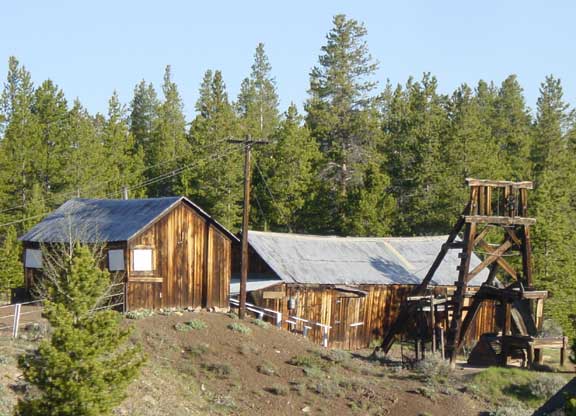
Matchless Mine - Wikipedia
and here:


- Messages
- 47,948
- Reaction score
- 7,944
- Points
- 288

Living in Alaska Off Grid – Ann Parker Answers 10 Questions
What is daily life really like in remote Alaska? From snowmachine supply runs to 40-below winters, Ann Parker shares the true story behind Follow Me to Alaska.
- Messages
- 47,948
- Reaction score
- 7,944
- Points
- 288
Building an off-grid cabin in the Pacific Northwest rainforest. Follow Bryan and Aspen the dog through real off-grid work—DIY well digging, hard construction, mistakes, fixes, and doing it the hard way.

 www.youtube.com
Wild Coast Outpost
Building an off-grid cabin in the Pacific Northwest rainforest. Follow Bryan and Aspen the dog through real off-grid work—DIY well digging, hard construction, mistakes, fixes, and doing it the hard way. 🔨 Off-Grid Cabin Build Series...
www.youtube.com
- Messages
- 47,948
- Reaction score
- 7,944
- Points
- 288
- Messages
- 47,948
- Reaction score
- 7,944
- Points
- 288
- Messages
- 47,948
- Reaction score
- 7,944
- Points
- 288

Frugal Off Grid | Structured Off-Grid Education for Beginners
Structured off-grid education for beginners. Learn how to choose counties, find off-grid land, avoid costly mistakes, and build shelter, water, food, power, and income.
 frugaloffgrid.com
- Messages
- 47,948
- Reaction score
- 7,944
- Points
- 288
How Living With Less Made Me Wealthy
Mar 22, 2026What does it really mean to be wealthy?
In this video, I share how simple living and life in my off-grid cabin have changed my understanding of wealth. From solar power and growing my own food to building with reclaimed materials and finding value in strong relationships, I’ve discovered a different kind of richness — one that has nothing to do with money.
This is a story about slow living, self-sufficiency, and finding freedom in living with less.
If you’re curious about tiny house living, off-grid life, or how to build a more meaningful and simple life, this video is for you.
16:12
My back would not handle the labor requirements. I certainly do not wants to swing a hammer or operate a sawzall anymore. My destiny is looking for a balance between having domestic servants and maintaining privacy. I might need one of those Phillipina maids that cooks and cleans, then leaves.
16:12
"Now I have free electricity flowing...."
He lost me there. He doesn't mention the short (three years or so) panel life; the work keeping the panels clean; the problems in many areas, with reflective heat/light from the sun, that can affect (kill) birds and habitats.
Nothing worth having is free. If he's saving money, great. I've heard a lot about the amount of work, maintenance and hassle are these "passive" power setups. Including some commercial buildings and operators, conned into installing those stupid panels, who later had to deal with roof fires.
Lifespan of solar panels...Solar panels typically last 25 to 30 years"Now I have free electricity flowing...."
He lost me there. He doesn't mention the short (three years or so) panel life; the work keeping the panels clean; the problems in many areas, with reflective heat/light from the sun, that can affect (kill) birds and habitats.
Nothing worth having is free. If he's saving money, great. I've heard a lot about the amount of work, maintenance and hassle are these "passive" power setups. Including some commercial buildings and operators, conned into installing those stupid panels, who later had to deal with roof fires.
Someone's been saying otherwise...not in discussions of the merits of solar power, but in context of silver industrial use and reclamation.Lifespan of solar panels...Solar panels typically last 25 to 30 years
The Truth will out...is being outed. Solar panels haven't exactly taken the world by storm, and there's no-doubt reasons why. Just as how the battery golf-carts haven't replaced Toyotas on our streets.
- Messages
- 47,948
- Reaction score
- 7,944
- Points
- 288
- Messages
- 47,948
- Reaction score
- 7,944
- Points
- 288
Our off-grid battery and inverter setup in Alaska
Apr 24, 2026 ✪ Members first on April 22, 2026 #growatt #inverter #lithiumbatteryJoin us as we tackle a new project, setting up an efficient power system. We are completely off grid at our remote Alaskan home. In this video we install two Growatt all in one inverters as well as our EG4 LL lithium batteries into our cabin.
This summer we will complete our solar system when we install our 370 watt bifacial panels closer to the cabin.
Welcome to our world. Sarah and I along with our dogs Zeus and Mishka live off grid and remote in Alaska 13 miles to the closest road and town. The only way to and from our off grid homestead is via the Alaska Railroads flagstop system. Our homestead consist of 4 acres. We have not been out here just over 4.5 years. These past few years have passed by very fast for us as we are always busy with projects around the property. In this video we explain some of the things we enjoy, love, want to change and what we hope to do in the future.
Sarah and I hope that you enjoy learning a little more about how we live on our remote Alaskan property.
Our off-grid battery and inverter setup in Alaska
- Messages
- 47,948
- Reaction score
- 7,944
- Points
- 288
How I Afford This Life With No 9-5
May 2, 2026How do I afford building a cabin and living a more self-sufficient life without a traditional 9–5 job?
In this video, I share how I finance my off-grid homestead while staying debt-free and building a more independent lifestyle. From multiple income streams to reducing expenses, reusing materials, and living more intentionally — this is my approach to creating financial freedom outside the conventional system.
If you're interested in homesteading, permaculture, and self-sufficiency, this video offers a practical and honest look at what it really takes.
20:51
- Messages
- 47,948
- Reaction score
- 7,944
- Points
- 288
How I Afford This Life With No 9-5
May 2, 2026
How do I afford building a cabin and living a more self-sufficient life without a traditional 9–5 job?
In this video, I share how I finance my off-grid homestead while staying debt-free and building a more independent lifestyle. From multiple income streams to reducing expenses, reusing materials, and living more intentionally — this is my approach to creating financial freedom outside the conventional system.
If you're interested in homesteading, permaculture, and self-sufficiency, this video offers a practical and honest look at what it really takes.
20:51
This was revealing to me...sixty years after my old man started doing what he did.
I now see how he was able to live something like a bottom-shelf champaign life, on a beer budget. He did much the same as this, for a weekend retreat/retirement home...built on cheap land, obtained from a speculator who had bought it from a bankrupt interurban trolley line. Land price, including waterfront access, was $6k, mid-1960s. He paid cash for it. He wasn't anti-debt, he had a mortgage and car notes, but this was his lark.
He then bought a pre-cut kit home, $2000. It was cheap, and showed it. We were 20 years re-engineering it; but we had waterfront property on a beautiful lake. Caveat: Much of the land was sloped at 30 degrees, and the rail line bed had what now would be called toxic-waste residue. We were burning rotted creosote ties for a decade...another thing that wouldn't be allowed now.
And he tried to go to work like this guy - his interest was the stonk market, but his timing on entry was catastrophic. So he never got away from his Salaryman life.
But now I see how he did it. And how us kids would up part-owners (share and share alike) of property that re-sold two years ago at $1 million.
In most cases, I'd have rather had the land. But this was in The Vampire State, Gnu Yuck. Ground Zero for Financialization. My grandfather who lived in the state, was a competition marksman with awards and range pistols. I'd go to prison a year for owning what he was proud to leave to his daughter, my mother.
Interestingly, while my old man understood, partially, the folly of borrowed money, he didn't totally escape it, and didn't teach it to us. It fell to others to show it to me, and much later in life.
- Messages
- 47,948
- Reaction score
- 7,944
- Points
- 288
- Messages
- 47,948
- Reaction score
- 7,944
- Points
- 288
How I Built This Life Without Burning Out
May 23, 2026 #SimpleLiving #SelfSufficiency #TinyHouseLiving simply sounds peaceful — but building a self-sufficient life can easily become overwhelming if you’re not careful. In this week’s video, I reflect on the mindset, motivation, and small daily habits that help me stay grounded while building my tiny house life, homestead, and kitchen garden in the woods.
This is a slower and more honest conversation about simple living, self-sufficiency, balance, and learning to take big projects one step at a time.
19:08

- Messages
- 6,485
- Reaction score
- 6,551
- Points
- 308
Someone's been saying otherwise...not in discussions of the merits of solar power, but in context of silver industrial use and reclamation.
The Truth will out...is being outed. Solar panels haven't exactly taken the world by storm, and there's no-doubt reasons why. Just as how the battery golf-carts haven't replaced Toyotas on our streets.
I was playing golf not long ago with a custom builder. Guy only builds mansions for rich people. We were on #16 and next to a house with a roof covered with new solar panels. He looked at it and said, "Just wait until they fail and he can't get rid of them." I asked if they were difficult to get rid of and he said, "No landfill will take them because they leach toxic shit."
Me? I don't want that many holes in my roof. And what happens when you need new shingles? Bag that.
There's a lot of stories of people who'd gotten into the "free solar installation" scam, and found substandard wiring and many fires as a result. And, as you say, once out of the contract - many years and lawyers later - there's no place to discard them.Me? I don't want that many holes in my roof. And what happens when you need new shingles? Bag that.
A Deep South region of Walmart stores had this sort of installation done...and had repeated fires, and finally had to disconnect the panels...decided not to remove them, because the cost was on Walmart, but there were lawsuits for breaking the "contract."