


Apparently, it's old news, but it was new to me...
More:
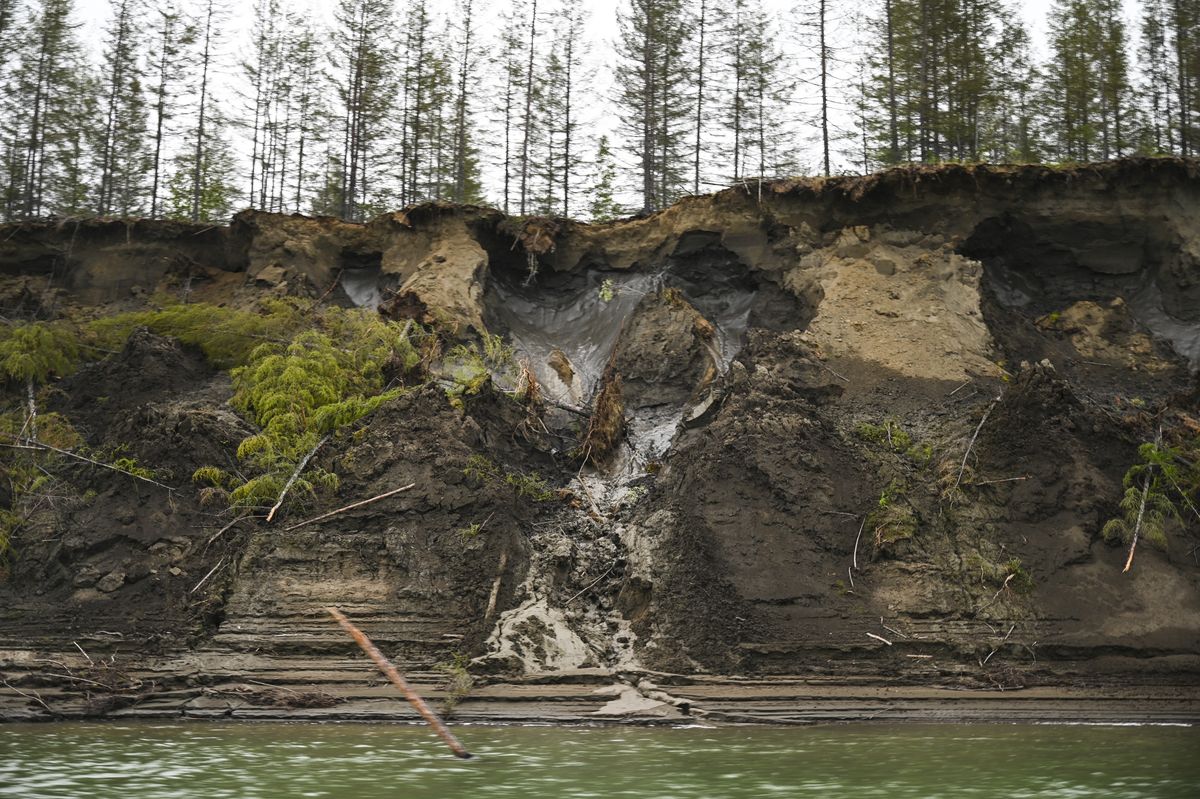
 www.smithsonianmag.com
From 46,000-year-old Siberian permafrost, a team of researchers has collected and revived prehistoric roundworms, according to a new study published Thursday in the journal PLOS Genetics.
The parasitic microorganisms seem to have remained alive by entering a state called cryptobiosis, in which they reduce their metabolism to extremely low levels to withstand extreme conditions. Essentially, the worms were frozen in time.
The researchers calculated the age of the roundworms, or nematodes, by radiocarbon dating plant material also found in the permafrost. They determined the organisms are members of a previously unknown species, which they’ve dubbed Panagrolaimus kolymaensis, after the Kolyma River near the site the worms were found.
“We can say that they are alive, because they move, they eat bacteria on the culture plates, and they reproduce,” Philipp Schiffer, a co-author of the study and evolutionary biologist at the University of Cologne in Germany, tells the Washington Post’s Carolyn Y. Johnson.
“To have a complex and multicellular organism that can shut down and go into this state of suspended animation—for all extents and purposes appear dead... that’s mind-boggling,” says Thomas Boothby, a molecular biologist at the University of Wyoming who didn’t contribute to the research, to the Wall Street Journal’s Dominique Mosbergen.
When organisms enter cryptobiosis, their metabolic, reproductive, developmental and repair processes grind to a halt, according to the University of Hawaii at Manoa. Past studies have found examples of organisms surviving for long periods of time in this state. For example, a Bacillus bacterial spore lived in amber for between 25 million and 40 million years, and a Lotus seed germinated after spending 1,000 to 1,500 years in an ancient lake, per the paper. Previously, the longest a nematode had been recorded to survive in cryptobiosis was just 39 years.
The discovery of the long-frozen nematodes was first outlined in a 2018 study that estimated the worms, found in a fossil arctic gopher burrow, were 42,000 years old, according to Scientific American’s Meghan Bartels. The new work pushes their age back an additional 4,000 years and claims they’re part of a previously unknown species, which typically lives for only one to two months, per the Washington Post.
...
More:
Scientists Revive 46,000-Year-Old Roundworms From Siberian Permafrost
The nematodes had survived in a state of slowed metabolism called cryptobiosis, according to a new paper

