
You are using an out of date browser. It may not display this or other websites correctly.
You should upgrade or use an alternative browser.
You should upgrade or use an alternative browser.
The economy, wealth inequality and survival
- Thread starter searcher
- Start date
Welcome to the Precious Metals Bug Forums
Welcome to the PMBug forums - a community supported watering hole for folks interested in gold, silver, precious metals, sound money, investing, market and economic news, central bank monetary policies, politics and more.
Register a free account to join the discussions. When you register an account and log in, you may enjoy additional benefits including access to market data/charts and additional members only rooms (including one for trade/barter with the community).

- Messages
- 47,530
- Reaction score
- 7,891
- Points
- 288
World Socialist Website opinion piece. Take it fwiw and dyodd.

The social crisis fueling the collapse of democracy in America
It is the bankruptcy of American capitalism and the fear of social revolution, not merely Trump’s authoritarian personality, that are the source of the frontal assault on democratic rights.
www.wsws.org
- Messages
- 47,530
- Reaction score
- 7,891
- Points
- 288
Raising taxes on the ultrarich
SummaryThe public has supported raising taxes on the ultrarich and corporations for years, but policymakers have not responded. Small increases in taxes on the rich that were instituted during times of Democratic control of Congress and the White House have been consistently swamped by larger tax cuts passed during times of Republican control. This was most recently reflected in the massive budget reconciliation bill pushed through Congress exclusively by Republicans and signed by President Trump. This bill extended the large tax cuts first passed by Trump in 2017 alongside huge new cuts in public spending. This one-step-forward, two-steps-back dynamic has led to large shortfalls of federal revenue relative to both existing and needed public spending.
Raising taxes on the ultrarich and corporations is necessary for both economic and political reasons. Economically, preserving and expanding needed social insurance and public investments will require more revenue. Politically, targeting the ultrarich and corporations as sources of the first tranche of this needed new revenue can restore faith in the broader public that policymakers can force the rich and powerful to make a fair contribution. Once the public has more faith in the overall fairness of the tax system, future debates about taxes can happen on much more constructive ground.
Policymakers should adopt the following measures:
Read the entire article here:
- Messages
- 47,530
- Reaction score
- 7,891
- Points
- 288
In this vid Gary talks about England (his home.) Nothing to see, can listen in one tab, play around the forum in a different tab. It's a good one, imo.
Gary's back for one episode only. Here's what the UK Budget next week means for you, the economy and democracy.
37:50
Chapters
00:00 Intro
1:04 Raising taxes
04:30 UK government debt situation
09:12 Transfer of wealth to rich
13:22 Why aren’t they taxing the rich?
18:40 The elites don’t care
26:00 The death of democracy
28:32 What do you do?
31:15 Hope
33:08 Know your history
36:41 Help me get to #1
UK Budget – The End of Democracy?
Nov 23, 2025Gary's back for one episode only. Here's what the UK Budget next week means for you, the economy and democracy.
37:50
Chapters
00:00 Intro
1:04 Raising taxes
04:30 UK government debt situation
09:12 Transfer of wealth to rich
13:22 Why aren’t they taxing the rich?
18:40 The elites don’t care
26:00 The death of democracy
28:32 What do you do?
31:15 Hope
33:08 Know your history
36:41 Help me get to #1
- Messages
- 47,530
- Reaction score
- 7,891
- Points
- 288
What Gary Sees (that others don't): Barry's Economics
Nov 30, 2025 #Inequality #SocialJustice #BarrysEconomicsThe difference that sets Gary Stevenson apart isn't solely his trading success, his hard economics, or even his communication skills. It’s the perspective he brings — a perspective almost completely missing from the UK’s media and political class.
In this video, I break down:
• why Gary’s background lets him see the 50th percentile clearly
• why wealthy commentators struggle to understand inequality
• how class-based blindspots shape economic debates
• the biases that make millionaires think the system is “basically fine”
• why inequality sounds like “anger” to people who don’t experience it
• how motivated reasoning and status-quo bias distort policy conversations
• why Gary’s framing of tax, wealth and inheritance cuts through the noise
This isn’t about left or right. It’s about who feels the crisis, who doesn’t, and whose perspective shapes the story. Gary Stevenson doesn’t just debate inequality. He translates it — from lived reality into plain language.
20:28
SCIENTIFIC + PSYCHOLOGICAL INFO:
1. Status Quo Bias (Samuelson & Zeckhauser, 1988)People tend to prefer existing systems and default options, even when alternatives may clearly be better. This can help explain why individuals in comfortable circumstances may feel less urgency for systemic change.
2. Motivated Reasoning (Kunda, 1990)People unconsciously use selective reasoning to reach conclusions they prefer, protecting their prior beliefs and interests.
3. Contact Theory & Empathy Gaps (Allport, 1954; Pettigrew & Tropp, 2006)Direct contact with a social group improves accuracy of judgments about that group. Lack of contact can widen empathy gaps and distort perceptions.
4. Socioeconomic Perception Biases (Norton & Ariely, 2011; Kraus et al., 2017)Higher-SES individuals often underestimate inequality, overestimate social mobility, and perceive the system as more fair or meritocratic than it is.
5. SES & Perspective-Taking (Kraus, Piff & Keltner 2011; Stellar et al., 2012; supported by Weiss & Faber, 2022)Higher socioeconomic status is linked to reduced accuracy when imagining or understanding the experiences of lower-income individuals.
6. Scarcity & Cognitive Load (Mullainathan & Shafir, 2013)Financial scarcity increases cognitive load and reduces mental bandwidth, making economic pressures more psychologically immediate and tangible.
- Messages
- 47,530
- Reaction score
- 7,891
- Points
- 288
The Psychology Used to Silence You - Barry's Economics
Dec 7, 2025 #BarrysEconomics #GarysEconomics #InequalityWhy you're not wrong:
In this video, I break down the psychological and social mechanisms used (often unconsciously) to silence people when they talk about a Wealth Tax or Capital Taxation.
11:13
Key social-psychology theories & studies referenced:
- EMOTIONAL DISMISSAL / INVALIDATIONKatz & Gottman (1999) – Emotion dismissing vs emotion coaching. Defines emotional dismissal as minimizing or reframing emotional reactions as irrational.https://psycnet.apa.org/record/1999-0...
- TESTIMONIAL INJUSTICE (DISMISSING CREDIBILITY DUE TO EMOTION / IDENTITY)Miranda Fricker (2007) – Epistemic Injustice: Power & the Ethics of Knowing. Foundational work on how people’s testimony is dismissed as “irrational” due to prejudice.https://global.oup.com/academic/produ...
- Pohlhaus (2012) – Relational knowing and epistemic injustice. Shows how dominant groups misread anger from marginalized groups as “bias” or “irrationality.”https://www.jstor.org/stable/41349563
- Medina (2012) – Hermeneutical injustice and social marginalization. Explores how emotions linked to injustice get reframed as personal flaws.https://philpapers.org/rec/MEDHI
- EMOTION STEREOTYPING & STATUS-BASED CREDIBILITY BIASTiedens (2001) – Anger and advancement. High-status people’s anger = “powerful”; low-status people’s anger = “irrational / emotional.”https://psycnet.apa.org/record/2001-0...
- Ridgeway (2014) – Why status matters. Explains how emotion and credibility are evaluated differently based on social rank.https://journals.sagepub.com/doi/10.1...
SYSTEM JUSTIFICATION THEORY (DEFENDING THE STATUS QUO):
- Jost et al. (2018) – A Quarter-Century of System Justification Theory. Overview of why people defend systems even when they’re unfair.https://as.nyu.edu/content/dam/nyu-as...
- Caricati (2020) – System justification among the disadvantaged. Shows how even those harmed by the system may internalize system-defending beliefs.https://www.frontiersin.org/articles/...
- Messages
- 47,530
- Reaction score
- 7,891
- Points
- 288
'People are so disgusted' - Economist Thomas Piketty on why we need a wealth tax
Dec 10, 2025Economist Thomas Piketty says people are getting 'disgusted' with wealth inequality and governments need to overcome their fears to adopt a wealth tax.
Piketty spoke to Channel 4 News Economics Correspondent Helia Ebrahimi ahead of the release of the World Inequality Report, which he helped coordinate.
10:21
- Messages
- 47,530
- Reaction score
- 7,891
- Points
- 288
EXPOSING America's BROKEN Tax Code for the Rich - Ray Madoff
Ray D. Madoff is a professor at Boston College Law School and the cofounder and director of the Boston College Forum on Philanthropy and the Public Good. She is the author of Immortality and the Law: The Rising Power of the American Dead and lead author of The Practical Guide to Estate Planning. Her writing has appeared in The New York Times, The Wall Street Journal, The Washington Post, and The New York Review of Books, among other outlets.
0:00 Ray Madoff Introduction
2:28 Why has the tax code for the ultra-rich not changed?
4:37 What would Thomas Jefferson say about the tax code today?
6:19 What is dead hand control and has kept people rich?
7:35 How the richest Americans don't pay taxes?
11:53 Express VPN
14:48 Elon Musk and paying taxes
15:55 The way policies shifted after Citizens United
19:04 What would the founding fathers recommend we do to address the situation?
21:02 What elements of the tax code alarmed Professor Madoff the most?
24:16 Do Americans begrudge wealth?
26:30 Reforming the tax system
29:02 What can average citizens do to make the system fairer?
31:38 Five Words
Ray D. Madoff is a professor at Boston College Law School and the cofounder and director of the Boston College Forum on Philanthropy and the Public Good. She is the author of Immortality and the Law: The Rising Power of the American Dead and lead author of The Practical Guide to Estate Planning. Her writing has appeared in The New York Times, The Wall Street Journal, The Washington Post, and The New York Review of Books, among other outlets.
0:00 Ray Madoff Introduction
2:28 Why has the tax code for the ultra-rich not changed?
4:37 What would Thomas Jefferson say about the tax code today?
6:19 What is dead hand control and has kept people rich?
7:35 How the richest Americans don't pay taxes?
11:53 Express VPN
14:48 Elon Musk and paying taxes
15:55 The way policies shifted after Citizens United
19:04 What would the founding fathers recommend we do to address the situation?
21:02 What elements of the tax code alarmed Professor Madoff the most?
24:16 Do Americans begrudge wealth?
26:30 Reforming the tax system
29:02 What can average citizens do to make the system fairer?
31:38 Five Words
Any relation to Bernie?
- Messages
- 47,530
- Reaction score
- 7,891
- Points
- 288
What Slow Horses Gets Right About Power - Barry's Economics
Dec 14, 2025 #BarrysEconomics #GarysEconomics #InequalityWhy Slow Horses Is About You (Not Spies) Because Slow Horses Isn’t Fiction — It’s How Power Really Works
Slow Horses isn’t just a spy show — it’s one of the most accurate portraits of modern power, bias and inequality on TV.
Here’s what the rejects of Slough House can teach us about who actually sees the truth… and why the “polished elite” so often get it wrong.
In this video, I break down the psychology behind the show using real studies on why we reward confidence over competence. Slow Horses might be fiction — but the science behind it is very real.
Slow Horses is one of the smartest shows on TV — not because of the spy plot, but because of what it exposes about power, class, status, and who we choose to trust.
We’re conditioned our whole lives to believe that only certain types of people — accents, schools, clothes, confidence — get to understand how the country works .But Slow Horses flips that completely.
This isn’t just storytelling… it’s psychology.
8:48
Here are the sources and studies I mention in the video:
1. Status Bias Kraus, M.W., & Keltner, D. (2009). Signs of Socioeconomic Status: A Thin-Slicing Approach. Journal of Psychological Science.https://doi.org/10.1111/j.1467-9280.2... People automatically rate high-status individuals (clothes, accents, posture) as more competent — even when performance is identical.
2. Halo Effect Thorndike, E.L. (1920).A Constant Error in Psychological Ratings. Journal of Applied Psychology. https://doi.org/10.1037/h0071665→ When someone looks “polished” or succeeds in one area, we project other positives onto them: intelligence, leadership, trustworthiness. Modern example: Believing someone who runs a tech company can also run governments, solve wars, or parent well — purely through spillover prestige.
3. Authority Bias Milgram, S. (1963).Behavioral Study of Obedience. Journal of Abnormal and Social Psychology. https://doi.org/10.1037/h0040525→ Humans obey people who look authoritative — lab coats, titles, offices — even when they’re obviously wrong or harmful. Regent’s Park (in the show) is basically the lab coat: shiny, impressive, and catastrophically incompetent.
4. Accent Bias Lev-Ari, S. & Keysar, B. (2010).Why Don’t We Believe Non-native Speakers? The Influence of Accent on Credibility. Journal of Personality and Social Psychology. https://doi.org/10.1037/a0019869→ People trust information less when delivered in a non-prestige or unfamiliar accent — even when the content is identical.
This is why a Jackson Lamb type gets ignored. Not because he’s wrong — but because he doesn’t sound like the kind of person who’s “supposed” to know.
- Messages
- 47,530
- Reaction score
- 7,891
- Points
- 288
The Real Effect of Inequality - Barry's Economics
Dec 21, 2025 #BarrysEconomics #GarysEconomics #InequalityWhen people talk about poverty, they usually talk about money. Low wages. High rent. No savings. No safety net. But that’s only half the story.
The most corrosive part of inequality isn’t just material hardship — it’s humiliation. It’s the quiet, daily experience of being ignored, talked over, looked down on, or treated as if your life matters less.
This video looks at what inequality does psychologically, not just financially — and why societies with bigger gaps don’t just get poorer… they get sicker, angrier, and less trusting.
This isn’t about being “nice” to poor people. It’s about how systems actually function — and what happens when dignity is stripped from millions of people.
9:38
Read what the research shows along with links below the vid on youtube.
- Messages
- 47,530
- Reaction score
- 7,891
- Points
- 288
US labor unions gear up to fight against Trump’s 'Billionaire First' agenda
Donald Trump has staged a year of “unrelenting attacks on working people,” according to the head of the largest federation of the labor unions in the US. Now they’re preparing to fight back.Liz Shuler, president of the AFL-CIO, said it was gearing up to challenge the US president’s “Billionaire First” agenda in 2026 – and drive candidates in key elections to stand up for “struggling” Americans.
More:
https://www.msn.com/en-us/money/mar...ire-first-agenda/ar-AA1T1aPb?ocid=socialshare
- Messages
- 47,530
- Reaction score
- 7,891
- Points
- 288

Why Working-Class Americans Vote for Billionaires: Shame, Status, and the Arsonist Vote
Dec 23, 2025 #politics #trump #workingclassMillions of struggling, working-class Americans keep voting for a billionaire who lives in a gold tower. On paper, it makes no sense. In real life, it’s the logical outcome of shame, status anxiety, and a political system that abandoned them.
This video breaks down:
• Why “they’re just dumb and hateful” is a comforting lie
• How shame and system justification keep people defending a rigged game
• Why Trump is seen as an avatar of the...
- Messages
- 47,530
- Reaction score
- 7,891
- Points
- 288
Nothing to see, can listen in one tab, play around the forum in a different tab.
Understanding the past can help you shape the future. In the Victorian era technological innovation created massive new wealth, but it was concentrated in the hands of the few. Can we change things NOW to avoid the same desperate poverty most Victorians lived and died in?
30:58
00:00 Intro
01:50 Ghosts of Christmas Past
06:00 Technology may not fix our problems
09:20 History shows us change is possible
13:10 Christmas Present: where are we now?
20:45 Desperation for change
22:09 The future
Are we living through a new Victorian era?
Dec 28, 2025Understanding the past can help you shape the future. In the Victorian era technological innovation created massive new wealth, but it was concentrated in the hands of the few. Can we change things NOW to avoid the same desperate poverty most Victorians lived and died in?
30:58
00:00 Intro
01:50 Ghosts of Christmas Past
06:00 Technology may not fix our problems
09:20 History shows us change is possible
13:10 Christmas Present: where are we now?
20:45 Desperation for change
22:09 The future
- Messages
- 47,530
- Reaction score
- 7,891
- Points
- 288

What Happens When the Economy Fails Depends on Who You Are
For working families, recessions mean job loss and debt; for billionaires, they mean discounted assets and record wealth gains…
 hartmannreport.com
- Messages
- 47,530
- Reaction score
- 7,891
- Points
- 288
Kathleen Vohs - Wikipedia
How Money Turns Good People Bad - Barry's Economics
Jan 25, 2026 #BarrysEconomics #GarysEconomics #InequalityThere's a story running in the background of your mind right now. You didn't start it. You didn't agree to it. And it's ruining your life.That story has a headquarters: Wall Street. A place where the myth that "greed is good" isn't just believed, it's acted out, every single day.
Read more below the vid on youtube.
How Money Turns Good People Bad - Barry's Economics
10:16
- Messages
- 47,530
- Reaction score
- 7,891
- Points
- 288
Nothing to see. Can listen in on tab, play around the forum in a different tab.
A massive energy crisis is coming from Iran and the Gulf. What can the government do to protect us? Can you do anything to protect yourself? Gary unpacks the economic consequences of the war
45:06
CHAPTERS
00:00 Intro
00:59 The basics
01:56 Interest rates
03:42 Government borrowing
04:59 What it means for you
06:01 How to you protect yourself
13:05 What can the government do?
17:25 Drilling in the North Sea
19:24 How to trade in this crisis
22:47 Increase your resources
27:40 Crises in the UK
30:05 War and inequality
34:45 How wealth is being taken from you
38:05 War, information and manipulation
40:35 We CAN change things
The Iran economic shock is coming. How to protect yourself
Apr 5, 2026A massive energy crisis is coming from Iran and the Gulf. What can the government do to protect us? Can you do anything to protect yourself? Gary unpacks the economic consequences of the war
45:06
CHAPTERS
00:00 Intro
00:59 The basics
01:56 Interest rates
03:42 Government borrowing
04:59 What it means for you
06:01 How to you protect yourself
13:05 What can the government do?
17:25 Drilling in the North Sea
19:24 How to trade in this crisis
22:47 Increase your resources
27:40 Crises in the UK
30:05 War and inequality
34:45 How wealth is being taken from you
38:05 War, information and manipulation
40:35 We CAN change things
- Messages
- 47,530
- Reaction score
- 7,891
- Points
- 288
Less than half of Philly-area full-time workers make a living wage, report says
A living wage is becoming less attainable for Philadelphia-area residents, even those who work full-time.In 2025, 44.3% of full-time workers made a living wage in the 11-county region, which includes Wilmington and Camden, according to a new report from Dayforce, a company that provides payroll and workforce management software.
That’s a decline from 2021, when 54.7% full-time workers in the region made a living wage, according to Dayforce.
The average living wage in the Philadelphia region is $32.88 per hour for a family with two adults and two children, based on data from the Living Wage Institute. Dayforce’s report used the institute’s living wage for each area county, compared with its own anonymized payroll data and information from the U.S. Bureau of Labor Statistics.
More:
https://www.msn.com/en-us/money/mar...wage-report-says/ar-AA220qOU?ocid=socialshare
- Messages
- 47,530
- Reaction score
- 7,891
- Points
- 288
Nothing to see, can listen in one tab, play around the forum in a different tab. This also goes for quite a few vids posted on the forum.
Gary's Economics
Global stock markets are at all time highs. Gold has doubled and silver tripled in the last two years alone. What's behind these moves? Shouldn't economic crises like Iran be pushing asset prices down? Is now a good time to invest?
28:52
00:00 Intro
01:34 Global asset prices
03:45 How 2008 crisis pushed prices up
09:00 Do interest rates...
Gary's Economics
Why do asset prices keep going up?
May 10, 2026Global stock markets are at all time highs. Gold has doubled and silver tripled in the last two years alone. What's behind these moves? Shouldn't economic crises like Iran be pushing asset prices down? Is now a good time to invest?
28:52
00:00 Intro
01:34 Global asset prices
03:45 How 2008 crisis pushed prices up
09:00 Do interest rates...
- Messages
- 47,530
- Reaction score
- 7,891
- Points
- 288
Today's Gary Economics is pretty long (41:03) but there's nothing to see so you can listen in one tab, play around the forum in a separate tab. May want to listen in segments.
May 17, 2026
Parties like Reform have a clear message on why living standards are collapsing. And this is why they're growing. If you want to stop them you have to reverse falling living standards.
Why are the far right doing so well? And can it be stopped?
May 17, 2026
Parties like Reform have a clear message on why living standards are collapsing. And this is why they're growing. If you want to stop them you have to reverse falling living standards.
Why are the far right doing so well? And can it be stopped?
- Messages
- 47,530
- Reaction score
- 7,891
- Points
- 288
Barry's Economics
The Wealth Tax Debate Rages On
Back and Forth
Up and Down
But what does it miss? And Why Is It Always so Circular and Never Ending?
11:58
00:30 : Inequality problem / decades of misdiagnosis
01:00 : Capital pooling into assets / Piketty
01:20 : IMF and OECD
03:45 : Henley and Partners Statistics
05:15 : "What type of wealth tax?"
06:30 : Running for the ball / zigzag
07:00 : Income Tax Facts
07:40 : The Economics Of Traitors
09:15 : Car driving off a cliff
09:45 : The perfect wealth tax
Perfect Wealth Tax | What Isn't Said
May 17, 2026 #BarrysEconomics #GarysEconomics #InequalityThe Wealth Tax Debate Rages On
Back and Forth
Up and Down
But what does it miss? And Why Is It Always so Circular and Never Ending?
11:58
00:30 : Inequality problem / decades of misdiagnosis
01:00 : Capital pooling into assets / Piketty
01:20 : IMF and OECD
03:45 : Henley and Partners Statistics
05:15 : "What type of wealth tax?"
06:30 : Running for the ball / zigzag
07:00 : Income Tax Facts
07:40 : The Economics Of Traitors
09:15 : Car driving off a cliff
09:45 : The perfect wealth tax
- Messages
- 47,530
- Reaction score
- 7,891
- Points
- 288
Nothing to see, can listen in one tab, play around the forum in a different tab.
Gary's Economics
May 31, 2026
The world's fourth richest wants your taxes cut to 0. Why did he say this last week – and should we believe him?
Why Jeff Bezos wants to cut your taxes
Gary's Economics
May 31, 2026
The world's fourth richest wants your taxes cut to 0. Why did he say this last week – and should we believe him?
Why Jeff Bezos wants to cut your taxes

Let's see...the productive craftsman-class, formerly the Middle Class, is taxed into penury - both from direct and consumption taxes, and from the hidden taxes of currency debasement and of the money-changer class receiving the seigniorage of newly-created fiat. This new wealth, competing to buy real property as investments, coupled to banks subsidized to make low-cost or zero-interest LOANS for speculative real-estate purchases, have priced the craftsman-class out of home ownership.'People are so disgusted' - Economist Thomas Piketty on why we need a wealth tax
Dec 10, 2025
Economist Thomas Piketty says people are getting 'disgusted' with wealth inequality and governments need to overcome their fears to adopt a wealth tax.
Piketty spoke to Channel 4 News Economics Correspondent Helia Ebrahimi ahead of the release of the World Inequality Report, which he helped coordinate.
10:21
Various government regulations, pressures, unwise wars, prohibitions on fuel-refining, have made the cost of energy explode. This translates into every staple, every essential good a person must own or buy. THIS cuts down on, sometimes eliminates, discretionary spending or monies.
So, the answer to this is to INCREASE the government take? To LEGITIMIZE the government taxing wealth that WAS already taxed, at earning, to tax it again and again, until there's nothing left? FOR MORE CRACKHEAD PROJECTS LIKE USAID, LIKE QUEERING THE THIRD WORLD?
So we should use envy, the hatred the have-nots have for the successful, to legitimize the IDEA that all wealth is government's, and not the property of those who have earned it? That one may only have what government PERMITS?
So, then, ALL wealth, ALL SUCCESS, is to be political? To be permitted by government, using government's metrics as to who can own what, and how much?
DOES this sound like a better way? DOES IT?
- Messages
- 47,530
- Reaction score
- 7,891
- Points
- 288
Last Meal w/ Tom Nash & Gary Stevenson
Not much to see at all. If interested, best to listen in one tab, play around the forum in a different tab. 1:06:26
Recently I sat down with Gary Stevenson: former trader, author of The Trading Game, and the man behind Gary's Economics — to ask the question that drives everything he does: how much is enough?
Gary grew up poor in East London, got expelled from school at 16, and went on to become one of the most profitable traders in Citibank's history — making $12 million for the bank at 22 years old, before he even knew what he was doing.
But the money didn't make him happy. It made him obsessive. Then isolated. Then depressed.
But the money didn't make him happy. It made him obsessive. Then isolated. Then depressed.In this episode of Last Meal, Gary opens up about the psychology of extreme wealth, the cost of ambition, and why he walked away from one of the most lucrative careers in finance to warn the world about growing economic inequality. We talk about his childhood in East London, what it felt like to earn bonuses one hundred times that of his friends, and tell no one — including his parents — of his newfound wealth. The year he spent cycling alone through Tokyo at night, set as a backdrop to his choice of Last Meal, and just happened to be my favourite in all of Japan too .
.
We also go deep on the nature of obsession, whether ambition is a virtue or a madness, what Japan taught him about community and loneliness, and how he thinks about meaning now that his YouTube channel has become one of the biggest political platforms in Europe.
The True Cost of Financial Success | Gary Stevenson
Not much to see at all. If interested, best to listen in one tab, play around the forum in a different tab. 1:06:26
The True Cost of Financial Success | Gary Stevenson
Jun 15, 2026 LAST MEAL with Tom NashRecently I sat down with Gary Stevenson: former trader, author of The Trading Game, and the man behind Gary's Economics — to ask the question that drives everything he does: how much is enough?
Gary grew up poor in East London, got expelled from school at 16, and went on to become one of the most profitable traders in Citibank's history — making $12 million for the bank at 22 years old, before he even knew what he was doing.
But the money didn't make him happy. It made him obsessive. Then isolated. Then depressed.
But the money didn't make him happy. It made him obsessive. Then isolated. Then depressed.In this episode of Last Meal, Gary opens up about the psychology of extreme wealth, the cost of ambition, and why he walked away from one of the most lucrative careers in finance to warn the world about growing economic inequality. We talk about his childhood in East London, what it felt like to earn bonuses one hundred times that of his friends, and tell no one — including his parents — of his newfound wealth. The year he spent cycling alone through Tokyo at night, set as a backdrop to his choice of Last Meal, and just happened to be my favourite in all of Japan too
.We also go deep on the nature of obsession, whether ambition is a virtue or a madness, what Japan taught him about community and loneliness, and how he thinks about meaning now that his YouTube channel has become one of the biggest political platforms in Europe.
The True Cost of Financial Success | Gary Stevenson
- Messages
- 47,530
- Reaction score
- 7,891
- Points
- 288
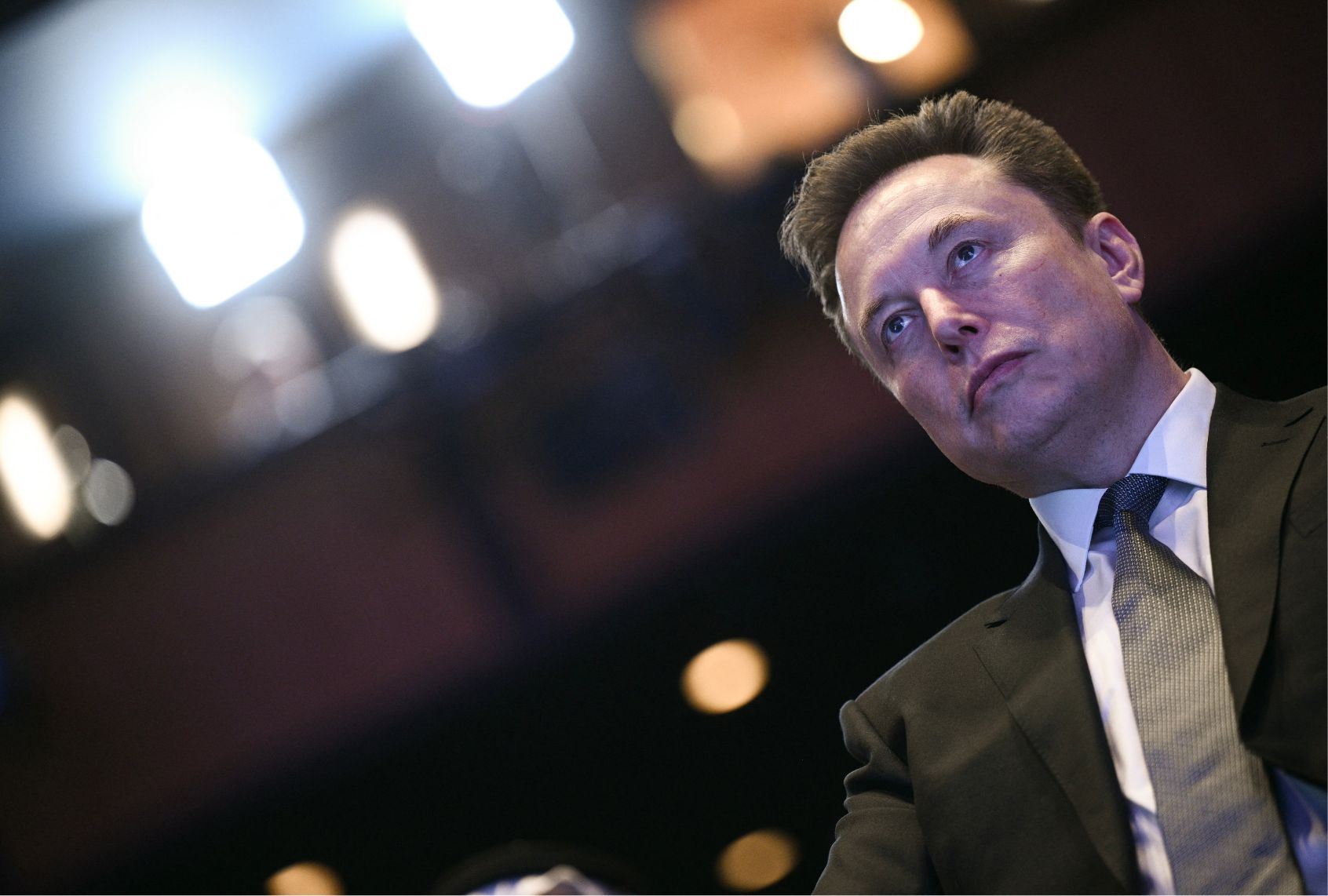
Elon Musk and the trillionaire class test democracy's limits
The one-person, one-vote principle never accounted for billionaires, let alone trillionaires.
 www.salon.com
Simple way to deal with this, is to get the Seigniorage Class off the government teat.Elon Musk and the trillionaire class test democracy's limits
The one-person, one-vote principle never accounted for billionaires, let alone trillionaires.
Musk made his money the new-fashioned way: Government contracts and subsidies.
SOUND MONEY and CONSTITUTIONALLY-LIMITED GOVERNMENT, puts this new Elite class in a sink-or-swim situation. Most will sink.

- Messages
- 22,605
- Reaction score
- 12,711
- Points
- 288
Elon Musk just proved that ownership in America is a legal fiction.
Musk: “You get taxed on what you earn, you get taxed on what you buy, and you get taxed on what you own.”
Think about what property tax actually means.
You worked for decades. Paid it off in full. The deed is in your name.
Stop paying the government its annual fee. Watch them take it and sell it to someone who will.
You never owned that house. You were leasing it from an entity you never signed a contract with.
Income tax tells the same truth in softer packaging.
The government does not take a portion of your earnings. They decide how much of your own labor you are permitted to keep.
That is not semantics. It is a confession of who the system believes your time belongs to first.
Sales tax buries itself in the receipt. Two people exchange value voluntarily. A third party who contributed nothing takes a cut simply for allowing it to happen.
Now stack all three.
Taxed when you create. Taxed when you spend. Taxed when you hold. Taxed again when you die and try to pass it to your children.
At no point in that cycle does the system recognize your output as yours.
Because money is not an abstraction. It is crystallized human lifespan.
Every dollar taxed is an hour you already lived, already bled for, already gone.
The state is not managing an economy. It is claiming dominion over time you will never get back.
And spending it on systems you never asked for and actively oppose.
The institution extracting all of it faces zero obligation to perform. A contractor who delivers nothing gets fired. A bureaucracy that burns through trillions gets a budget increase the next fiscal year.
SpaceX pays taxes to the agencies that obstruct its launches. Tesla funds the regulators drafting rules to shield its competitors.
The builders are not subsidizing government. They are financing their own friction.
The tax code is 74,000 pages long. Not because the economy demands it. Because the extraction had to be buried in enough complexity that you would stop asking who it was designed to protect.
The past belonged to the people who taxed the world.
The future belongs to the people who build it.
MONEY is a legal fiction.
That's why he has a metric excrement-ton of it.
Most of it came from government. Contracts - for things government shouldn't be doing - and rebates for the Elites to buy his gee-whiz wheeled battery devices.
I am disgusted with this clown. His DOGE farce, and how he USED his proposal of DOGE to worm his way into Trump's Inner Circle...just proves beyond all doubt, he's a fraud.
That's why he has a metric excrement-ton of it.
Most of it came from government. Contracts - for things government shouldn't be doing - and rebates for the Elites to buy his gee-whiz wheeled battery devices.
I am disgusted with this clown. His DOGE farce, and how he USED his proposal of DOGE to worm his way into Trump's Inner Circle...just proves beyond all doubt, he's a fraud.
- Messages
- 22,605
- Reaction score
- 12,711
- Points
- 288
Marc Andreessen went on Chris Williamson's podcast and broke down exactly how Elon Musk runs multiple companies at once
No other CEO on Earth does this:
1. Every week, Musk shows up at each of his companies, identifies the single biggest problem that company is having that week, and fixes it. Then he does that for 52 weeks in a row. At the end of the year, each company has solved its 52 biggest problems. Meanwhile, most large companies are still having the planning meeting for the pre-planning meeting for the board presentation with the compliance review and the legal review attached.
2. This is not a new operating method. It is actually how the great industrialists of the late 1800s and early 1900s ran their companies. Henry Ford, Andrew Carnegie, Thomas Watson, who built IBM. Total devotion from the leader to fully and deeply understand what the company does, be in the trenches, talk directly to the people doing the work, and be the lead problem solver in the organization. Andreessen says he is not aware of another current CEO who operates this way.
3. The framework Musk uses is the bottleneck. In any manufacturing chain, there is always one thing holding everything up. Sometimes it is raw materials at the start. Sometimes it is warehousing at the end. Sometimes it is in the middle. The job is to find it and remove it. Musk has universalized this concept across every company he runs. In any given week, there is one main bottleneck. He micromanages the solution to that one thing and delegates almost everything else.
4. Musk delegates almost everything. Andreessen is clear about this. He is not involved in most of what his companies are doing. He is involved in the one thing that is the biggest problem right now. Once that is fixed, he moves to the next biggest problem. Everything else by definition, is running better than the bottleneck, so it does not need him.
5. When Musk identifies the bottleneck, he goes directly to the engineer who actually understands it. not the VP of engineering, not the director, not the manager. The individual contributor who has the actual technical knowledge. He sits in the room with that person and fixes the problem alongside them. He does not ask for a report to be reviewed in three weeks. he shows up at the keyboard or on the manufacturing line and works through it overnight if necessary.
6. This is why technical people who work for Musk say it was the best experience of their lives. Andreessen's framing: if you are stuck on a problem you cannot solve, Elon Musk is going to show up in his Gulfstream, sit with you in front of the keyboard, and help you figure it out. For an engineer who genuinely cares about the work, that is an almost incomprehensible level of support from the CEO of the company.
7. Business school teaches the opposite of this: management as a generic skill applicable to any industry. Soup company or a rocket company, the management principles are the same. process, balance sheet, meeting schedules, compliance, executive motivation, interpersonal conflict resolution. Andreessen says those skills are useful in many contexts. They just give you nothing; you need to do what Musk does. And Musk pushes as far as he can away from all of that so he can spend all of his time doing the things only he can do.
- Messages
- 47,530
- Reaction score
- 7,891
- Points
- 288
Barry's Economics
Jun 28, 2026 #DowntonAbbey #ClassSystem #perioddrama
Why does the working class love Downton Abbey,a period drama that adores the very British aristocracy that kept their great-grandparents in poverty?
This is the psychology of how a show about the British class system became comfort viewing for the people it should enrage.
I love Downton Abbey too.
That's the problem.
In this video I use John Jost's System Justification Theory and Robert Sapolsky's research on the neurobiology of inequality to explain why people at the bottom of a hierarchy so often defend it, and why a beautiful house full of deferential servants works less like escapism and more like an anesthetic.
We get into why "poor but happy" stories make inequality feel fair, how years of low status physically rewire the brain and leave you more risk-averse and more attached to whatever stability exists, and the one hopeful catch: the moment you can name what a story is doing to you, it starts to lose its power. You don't have to stop watching Downton. Just watch it the way a doctor watches a cigarette advert.
The Surprising Reason We All Love Downton Abbey
Jun 28, 2026 #DowntonAbbey #ClassSystem #perioddrama
Why does the working class love Downton Abbey,a period drama that adores the very British aristocracy that kept their great-grandparents in poverty?
This is the psychology of how a show about the British class system became comfort viewing for the people it should enrage.
I love Downton Abbey too.
That's the problem.
In this video I use John Jost's System Justification Theory and Robert Sapolsky's research on the neurobiology of inequality to explain why people at the bottom of a hierarchy so often defend it, and why a beautiful house full of deferential servants works less like escapism and more like an anesthetic.
We get into why "poor but happy" stories make inequality feel fair, how years of low status physically rewire the brain and leave you more risk-averse and more attached to whatever stability exists, and the one hopeful catch: the moment you can name what a story is doing to you, it starts to lose its power. You don't have to stop watching Downton. Just watch it the way a doctor watches a cigarette advert.
The Surprising Reason We All Love Downton Abbey
- Messages
- 47,530
- Reaction score
- 7,891
- Points
- 288
Gary's Economics
Gary takes a lighthearted look at a upcoming documentary in which he talks with a lot of peeps on their thoughts on a wealth tax. Nothing much to see, can listen in one tab, play around the forum in a different tab.
My Documentary is Coming Out THIS WEEK!! – why you should watch it
Jul 5, 2026
Weds 8 July 9pm: when my new documentary will air on Channel 4 in the UK.
We'll also share on this Youtube channel from Sunday 12 July. x
My Documentary is Coming Out THIS WEEK!! – why you should watch it
Gary takes a lighthearted look at a upcoming documentary in which he talks with a lot of peeps on their thoughts on a wealth tax. Nothing much to see, can listen in one tab, play around the forum in a different tab.
My Documentary is Coming Out THIS WEEK!! – why you should watch it
Jul 5, 2026
Weds 8 July 9pm: when my new documentary will air on Channel 4 in the UK.
We'll also share on this Youtube channel from Sunday 12 July. x
My Documentary is Coming Out THIS WEEK!! – why you should watch it
- Messages
- 47,530
- Reaction score
- 7,891
- Points
- 288
Barry's Economics
In this one Barry talks about Gary Stevenson and his new documentary coming out this Wednesday. See the post above. While I'm watching it your best bet may be to listen in one tab and play around the forum in a different tab.
The Economics Of Getting Filthy Rich
Jul 5, 2026 #BarrysEconomics #GarysEconomics #Inequality
Gary Stevenson quit a trading job that made him millions and has spent the years since campaigning for a wealth tax, and this week his documentary "How to Get Filthy Rich" airs on Channel 4, Wednesday 8th July at 9pm.
Gary came in for a two and a half hour conversation, and this is the first of three episodes we've cut from it.
We talk about the billionaire he interviewed who's never once walked in the park his flat overlooks, what trading floors actually do to the people inside them, and why he thinks cynicism functions as a tax on ordinary people.
How to Get Filthy Rich airs Wednesday 8th July, 9pm, Channel 4.
I’m Barry Ferns – a comedian whose personal journey through failure, homelessness, and rebuilding led me to explore the socio and behavioral economics of inequality.
The Economics Of Getting Filthy Rich
In this one Barry talks about Gary Stevenson and his new documentary coming out this Wednesday. See the post above. While I'm watching it your best bet may be to listen in one tab and play around the forum in a different tab.
The Economics Of Getting Filthy Rich
Jul 5, 2026 #BarrysEconomics #GarysEconomics #Inequality
Gary Stevenson quit a trading job that made him millions and has spent the years since campaigning for a wealth tax, and this week his documentary "How to Get Filthy Rich" airs on Channel 4, Wednesday 8th July at 9pm.
Gary came in for a two and a half hour conversation, and this is the first of three episodes we've cut from it.
We talk about the billionaire he interviewed who's never once walked in the park his flat overlooks, what trading floors actually do to the people inside them, and why he thinks cynicism functions as a tax on ordinary people.
How to Get Filthy Rich airs Wednesday 8th July, 9pm, Channel 4.
I’m Barry Ferns – a comedian whose personal journey through failure, homelessness, and rebuilding led me to explore the socio and behavioral economics of inequality.
The Economics Of Getting Filthy Rich
- Messages
- 47,530
- Reaction score
- 7,891
- Points
- 288
^
Here's part 2
The Trick The Rich Play On The Poor
Jul 12, 2026 #BarrysEconomics #GarysEconomics #Inequality
Part 2 of my Conversation with Gary Stevenson - the economist who quit a trading job that made him millions and has spent the years since campaigning for a wealth tax, and this week his documentary "How to Get Filthy Rich" aired on Channel 4, Wednesday 8th July at 9pm.
Gary came in for a two and a half hour conversation, and this is the second of three episodes we've cut from it.
The Trick The Rich Play On The Poor
Here's part 2
The Trick The Rich Play On The Poor
Jul 12, 2026 #BarrysEconomics #GarysEconomics #Inequality
Part 2 of my Conversation with Gary Stevenson - the economist who quit a trading job that made him millions and has spent the years since campaigning for a wealth tax, and this week his documentary "How to Get Filthy Rich" aired on Channel 4, Wednesday 8th July at 9pm.
Gary came in for a two and a half hour conversation, and this is the second of three episodes we've cut from it.
The Trick The Rich Play On The Poor
- Messages
- 47,530
- Reaction score
- 7,891
- Points
- 288
Gary's Economics
What would an HONEST debate about a wealth tax look like?
Jul 12, 2026
TV and radio discussion on wealth taxes usually get derailed by fear mongering and terrible statistics – often from people who are paid to defend the ultra rich. What would an honest debate about wealth inequality and taxing wealth actually look like?
How to Get Filthy Rich: My Channel4 Documentary – https://www.channel4.com/programmes/h...
The Big Issue edition I edited – https://www.bigissue.com/behind-the-s...
My website that explains What is Wealth and Inequality – https://garyseconomics.org/introduction/
My interview with Krishnan Guru-Murthy – • Gary Stevenson on taxing the rich and why
What would an HONEST debate about a wealth tax look like?
Jul 12, 2026
TV and radio discussion on wealth taxes usually get derailed by fear mongering and terrible statistics – often from people who are paid to defend the ultra rich. What would an honest debate about wealth inequality and taxing wealth actually look like?
How to Get Filthy Rich: My Channel4 Documentary – https://www.channel4.com/programmes/h...
The Big Issue edition I edited – https://www.bigissue.com/behind-the-s...
My website that explains What is Wealth and Inequality – https://garyseconomics.org/introduction/
My interview with Krishnan Guru-Murthy – • Gary Stevenson on taxing the rich and why