Most extracted rhenium is a byproduct of copper mining, with about 80 percent recovered from flue dust during the processing of molybdenite concentrates from porphyry copper deposits.
Continental-arc porphyry copper-(molybdenum-gold) deposits supply most of the world’s rhenium production and have large inferred rhenium resources. Porphyry copper mines in Chile account for about 55 percent of the world’s mine production of rhenium.
While copper has been mined for thousands of years, the demand for it has surged in the past two decades,
driving its price up nearly 75% since 2020.
Yet, despite its importance, the world’s largest copper mines in
regions like Chile, Peru and the Democratic Republic of the Congo (DRC) are struggling to meet demand amid a global shortage, all while
grappling with escalating environmental concerns.
Cassandra Cummins, the CEO of New Jersey-based Thomas Instrumentation, has had to factor in the steep increase in copper that goes into the circuit boards and other electronic components that the family-owned firm manufactures for commercial clients.
She explains that while the microchips the company uses contain rare earth minerals, around 90% of a finished circuit board is copper. Take LEDs, for example: while the rare earth element terbium makes them shine green, “it’s a tiny fraction compared to the amount of copper on the board,” she says. “But if we don’t have copper, if my suppliers don’t have copper, then we don’t have boards.”
The rising cost of copper in recent years has significantly increased the price of those finished boards for Thomas Instrumentation’s customers. “We apologize, but we have to increase prices,” Cummins says.
It’s a problem that will only get worse. A
report last year by S&P Global blamed the shortfall on a number of problems, including underinvestment in new exploration and mines due to the industry’s focus on short-term returns.
BHP, a Melbourne, Australia-based multinational mining and metals company
says that existing mines will produce around 15% less copper in 2035 than in 2024. The average grade of ore has also diminished by around 40% since 1991, BHP says.
“Most of the high-grade stuff’s already been mined,” says Mike McKibben, an associate professor emeritus of geology at University of California, Riverside. “So, we have to go after increasingly lower grade material" that cost more to mine and process, he says.
That’s a recipe for higher prices and unmet demand, says Shon Hiatt, a business professor at the University of Southern California. “It’s projected that in the next 20 years, we will need as much copper as all the copper that has ever been produced up to this date,” he says.
Without new capital investments, Commodities Research Unit (CRU) predicts global copper mine production will drop to below 12Mt by 2034, leading to a supply shortfall of more than 15Mt. Over 200 copper mines are expected to run out of ore before 2035, with not enough new mines in the pipeline to take their place.
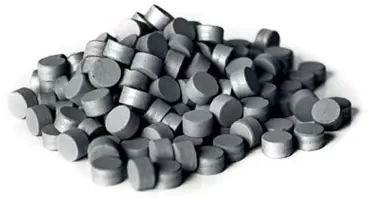
Rhenium (Re), the last naturally-occurring element to be discovered, was discovered in Germany in 1925. The process was so complicated and the cost so high that production was discontinued until early 1950 when tungsten-rhenium and molybdenum-rhenium alloys were prepared. These alloys found important applications in industry that resulted in a great demand for the rhenium produced from the molybdenite fraction of porphyry copper ores. Important uses of rhenium have been in platinum-rhenium catalysts, used primarily in producing lead-free, high-octane gasoline and in high-temperature superalloys used for jet engine components.
Editor’s note: Posted November 14 following the end of the lapse in appropriations. The Department of the Interior, through the U.S. Geological Survey, published the final 2025 List of Critical Minerals November 6, outlining 60 minerals vital to the U.S. economy and national security that face...

www.usgs.gov
Rhenium prices are spiking sharply—this article explores whether it’s speculative or driven by real demand in high-tech & aerospace sectors.

www.questmetals.com



 INTERNET SLEUTHS RECOVER NOW-DELETED 2024 MANIFESTO BY BROWN STUDENT AS SHOOTING INVESTIGATION CONTINUES



 Recording date: December 12, 2025
 Chapters