
You are using an out of date browser. It may not display this or other websites correctly.
You should upgrade or use an alternative browser.
You should upgrade or use an alternative browser.
Tracking Trump's Tariffs and Turbulent Trade Talks
- Thread starter searcher
- Start date
Welcome to the Precious Metals Bug Forums
Welcome to the PMBug forums - a community supported watering hole for folks interested in gold, silver, precious metals, sound money, investing, market and economic news, central bank monetary policies, politics and more.
Register a free account to join the discussions. When you register an account and log in, you may enjoy additional benefits including access to market data/charts and additional members only rooms (including one for trade/barter with the community).

- Messages
- 45,927
- Reaction score
- 7,745
- Points
- 288
The latest: Canada announces retaliatory tariffs against the US
Canada has announced retaliatory tariffs against the United States as relations sharply deteriorate, after President Donald Trump mused about renaming Lake Ontario “Lake America” and insulted Canada’s Prime Minister Mark Carney by calling him “Governor Carney.” More than 700 U.S.-made products are on Canada's tariffs list, hitting everyday purchases such as seafood, cheese, clothing, cosmetics and toilet paper with duties as high as 50%.The Supreme Court on Monday cleared the way for Trump to move ahead with his executive order restricting mail-in voting, though it remains unclear how much his administration can implement before the fast-approaching midterm elections. Mail balloting has long been a favorite target for Trump, who has claimed that it breeds fraud despite strong evidence to the contrary and his own use of the voting method.
More here:
https://www.msn.com/en-us/news/othe...s-against-the-us/ar-AA2aTmIi?ocid=socialshare

- Messages
- 829
- Reaction score
- 696
- Points
- 268
So the everyday people will have to pay a huge "sales tax" on these items, and their government will pocket the money.More than 700 U.S.-made products are on Canada's tariffs list, hitting everyday purchases such as seafood, cheese, clothing, cosmetics and toilet paper with duties as high as 50%.
And this affects me... how? (I don't think it does.)

Mark Carney.
International Central Banker. Know how to tell when he's lying?
His lips move.
International Central Banker. Know how to tell when he's lying?
His lips move.
Why is it so terrible to be able to track ballots back to the people they were sent to?The Supreme Court on Monday cleared the way for Trump to move ahead with his executive order restricting mail-in voting, though it remains unclear how much his administration can implement before the fast-approaching midterm elections. Mail balloting has long been a favorite target for Trump, who has claimed that it breeds fraud despite strong evidence to the contrary and his own use of the voting method.
So that the ballot received back matches the one that was sent out?
It just makes sure that "extra" ballots can't be added later.

- Messages
- 22,346
- Reaction score
- 12,605
- Points
- 288
 BREAKING: President Trump just STRUCK THE DEAL OF THE CENTURY with Canada!
Literally moments before Canada was about to get crushed with 50% tariffs across the board…
Canada is ELIMINATING tariffs on American farm goods.
Trump:
“[Canadian] tariffs will be NONEXISTENT for our farmers. Our farmers were paying TREMENDOUS tariffs into Canada, and those tariffs are going to be totally EVISCERATED. Down to ZERO.”
This is a MASSIVE win for American farmers.
America First is winning.


Retweet if you’re tired of the U.S. getting ripped off.
- Messages
- 829
- Reaction score
- 696
- Points
- 268
There are still senseless shit heads who claim that bosses will demand that their employees prove who they voted for.Why is it so terrible to be able to track ballots back to the people they were sent to?
I don't think this is true, but even if it is, I condemn anyone who will accept an asshole boss who demands a vote one way or another.
Both the asshole boss and the asshole employee should be shunned from society.
There are still senseless shit heads who claim that bosses will demand that their employees prove who they voted for.
I don't think this is true, but even if it is, I condemn anyone who will accept an asshole boss who demands a vote one way or another.
Both the asshole boss and the asshole employee should be shunned from society.
I don't think it's so people can prove who they voted for.
I thought it was so each mail in ballot could be a accounted for, once it's been returned with the ballot filled out.
So the day after the election they can't "find" another mail truck full of mail in ballots.
- Messages
- 45,927
- Reaction score
- 7,745
- Points
- 288

Nunavut - Wikipedia
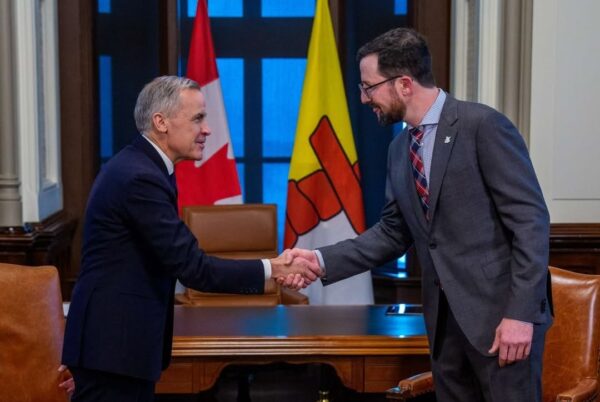
Nunavut braces for trade war impacts - ArcticToday
Nunavut Premier John Main said he’s “disappointed and concerned” that trade talks between Canada and the U.S. were suspended last week. “Our government will assess the impacts of tariffs on our territory, businesses, and residents,” the premier wrote Monday in a statement. On Friday, he said he...
 www.arctictoday.com
- Messages
- 45,927
- Reaction score
- 7,745
- Points
- 288
Canada stood up to Trump in a way no other country dared | Bill Clinton
Aug 25, 2026
Trump vs. Canada Trade War Explained: Why Trump's Tariffs Will FailIn this episode, we break down the escalating trade war between the United States and Canada under Donald Trump's second term. We compare Trump's economic "expertise" (questionable at best) with Canadian Prime Minister Mark Carney's credentials — Harvard magna cum laude, Oxford DPhil, and leadership of both the Bank of Canada and Bank of England.
We examine Trump's failed track record: the botched Lincoln Memorial reflecting pool renovation, the disastrous Iran war costing $113 billion, and his failed "economic D-Day." Plus, we dive into Trump's narcissistic leadership style and why his psychopathic overconfidence makes him a danger to the global economy.
3:28
Aug 25, 2026
Trump vs. Canada Trade War Explained: Why Trump's Tariffs Will FailIn this episode, we break down the escalating trade war between the United States and Canada under Donald Trump's second term. We compare Trump's economic "expertise" (questionable at best) with Canadian Prime Minister Mark Carney's credentials — Harvard magna cum laude, Oxford DPhil, and leadership of both the Bank of Canada and Bank of England.
We examine Trump's failed track record: the botched Lincoln Memorial reflecting pool renovation, the disastrous Iran war costing $113 billion, and his failed "economic D-Day." Plus, we dive into Trump's narcissistic leadership style and why his psychopathic overconfidence makes him a danger to the global economy.
3:28
- Messages
- 45,927
- Reaction score
- 7,745
- Points
- 288
How Europe can support Canada in its trade war with Trump | DW News
Aug 24, 2026 #dwcurrentaffairs
The Canada-US trade war has escalated sharply -- with both countries planning to impose tit-for-tat tariffs on each other after last ditch talks collapsed over the weekend. Canada is hitting back with tariffs on some US imports from September 8, and for now, no further talks are planned. But Canadian Prime Minister Mark Carney says something much bigger has shifted,
which raises a question for Europe. Carney says this fall Canada will begin talks with the European Union for what he calls a much stronger and deeper security and economic partnership. But can Europe really provide Canada with an escape route from its dependence on America? We spoke to Jacob Funk Kirkegaard, a Senior Fellow at Bruegel - a major economic policy think tank based in Brussels.
10:32
Aug 24, 2026 #dwcurrentaffairs
The Canada-US trade war has escalated sharply -- with both countries planning to impose tit-for-tat tariffs on each other after last ditch talks collapsed over the weekend. Canada is hitting back with tariffs on some US imports from September 8, and for now, no further talks are planned. But Canadian Prime Minister Mark Carney says something much bigger has shifted,
which raises a question for Europe. Carney says this fall Canada will begin talks with the European Union for what he calls a much stronger and deeper security and economic partnership. But can Europe really provide Canada with an escape route from its dependence on America? We spoke to Jacob Funk Kirkegaard, a Senior Fellow at Bruegel - a major economic policy think tank based in Brussels.
10:32


- Messages
- 45,927
- Reaction score
- 7,745
- Points
- 288
Some what related and posted as food for thought, nothing more. As usual, take it fwiw, dyodd & make of it what you will.


- Messages
- 45,927
- Reaction score
- 7,745
- Points
- 288
- Trump is reportedly considering broader semiconductor tariffs, Politico reported Thursday.
- The tariffs could cover servers, laptops and gaming hardware, people familiar with the matter told the outlet.
- “Reshoring semiconductor manufacturing is a top priority for President Trump,” the White House told Politico.

U.S. considers fresh round of tariffs on semiconductors, report says
As tech giants race to beat China in the AI infrastructure buildout, the U.S. is reportedly considering enforcing tariffs on semiconductors.
- Messages
- 45,927
- Reaction score
- 7,745
- Points
- 288
- President Donald Trump signed an executive order that he said will “immediately” change the name of Lake Ontario to “Lake America.”
- The move followed a breakdown in U.S.-Canada trade talks that prompted new retaliatory tariffs and a rapidly deteriorating relationship.
- Trump last year signed an order asserting that the Gulf of Mexico would be renamed the “Gulf of America.”

Trump signs order to rename Lake Ontario 'Lake America' amid Canada trade war
President Donald Trump signed an executive order that he said will "immediately" change the name of Lake Ontario to "Lake America."
- Messages
- 45,927
- Reaction score
- 7,745
- Points
- 288

Key Trade Deals and Frameworks
United Kingdom: Signed an automotive, aerospace, and agricultural economic framework agreement.
South Korea: Reached an agreement lowering tariffs to 15% in exchange for major U.S. auto access, Boeing purchases, and local investments.
European Union: Agreed to a foundational bilateral trade framework carrying a 15% tariff on most EU goods.
Western Hemisphere Partners: Announced reciprocal market access agreements with El Salvador, Argentina, Ecuador, and Guatemala.Taiwan & Indonesia: Concluded separate bilateral trade and economic pacts.
Got a link?
Joe, here ya go
Key Trade Deals and Frameworks in 2026
In 2026, U.S. trade policy is defined by a mix of bilateral agreements, tariff adjustments, and strategic frameworks aimed at reshaping global trade relationships.Major Bilateral and Multilateral Agreements
- EU–U.S. Trade Deal (July 2025, in force July 2026) – A landmark agreement that caps U.S. tariffs on most EU exports at 15%, eliminates tariffs on U.S. industrial goods, and improves market access for certain EU agri-food products. It includes guardrails, a 2026 deadline for U.S. to align steel/aluminum tariffs with the ceiling, and a sunset clause ending in 2029
European Commission.
- U.S.–Japan Critical Minerals Agreement (2023) – Focuses on free trade in critical minerals, strengthening supply chain security United States Trade Representative.
- U.S.–Mexico–Canada Agreement (USMCA) – In effect since 2020, with stricter rules of origin (75% North American content for autos) and enhanced labor provisions washingtoninsider.us.
- Dominican Republic–Central America–U.S. Free Trade Agreement (CAFTA-DR) – A multilateral agreement among several countries United States Trade Representative.
Trump Administration Trade Strategy
- Liberation Day Tariffs (April 2025) – Broad tariffs on nearly all trading partners, later modified to lower rates as deals were secured Council on Foreign Relations.
- Reciprocity Principle – High tariffs on countries imposing barriers on U.S. goods; exemptions/reductions for cooperative partners washingtoninsider.us.
- Potential Tariff Adjustments for Aligned Partners (Sept 2025) – Exemptions for aircraft, generic pharmaceuticals, natural resources, and some agricultural products Council on Foreign Relations.
- Agricultural Tariff Exemptions (Nov 2025) – To address affordability concerns Council on Foreign Relations.
Framework Agreements and Negotiations
- U.S.–Canada Trade Framework Collapse (Aug 2026) – Talks over a $1 trillion deal unraveled in 72 hours after last-minute tariff disputes, signaling renewed tensions Yahoo Finance.
- Ongoing Negotiations – The U.S. is pursuing deals with partners including Japan, Vietnam, Cambodia, Malaysia, Thailand, South Korea, Argentina, Ecuador, El Salvador, Guatemala, Switzerland, Taiwan, India, and North Macedonia Council on Foreign Relations.
Types of Trade Agreements
- Bilateral Agreements – Direct U.S.–partner deals (e.g., EU–U.S., U.S.–Japan).
- Multilateral Agreements – Agreements among multiple countries (e.g., CAFTA-DR, USMCA).
- Trade and Investment Framework Agreements (TIFAs) – Nonbinding frameworks for early-stage trade/investment discussions United States Trade Representative.
- Bilateral Investment Treaties (BITs) – Protect private investment and promote U.S. exports United States Trade Representative.
- Messages
- 45,927
- Reaction score
- 7,745
- Points
- 288
- President Donald Trump signed an executive order that he said will “immediately” change the name of Lake Ontario to “Lake America.”
- The move followed a breakdown in U.S.-Canada trade talks that prompted new retaliatory tariffs and a rapidly deteriorating relationship.
- Trump last year signed an order asserting that the Gulf of Mexico would be renamed the “Gulf of America.”
Trump signs order to rename Lake Ontario 'Lake America' amid Canada trade war
President Donald Trump signed an executive order that he said will "immediately" change the name of Lake Ontario to "Lake America."www.cnbc.com
Let's hear what Mary T has to say...............
Why is doing all that considered as being bad by so many?These aim to secure market access, protect strategic industries, and shift toward a more bilateral, less multilateral approach to trade.
All that stuff sounds good.
- Messages
- 45,927
- Reaction score
- 7,745
- Points
- 288
Why is doing all that considered as being bad by so many?
Are they actually bad or good for the American consumer?
Could it actually be what I said earlier ( playing with it like a toy)? Maybe have something to do with how he talks about them, the fact they are on then off then on again? Claiming world leaders are standing in line to kiss his ass and "he loves it"?
And let's not forget that we (the American citizens) are the ones actually paying the tariffs in the form of price increases.
And now, by the stroke of a pen, he renames Lake Ontario? C'mon..........
Whole lotta things to consider when formulating an opinion on this. Gotta consider all sides.
As for me............I'm tired of the chaos T created. Would like some smooth sailing for a while.
- Messages
- 45,927
- Reaction score
- 7,745
- Points
- 288
You're on your own with this, make of it what you will.
 reason.com
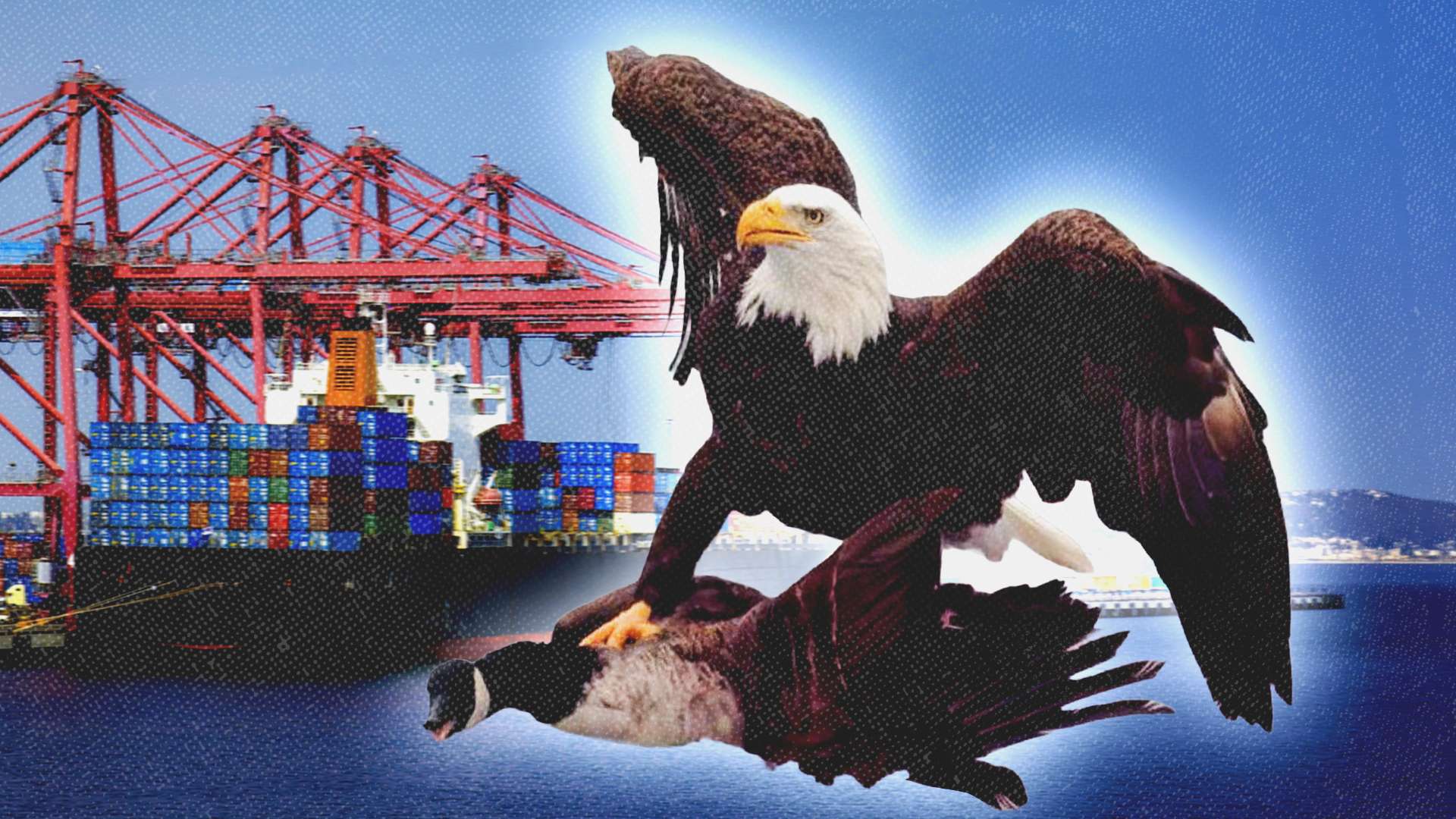
Trump’s trade war with Canada is costly, absurd, and unfunny
American consumers and businesses are being taken advantage of by Canadians who are…offering to sell us aluminum, oil, and wood? How?
reason.com
- Messages
- 45,927
- Reaction score
- 7,745
- Points
- 288


Mark Carney tells US to ‘start being serious’ amid escalating trade war
Canadian PM is set to retaliate against tariffs levied by Donald Trump and criticized US officials over insults
- Messages
- 45,927
- Reaction score
- 7,745
- Points
- 288
Mamma mia! How a panic over pasta prices prompted a Trump tariff retreat.
A monthslong crackdown within the Trump administration to soften its trade rules all started with a flap over pasta.In the aftermath, Commerce Secretary Howard Lutnick and other top Commerce Department officials are leaning on agency staff not to drive up tariffs on grocery items and other goods ahead of the midterm elections.
The interference is a vivid reminder of just how improvisational much of Trump’s trade agenda is, with decisions driven by political considerations and personal calculations as much as by law, alliances and existing trade pacts.
Read the rest:
- Messages
- 22,346
- Reaction score
- 12,605
- Points
- 288
Bessent: “CUT THE SNAKE'S HEAD OFF" – But Who is the Real Target?
Susan Kokinda analyzes Scott Bessent’s remarks to Larry Kudlow about tracking IRGC assets, focusing on offshore hubs like the British Virgin Islands and the broader British-linked financial architecture behind shell companies, alongside Treasury’s campaign warning 60 entities to clean up, with Hong Kong a major target. She argues this financial offensive is part of a strategic realignment away from imperial “choke points,” echoed by Doug Burgum’s call to shift global energy focus toward the Western Hemisphere. In the Middle East, she highlights lifted U.S. sanctions on Syria, the formation of the Mecca Joint Defense Alliance (Saudi Arabia, Turkey, Pakistan), and Trump’s “Board of Peace,” under which Hamas has agreed to disarm. She also covers G20 tensions over inviting Russia’s finance minister, Bessent’s meeting with him, and Bessent’s claim of shared U.S.-China goals on Iran.00:00 The Midweek Update - Bessent: “Cut the snake’s head off” – But Who is the Real Target? - September 2, 2026
01:40 Whose Islands? The Money Machine
04:53 Who’s on the outside in the Mideast
10:24 The G20 and Who’s Back In
- Messages
- 45,927
- Reaction score
- 7,745
- Points
- 288
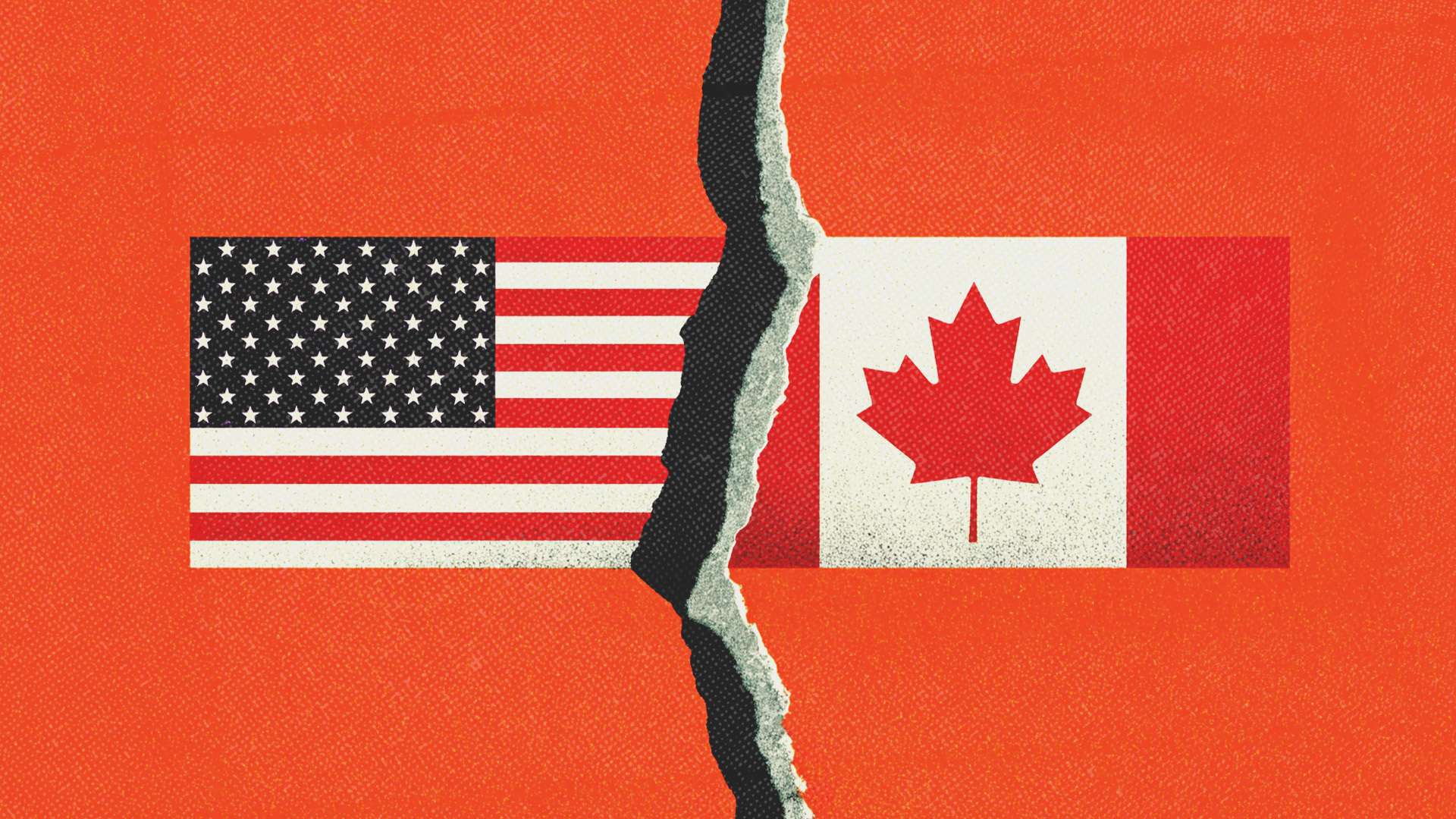
Trump's beef tariff cut accidentally makes the case for free trade
As the president liberalized the market for beef, he also imposed new 50 percent tariffs on some $20 billion worth of Canadian goods.
reason.com
- Messages
- 45,927
- Reaction score
- 7,745
- Points
- 288
Toilet paper industry to feel impacts of U.S. - Canada trade war
Sep 5, 2026
The United States and Canada are locked in a new round of tariffs, a trade fight between two of the world’s closest allies. Lumber, wood pulp, and paper are all caught in the middle. And now, one of the most ordinary household items, toilet paper, is suddenly part of the dispute. CGTN’s Nitza Soledad Perez reports from Miami.
1:55