
You are using an out of date browser. It may not display this or other websites correctly.
You should upgrade or use an alternative browser.
You should upgrade or use an alternative browser.
Tracking Trump's Tariffs and Turbulent Trade Talks
- Thread starter searcher
- Start date
Welcome to the Precious Metals Bug Forums
Welcome to the PMBug forums - a community supported watering hole for folks interested in gold, silver, precious metals, sound money, investing, market and economic news, central bank monetary policies, politics and more.
Register a free account to join the discussions. When you register an account and log in, you may enjoy additional benefits including access to market data/charts and additional members only rooms (including one for trade/barter with the community).

There's a lot Canna-duh coulda done.
Starting with, not electing Turd Dew.
Then, not throwing their own borders wide open.
And then not reacting to critical outcry from the citizenry by enacting **HATE SPEECH** codes.
And then, by enforcing laws that have been on their books. Laws against crime. Laws against assault; against robbery. All the stuff the melanin-enhanced New Canadians so love to do.
But they didn't do any of that; and it's not our watch. OUR place is to deal with a newly-hostile neighbor to the north - filled with subhuman vermin and an Elite Political Class that seems to want to become the Turd World.
That means, borders, fences, enforcement officers.
That ALSO means, we have to approach trade with Canistan as we would with Somalia or Niger. In other words, it's not gonna be relevant, except in rare isolated cases - lithium out of the Congo, say, or oil out of Alberta.
Other than that...just cut off trade. SEAL THE GODD@MM BORDER. Nothing IN or OUT of it. Not goods; not services, not tourists, not truck drivers who only speak Arabic.
We will survive just fine. CANISTAN will quickly die off.
We have a customer base, which is necessary for an economy. Canitardistan has one-tenth our population. It cannot support ANY industry that depends on economies of scale. It used to be, cutting our motor industry off, reduced Canitards to owning VW Beetles, Renaults, or Fiats or Ladas from Russia.
Now that's no problem - Japanese cars are better quality than ours (to the extent we even make cars, now) and Canuks cannot AFFORD our six-figure (US$) Bro-Dozer poseurup truxx. They have FAR lower a standard of living, now.
In the past, with imposing tariffs, the Big Four in the US, would set up small (or with AMC, big) plants in Canada to assemble CKD kits. Often with Canada-specific model names and options...like, no carpet, no A/C, manual gearboxes. Make them affordable.
Our surviving two dualopolistic automakers don't even WANT to make passenger cars, now; and don't want the middle-class trade. So, Canada will see Ladas and Chinese cars, come, and prices launch.
Steel for basic industry and railroads, will continue to come from India - now that we've destroyed the whole N.A steelmaking industry.
And we'll start to see malnutrition up there.
And their Elites won't care - because they're worse than our own Power Elites; as bad as Eurostan's Brussels taskmistresses.
STOP CARING. We have OUR world to save.
Starting with, not electing Turd Dew.
Then, not throwing their own borders wide open.
And then not reacting to critical outcry from the citizenry by enacting **HATE SPEECH** codes.
And then, by enforcing laws that have been on their books. Laws against crime. Laws against assault; against robbery. All the stuff the melanin-enhanced New Canadians so love to do.
But they didn't do any of that; and it's not our watch. OUR place is to deal with a newly-hostile neighbor to the north - filled with subhuman vermin and an Elite Political Class that seems to want to become the Turd World.
That means, borders, fences, enforcement officers.
That ALSO means, we have to approach trade with Canistan as we would with Somalia or Niger. In other words, it's not gonna be relevant, except in rare isolated cases - lithium out of the Congo, say, or oil out of Alberta.
Other than that...just cut off trade. SEAL THE GODD@MM BORDER. Nothing IN or OUT of it. Not goods; not services, not tourists, not truck drivers who only speak Arabic.
We will survive just fine. CANISTAN will quickly die off.
We have a customer base, which is necessary for an economy. Canitardistan has one-tenth our population. It cannot support ANY industry that depends on economies of scale. It used to be, cutting our motor industry off, reduced Canitards to owning VW Beetles, Renaults, or Fiats or Ladas from Russia.
Now that's no problem - Japanese cars are better quality than ours (to the extent we even make cars, now) and Canuks cannot AFFORD our six-figure (US$) Bro-Dozer poseurup truxx. They have FAR lower a standard of living, now.
In the past, with imposing tariffs, the Big Four in the US, would set up small (or with AMC, big) plants in Canada to assemble CKD kits. Often with Canada-specific model names and options...like, no carpet, no A/C, manual gearboxes. Make them affordable.
Our surviving two dualopolistic automakers don't even WANT to make passenger cars, now; and don't want the middle-class trade. So, Canada will see Ladas and Chinese cars, come, and prices launch.
Steel for basic industry and railroads, will continue to come from India - now that we've destroyed the whole N.A steelmaking industry.
And we'll start to see malnutrition up there.
And their Elites won't care - because they're worse than our own Power Elites; as bad as Eurostan's Brussels taskmistresses.
STOP CARING. We have OUR world to save.

- Messages
- 851
- Reaction score
- 705
- Points
- 268
Yeah. I am really worried when and where I can buy another six pack of LaBlatts.Lol the EU and Canada.... Like that sends shivers down anyone's spine.
I completely agree. To me, Canada is the worthless uncle who never did anything right, but kept coming back for handouts. Fuck Canada.But they didn't do any of that; and it's not our watch. OUR place is to deal with a newly-hostile neighbor to the north - filled with subhuman vermin and an Elite Political Class that seems to want to become the Turd World.
...
Other than that...just cut off trade. SEAL THE GODD@MM BORDER. Nothing IN or OUT of it. Not goods; not services, not tourists, not truck drivers who only speak Arabic.
We will survive just fine. CANISTAN will quickly die off.
...
STOP CARING. We have OUR world to save.
I am okay with sealing the border. No passage. We can set up and pay for a transport system to help our brothers in Alaska that does not involve Canada.
If any sensible Canadian provinces should want to break away, I would welcome them as good neighbors and start trading with them freely. They would not become part of the US, but I would like them to enjoy every trade opportunity. They can do their thing, and we will be happy to trade with them. I am thinking primarily about Alberta, but BC and Sask... might be good friends.Make it the 51st state.
I don't, or didn't, hate them like you do, but they've been going down the tubes for 35 years and moar. Used to be, Toronto was a nice long-weekend getaway place - for a couple from the Cleveland area, back in the 80s. Safe streets, interesting architecture, English spoken (with a quaint faint accent) and great beer.I completely agree. To me, Canada is the worthless uncle who never did anything right, but kept coming back for handouts. Fuck Canada.
I am okay with sealing the border. No passage. We can set up and pay for a transport system to help our brothers in Alaska that does not involve Canada.
Then came Leftism.
The turning point for me, was, 1992. I was in the Navv; on the flagship for Commander Third Fleet. That's the command that covers the Pacific Coast, North and South Americas, to Hawaii.
The admiral was embarking on some flesh-pressing, for some political reason. We'd already gone to Acapulco and crashed a party of Mexican government officials, all pureblood Castalians, and their blonde and redheaded Mexican wives. Not what you see on the streets of Tijuana, fer sure. So a few weeks later, we set sail from our North Island port to Vancouver, to One Canada Centre. That's the cruise-ship terminal up there.
We tied up on a Saturday morning, and as good luck would have it, I had duty that day. I had ALSO been assigned Pier Sentry duty, 2000 to 2400.
And there was a GIANT kerfuffle over what kind of arms we would be allowed, or not allowed. Now we had our load of dignitaries onboard, up in Officer Country; plus the Third Fleet contingent. Ours was a flagship, with plenty of sophisticated communication equipment and some VIPs. The admiral wanted armed guards on the brow.
The RCMP said, you will not, sir. We, our government, does NOT allow sidearms or handguns in possession of ANYONE but the Mounted Police, or provincial or city police.
We were at loggerheads. We did NOT have a Marine contingent onboard, that they could come and stand duty with long guns. I don't know if the RCMP would have permitted that.
In the end, a compromise was struck - a jackass compromise, an idiot's solution. The pier sentry, including me in turn, was to be issued a sidearm - with regulation holster BUT NO AMMUNITION and no magazine.
Whiskey-Tango-Foxtrot, over! Talk about provocation...we had the usual mind-controlled jackasses protesting us; to stand there, WITH a weapon that THEY DID NOT KNOW WASN'T LOADED...and have them maybe DARE us to use it...that is, their controller, GOAD them into provoking us...what am I gonna do, hit one on the head with it?
That was the first peek I had of the New Canaduh.
Since then, of course, I've been barred from entry, because I got ticketed for Ability Impaired (not drunk enough for DWI) fifty years ago. Alcohol offenses are now political crimes, and they never have a time limitation. I got barred from entry, and then, working for CN (American side) I got it lifted, and then it came down again.
Now Canaduh is dangerous, ugly, intolerant, expensive and unsafe. I have no interest of ever returning.

- Messages
- 46,677
- Reaction score
- 7,818
- Points
- 288
***Note: Not making any statement here at all. Posting it as food for thought (from a Canadian's perspective). Totally up to you what you make of it.
Please Explain, America.
Sep 9, 2026
Jim from Jim's Radio Shop shares a perspective on the economic relationship and trade history between Canada and the United States. Through the lens of recent political decisions, this commentary explores the impact of shifting trade policies on long-standing agreements and the integration of industries between the two neighboring nations.
7:00
Please Explain, America.
Sep 9, 2026
Jim from Jim's Radio Shop shares a perspective on the economic relationship and trade history between Canada and the United States. Through the lens of recent political decisions, this commentary explores the impact of shifting trade policies on long-standing agreements and the integration of industries between the two neighboring nations.
7:00
- Messages
- 46,677
- Reaction score
- 7,818
- Points
- 288
***DW News commentary. As usual, take it fwiw, dyodd & make of it what you will.
Why Canada's trust in the United States may not recover anytime soon | DW News
Sep 9, 2026
The United States is expanding its trade war with Canada, introducing import bans on products including many alcoholic beverages, some dairy products and motorcycles after Ottawa imposed roughly $20 billion in retaliatory tariffs on US goods. But the economic measures may be only part of the story. Jen Gerson, co-founder of The Line, argues that years of trust between the two neighbors have been damaged and could take a generation to rebuild.
10:55
Why Canada's trust in the United States may not recover anytime soon | DW News
Sep 9, 2026
The United States is expanding its trade war with Canada, introducing import bans on products including many alcoholic beverages, some dairy products and motorcycles after Ottawa imposed roughly $20 billion in retaliatory tariffs on US goods. But the economic measures may be only part of the story. Jen Gerson, co-founder of The Line, argues that years of trust between the two neighbors have been damaged and could take a generation to rebuild.
10:55
I'm against Trump's insane threats and pushings.Not making any statement here at all. Posting it as food for thought (from a Canadian's perspective). Totally up to you what you make of it.
Please Explain, America.
Sep 9, 2026
Jim from Jim's Radio Shop shares a perspective on the economic relationship and trade history between Canada and the United States. Through the lens of recent political decisions, this commentary explores the impact of shifting trade policies on long-standing agreements and the integration of industries between the two neighboring nations.
But Canaduh has had a part in this - tormenting its own productive citizens to where they've publicly, in an organized manner, started moving towards some sort of Secession or regional re-alignment with the US.
Look inward. Justine Turddew was unfit to be a librarian, and you made him the nation's chief executive, for, what, eight years?
- Messages
- 46,677
- Reaction score
- 7,818
- Points
- 288
Nothing crazy here, just some people bantering about the situation.
Top ag economists break down US-Canada trade tensions, tariffs on beef and machinery, input costs, interest rates, and signs the farm downturn may be bottoming out. The discussion is from the Iowa State College Roadshow.
11:51
Trade War or Political Theater? Ag Experts Weigh In On Tariffs & Beef Imports
Sep 11, 2026Top ag economists break down US-Canada trade tensions, tariffs on beef and machinery, input costs, interest rates, and signs the farm downturn may be bottoming out. The discussion is from the Iowa State College Roadshow.
11:51
- Messages
- 46,677
- Reaction score
- 7,818
- Points
- 288
SCB podcast. Nothing to see, can listen in one tab, play around the forum in a different tab. Noting to get excited about. Opinions / talking points, you know the drill.

Podcast | ‘The Great Fracturing’: A Whole New World of Trade Relations
The world is fractured, and it’s not healing anytime soon.
www.supplychainbrain.com

- Messages
- 22,492
- Reaction score
- 12,663
- Points
- 288
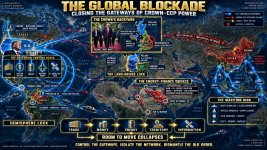
Let’s zoom all the way out, shall we... every move lands on the same map...
Trump has positioned America around the gateways the old order used to move power across the world... trade, dollar access, energy, military reach, borders, satellites and data now operate as one control layer...
Poland and Ukraine lock the eastern land bridge while Germany is pulled out of the arrangement that tied Russian energy to Chinese demand through London finance...
Iran’s oil route into China is being closed as Treasury follows the money through banks, shipping networks, gold markets and every intermediary still carrying it...
Canada’s northern conduit is exposed as Trump turns access to the American market into leverage...
Now the pressure has reached the Crown’s own backyard... Ireland rolls out the red carpet for Trump and he tells the world reunification is coming...
Northern Ireland, Scotland and Wales move further from Westminster while the Crown loses reach abroad and the United Kingdom begins pulling apart around it at home...
See how much control Trump has created? The old network can still move, but every road now leads toward a gate America controls...
The land bridge is locked... the financial rails are closing... the hemisphere is secured... and the maritime routes are surrounded...
Trump took control of the spaces between the pieces, now the Crown, CCP, and globalist control mechanisms are running out of room to move... the global blockade is real...
- Messages
- 46,677
- Reaction score
- 7,818
- Points
- 288
Euronews
In a document sent to EU legislators and seen by Euronews, the US has threatened the EU with retaliation if it does not scrap European preference provisions in its multiannual budget.

 www.euronews.com
In a document sent to EU legislators and seen by Euronews, the US has threatened the EU with retaliation if it does not scrap European preference provisions in its multiannual budget.
US threatens EU with retaliation over European preference in EU budget
Washington said that the competitiveness fund included in the budget would “impede” partnership with the US because of provisions favouring “made in Europe” products. #EuropeNews
www.euronews.com
- Messages
- 46,677
- Reaction score
- 7,818
- Points
- 288

Former trade officials explain why Trump’s Section 301 tariffs are illegal
Their brief says Trump is asserting 'essentially boundless' authority to impose 'economy-wide tariffs untethered from the statute Congress enacted.'
 reason.com
- Messages
- 46,677
- Reaction score
- 7,818
- Points
- 288
SCB commentary.

The 'Zero Sum Game' of the U.S. Trade War With Canada
The true costs of the Trump administration's trade war with Canada could linger long after any tariffs are lifted.
www.supplychainbrain.com
- Messages
- 46,677
- Reaction score
- 7,818
- Points
- 288

I've said it many times: Trump is an economic ignoramus.
What he is getting at is the fact that the $1.5 trillion spent on foreign mfg'ed goods is gone at the point of sale.
It helps another nations economy.
If on the other hand, that $1.5 trillion was spent on American mfg'ed goods, that money goes to pay American workers and American suppliers.
Who then in turn, pay all of their employees and business costs.
In short, that $1.5 trillion would circulate in OUR economy instead of some other economy half way around the World.
Same thing applies when hiring labor.
If you employ a foreigner (illegal or otherwise) who sends money "back home", that money is not being spent at our local stores and businesses.
....and all of their employees, who then go out to dinner, or shopping , or anything else one might spend money on in their local community.
Pay that same money to a foreign company or immigrant sending their wages out of the country, and all those secondary transactions disappear.
That means lower GDP for us.
@searcher , also don't forget that if that $1.5trillion circulated here, it would create more taxing opportunities.
More taxing opportunities means the gov can more easily pay it's debts.
A gov that can more easily pay it's debts is financially better off.
Which means less risk to your SS and Medicare money.
Ie: it's good for you (and all of us) that those dollars be spent here where it contributes something to our economy beyond the initial sale.
More taxing opportunities means the gov can more easily pay it's debts.
A gov that can more easily pay it's debts is financially better off.
Which means less risk to your SS and Medicare money.
Ie: it's good for you (and all of us) that those dollars be spent here where it contributes something to our economy beyond the initial sale.
The only thing that's "gone"...is the wholesale FOB price. Free-on-board - before any shipping costs.What he is getting at is the fact that the $1.5 trillion spent on foreign mfg'ed goods is gone at the point of sale.
I don't have a breakdown on that, but since our stevedores, railroaders, truckers, are paid 10x what theirs are...my guesstimate is, at least 2/3 of the shipping costs go into Americans' pockets or dividend payments.
And, is the money "gone"? China crap is a poor value; but it IS some sort of value. Pay the money, get the Yingyang fridge, or whatever. That's JOBS lost, but it's not money lost. The money was exchanged for value. Of a sort.
The PROFITS on that, went to the organization the Dumbo cracks favor moar than whatever union represented appliance assemblers. The profits went to the CCP and its various subsidiaries - COSCO, PLA, PBC.
Instead of Black Rock and Cerberus.
There's an argument to be made, for restrictions, tariffs, or just import bans...but Trump doesn't understand enough to make it.
Point is, that money is no longer circulating in our economy. It gets spent once, and is gone.The only thing that's "gone"...is the wholesale FOB price. Free-on-board - before any shipping costs.
The workers who made the fridge spend that money here. They buy food, go see a movie, buy gas, shop at the local stores, etc etc. that creates many more transactions that no longer exist after the foreign made ridge is purchased.And, is the money "gone"? China crap is a poor value; but it IS some sort of value. Pay the money, get the Yingyang fridge, or whatever. That's JOBS lost, but it's not money lost. The money was exchanged for value. Of a sort.
The gov used to be primarily funded by tariffs, and worked pretty darn well. No reason exists as to why it still can't work that way.There's an argument to be made, for restrictions, tariffs, or just import bans...but Trump doesn't understand enough to make it.
We have the biggest economy in the World. It should be viewed as a privilege for other nations to be able to access our markets.
As for Trump, the tariffs are intended to do two things.
1, be used as a tool to encourage other nations to lower their tariffs and trade barriers to American producers, and 2, to tncourage re-shoring of businesses and manufacturing.
Both of those things serve to increase our gdp, and that's the only thing that has any hope of helping to avert an approaching Bond crisis.
The only possible way out is through growth.
You don't let a diseased tree grow taller.The only possible way out is through growth.
You cut it down and plant a healthy sapling.
That's the only solution here. COLLAPSE. Rug-pull, followed by MASS executions.
Then start over. WITH SOUND MONEY.
- Messages
- 46,677
- Reaction score
- 7,818
- Points
- 288
No, cutting off trade with Europe would not make America wealthier
Free trade reduces prices and makes for freer lives. Unfortunately, the president is doubling down rather than learning the right lesson.
reason.com
- Messages
- 46,677
- Reaction score
- 7,818
- Points
- 288
Just a little food for thought.
 reason.com
President Trump stubbornly clings to archaic mercantilist economics
He who dies with the most hoarded cash does not, in fact, win.
reason.com
If there's anything archaic, it's this writer's bleating of the benefits of "Free Trade." Yes, free trade benefits all. Free trade is also easily corruptible, as we've seen over the last 30 years.Just a little food for thought.
President Trump stubbornly clings to archaic mercantilist economics
He who dies with the most hoarded cash does not, in fact, win.
A self-contained economic system may not be as immediately prosperous or dynamic, but it allows a wonderful buffer from international chaos. And it removes, far away, the urges of unscrupulous political hacks to start some. And removes the political NEED for launching chaos - war is always preceded by a monetary or economic crisis.
Gold "hoarded" by a government (or by a stacker!) may seem unproductive - until you consider what it prevents. It prevents victimization in a currency or fiscal collapse. It prevents the great loss of wealth (ask Britain about how Soros caused a run on the Pound) coming from keeping a currency's backing in paper promises, or declared relationships.
I got this same argument, against holding PMs, from a family member 25 years ago. And where has it led me? In my last working decade, I had become something of a "Boomer" - railroad-speak for job-hopper. A Boomer works a short time for a company, leaves, and pops up working for another, far away. Not unlike a hobo of a century ago, but with a trade, certificates, papers, verifiable history. This, because I left a job just before the GFC...it became, last-on, first-out. Layoffs.
BUT. I didn't have to panic. What I DID with that downtime, was a lot of what people retire to do. A lot of visiting National Parks. Three cross-country motorcycle tours. All the parts of the country that retirees are gonna go see with RVs...I saw with a pack on the back of my BMW bike. No bills, no problems...and no bus-like RV. I stayed in spendy hotels and lodges. Clean sheets and morning coffee, always.
THAT is what comes of not relying on debt instruments for one's accumulation of wealth. For the debt-instrument style of savings to work, there must be a whole lot of basics in place - stable money, investment opportunities, laws that favor private enterprise - and most of those, today, most places, have been corrupted.
Reason Magazine has been reasonable many times in the past. Is this writer a DNC plant? Or has the whole magazine and website, changed?
- Messages
- 46,677
- Reaction score
- 7,818
- Points
- 288
- President Donald Trump and Chinese leader Xi Jinping are expected to discuss ways to strengthen their fragile trade truce when they meet face-to-face in Washington this week.
- They will have to navigate thorny issues such as artificial intelligence, the Iran war, tariffs and sanctions, on top of ongoing tensions around export controls, rare earths and more.
- “A number of inconsistent viewpoints seem to be jostling each other,” China expert Claire Reade told CNBC.

Trump, Xi seek trade stability and deals, but AI, tariffs and Iran loom large. What to watch
Trump, facing low approval on the economy ahead of the midterm election, has an added incentive to emerge from the summit with China's Xi touting trade wins.
- Messages
- 46,677
- Reaction score
- 7,818
- Points
- 288
^
U.S.–China Trade Relations Over the Past 40 Years
From post‑war economic cooperation to today’s complex, competitive, and interdependent relationship, U.S.–China trade has evolved through distinct phases shaped by global economic shifts, political changes, and strategic competition.1970s–1990s: Building Economic Ties
After the 1979 normalization of relations, trade grew slowly but steadily. The U.S. and China began exchanging agricultural goods, manufactured products, and technology. China’s reform and opening‑up policies in the late 1970s and 1980s expanded exports, while the U.S. sought to integrate China into the global economy. By the early 1990s, bilateral trade was modest but expanding, and China joined the General Agreement on Tariffs and Trade (GATT) in 1995 Council on Foreign Relations.2000–2001: WTO Entry and Trade Surge
China’s accession to the World Trade Organization in 2001 marked a turning point. Tariffs fell, and China’s manufacturing sector exploded, making it the U.S.’s largest trading partner by goods trade within a decade Council on Foreign Relations+1. U.S. exports to China included capital goods, industrial supplies, and vehicles; imports from China were dominated by consumer goods, industrial supplies, and autos Congress.gov. This period also saw China become the largest foreign holder of U.S. Treasury securities Congress.gov.2002–2017: Growth and Rising Tensions
Trade volumes continued to rise, but U.S. concerns grew over China’s subsidies, intellectual property practices, and forced technology transfers Council on Foreign Relations+1. The U.S. repeatedly raised these issues in WTO forums, but progress was limited. By 2017, China was the U.S.’s top export market and largest source of imports Congress.gov.2018–2021: The First Trade War
In 2018, the Trump administration imposed tariffs on $250 billion of Chinese goods, citing unfair trade practices and national security concerns Council on Foreign Relations+2. China retaliated with its own tariffs and export controls. The “Phase One” deal in 2020 temporarily eased tensions, but COVID‑19 disrupted trade and left many tariffs in place Britannica.2022–2025: Escalation and “Trade War 2.0”
Under Biden, disputes over technology, supply chains, and industrial policy intensified Council on Foreign Relations+1. In 2025, Trump’s return triggered a new round of tariffs, with both sides imposing measures covering nearly 100% of bilateral trade Statista. A May 2025 Geneva truce temporarily reduced tariffs, but structural tensions remain Council on Foreign Relations+1.Key Themes Across Four Decades
- Economic interdependence: China’s rise as a manufacturing hub and U.S. reliance on Chinese markets and supply chains created deep mutual dependence Council on Foreign Relations+1.
- Strategic competition: U.S. concerns over China’s state‑directed industrial policy, tech dominance, and WTO compliance have driven policy shifts Council on Foreign Relations+1.
- Global impact: Trade disputes have affected global supply chains, commodity prices, and economic growth Council on Foreign Relations+1.
An experiment in sourcing cheap labor.
Sending automaking jobs to Mexico didn't work so well; but apparently the proto-Globalists remembered 1960s Japan. Labor was cheap but the workforce EXTREMELY competent; and MADE IN JAPAN started appearing on everything. For about eight years it was a slur. Then it didn't matter, except the price was low. Then cheap AND high-quality.
So, the Globalists, being what they are, ready to stereotype "Others"...hoped to find a new source of cheap, competent labor in China. IGNORING the cultural, traditional, and modern-political differences.
While the Reconstruction government in Japan embraced free-market capitalism, China clings to Mao, and Mao's interpretation of Marxism. THAT MATTERS, no matter whether China now has a quasi-market economy or not. JAPAN made its place not with low-cost labor - any failed state offers that - but HIGH QUALITY. And that translated into high-quality customer relations. One Japanese exec was quoted by writer David Halberstam, as saying, "A sale is not a conclusion of our business. It is the start of a long-term relationship, and hopefully, future sales, from the purchaser and from his associates."
Whereas the CCP shadow-partner plants, work hard - to APPEAR to meet the specifications, AND NOTHING MORE. And if shoddy material can be substituted when foreign inspectors are not watching, that will happen. I've read also of Japanese companies that outsourced some low-profit products to China, and found that if they trained/promoted Chinese plant inspectors, and left them to it, shortly there would be use of inferior metals and materials, and a general lessening of quality of assembly and preparation, such as painting of parts.
That matters, when something like a lawn mower or scooter engine is being assembled. You cannot use pot metal for head bolts.
China is ruled by the Marxists' deep contempt for capitalism - those who run corporations, and those who buy from them. That contempt is deeply ingrained in the culture...can't be just ordered away. China will be generations getting away from it - if it ever does; it now appears that industrial Western capitalism will collapse first.
Sending automaking jobs to Mexico didn't work so well; but apparently the proto-Globalists remembered 1960s Japan. Labor was cheap but the workforce EXTREMELY competent; and MADE IN JAPAN started appearing on everything. For about eight years it was a slur. Then it didn't matter, except the price was low. Then cheap AND high-quality.
So, the Globalists, being what they are, ready to stereotype "Others"...hoped to find a new source of cheap, competent labor in China. IGNORING the cultural, traditional, and modern-political differences.
While the Reconstruction government in Japan embraced free-market capitalism, China clings to Mao, and Mao's interpretation of Marxism. THAT MATTERS, no matter whether China now has a quasi-market economy or not. JAPAN made its place not with low-cost labor - any failed state offers that - but HIGH QUALITY. And that translated into high-quality customer relations. One Japanese exec was quoted by writer David Halberstam, as saying, "A sale is not a conclusion of our business. It is the start of a long-term relationship, and hopefully, future sales, from the purchaser and from his associates."
Whereas the CCP shadow-partner plants, work hard - to APPEAR to meet the specifications, AND NOTHING MORE. And if shoddy material can be substituted when foreign inspectors are not watching, that will happen. I've read also of Japanese companies that outsourced some low-profit products to China, and found that if they trained/promoted Chinese plant inspectors, and left them to it, shortly there would be use of inferior metals and materials, and a general lessening of quality of assembly and preparation, such as painting of parts.
That matters, when something like a lawn mower or scooter engine is being assembled. You cannot use pot metal for head bolts.
China is ruled by the Marxists' deep contempt for capitalism - those who run corporations, and those who buy from them. That contempt is deeply ingrained in the culture...can't be just ordered away. China will be generations getting away from it - if it ever does; it now appears that industrial Western capitalism will collapse first.
- Messages
- 46,677
- Reaction score
- 7,818
- Points
- 288

US, Korea Hail ‘Significant Progress’ on $350 Billion Trade Deal
Donald Trump and South Korean President Lee Jae Myung hailed “significant progress” on implementing the two countries’ long-stalled investment deal, with lawmakers in Seoul saying the first project would be a $22.3 billion gas-fired power development in Texas.
 gcaptain.com
- Messages
- 46,677
- Reaction score
- 7,818
- Points
- 288
Bloomberg opinion piece - free to read.
The US Is Badly Losing Its Trade War With China. Scott Lincicome judges eight years of tariffs, export controls, and industrial policy — a failure by its own standards. Xi Jinping’s arrival at the White House will be the first Chinese state visit to the United States since 2015, making it a good time to judge the changes to US-China trade policy. The US’s trade policy has been a failure by its own objectives, as none of the goals, such as rolling back Chinese industrial policy and shrinking China’s trade surplus, have been met. Despite some superficial victories. (Bloomberg free)
The US Is Badly Losing Its Trade War With China. Scott Lincicome judges eight years of tariffs, export controls, and industrial policy — a failure by its own standards. Xi Jinping’s arrival at the White House will be the first Chinese state visit to the United States since 2015, making it a good time to judge the changes to US-China trade policy. The US’s trade policy has been a failure by its own objectives, as none of the goals, such as rolling back Chinese industrial policy and shrinking China’s trade surplus, have been met. Despite some superficial victories. (Bloomberg free)
- Messages
- 46,677
- Reaction score
- 7,818
- Points
- 288
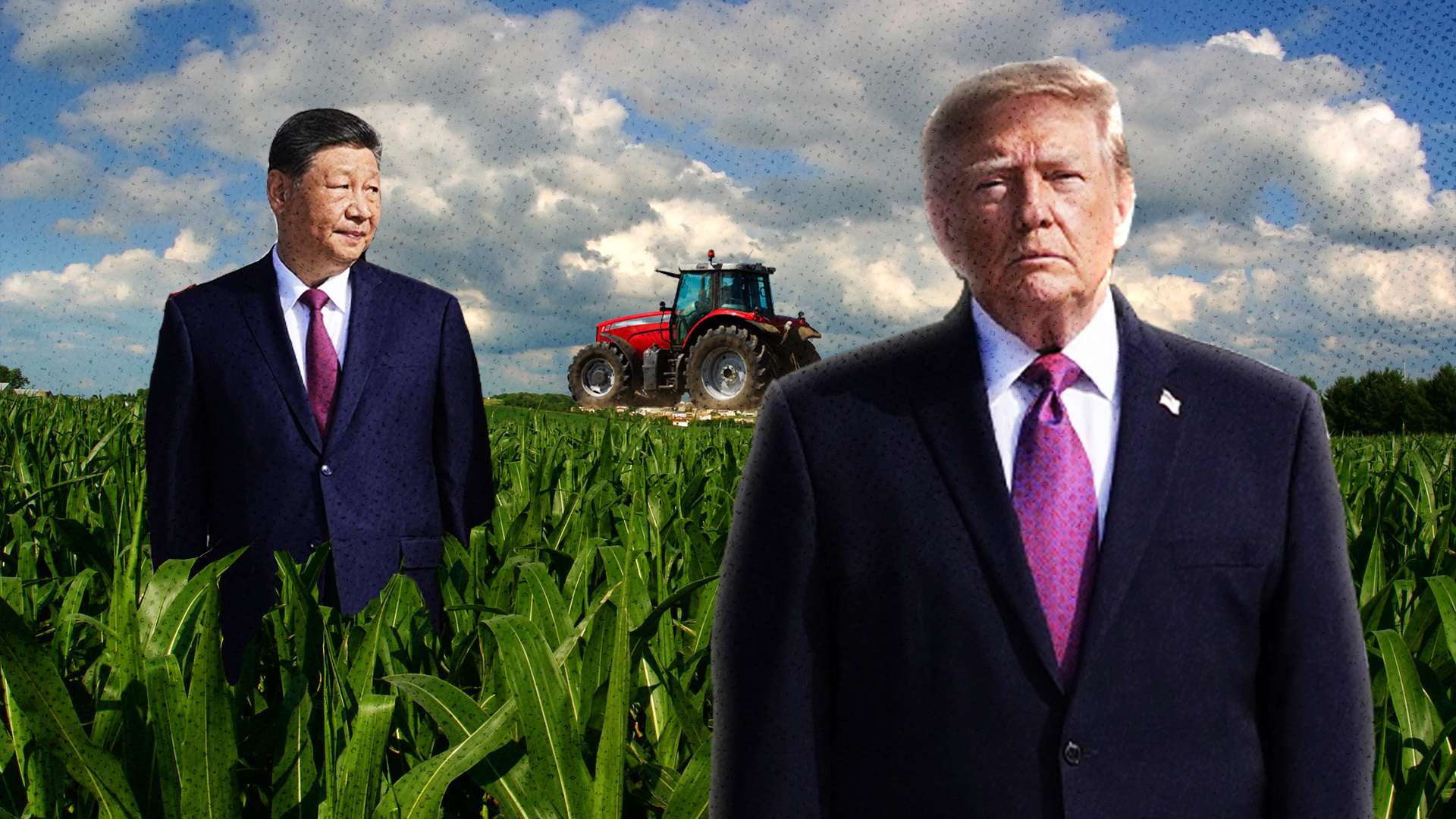
The collapse of farm exports is the most underappreciated story in American politics
It was a direct result of President Donald Trump's trade war, as even the Department of Agriculture now admits.
reason.com
- Messages
- 46,677
- Reaction score
- 7,818
- Points
- 288

Global Trade Keeps Getting Hit—and Keeps Moving
The world of trade is led by optimists, and the data shows the resilience of the strategies these stewards of trade have developed and deployed.
gcaptain.com