What If We’re Stuck Down Here?

Welcome to the Precious Metals Bug Forums

Welcome to the PMBug forums - a watering hole for folks interested in gold, silver, precious metals, sound money, investing, market and economic news, central bank monetary policies, politics and more.

Why not register an account and join the discussions? When you register an account and log in, you may enjoy additional benefits including no Google ads, market data/charts, access to trade/barter with the community and much more. Registering an account is free - you have nothing to lose!

searcher

morning
Moderator
Benefactor
Messages
37,121
Reaction score
6,384
Points
288
No clue as to the veracity of this.

What If We’re Stuck Down Here?​


If I'm to be honest, I believe in a future of space colonization because I want to believe in it. It's romantic. It's adventurous. It's cool! It's also, in a worst-case scenario, the way to preserve the species in the event we ruin the Earth—a deus ex humana to bail ourselves out even if under those circumstances we wouldn't, perhaps, deserve it. I root hard for the Artemis missions and the Gateway project, which could begin construction on a lunar-orbit space station by the end of the decade, and a crewed mission to Mars in my lifetime. I dream of what's beyond that, because it's good and healthy to dream. In the way are innumerable technological hurdles, which are worth tackling for their own sake: We progress scientifically by determining which challenges can be overcome.

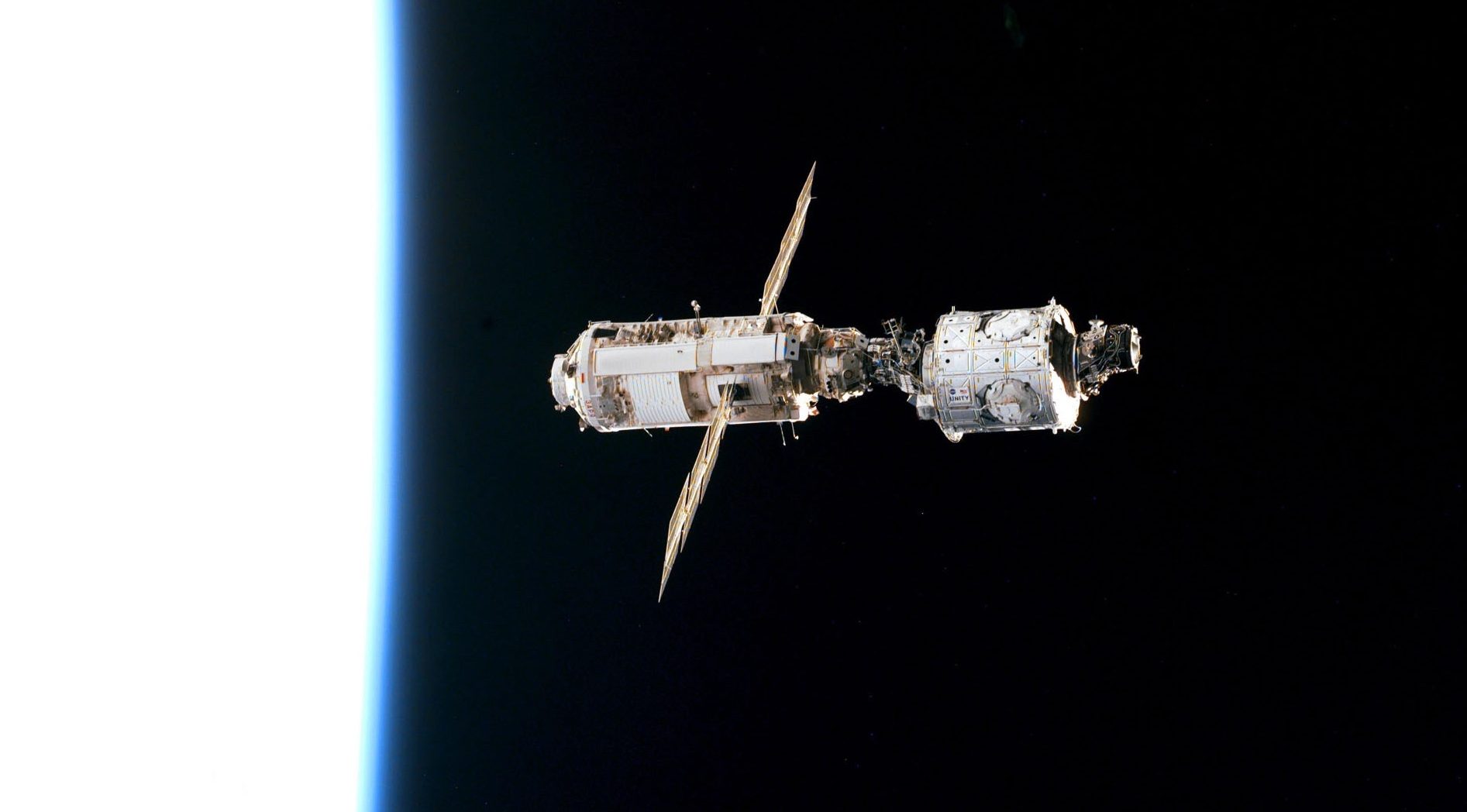
But what if certain challenges are not hurdles but roadblocks, and not technological but biological? If the problem is not what we can build, but what we are? It would be a huge blow to future hopes of a cosmic diaspora if the obstructions were not about time and distance, but about the fundamental weaknesses of the human body. We've long known of the deleterious effects spaceflight can have on the human body: bone loss, anemia, weakened immune systems, higher cancer risks, the list goes on. Some issues are caused by microgravity; others by the background radiation of space—NASA estimates that astronauts are exposed to the equivalent of up to 6,000 chest X-rays. Astronauts in low Earth orbit, where the International Space Station hangs out, are partially shielded from this radiation by Earth's magnetosphere, but even they suffer the effects.

More:
 
giphy.webp
 
In a nutshell, we're done for as a species if we don't leave the crib...

(assuming our predecessors weren't dumped here tens of thousands of years ago akin to the Poms sending their convicts to Australia).
 
Until we establish moon base Armstrong/Gagarin, I'm not holding my breath. No pun intended.


.
 
Here's an interesting take on things.

Neither Elon Musk Nor Anybody Else Will Ever Colonize Mars​


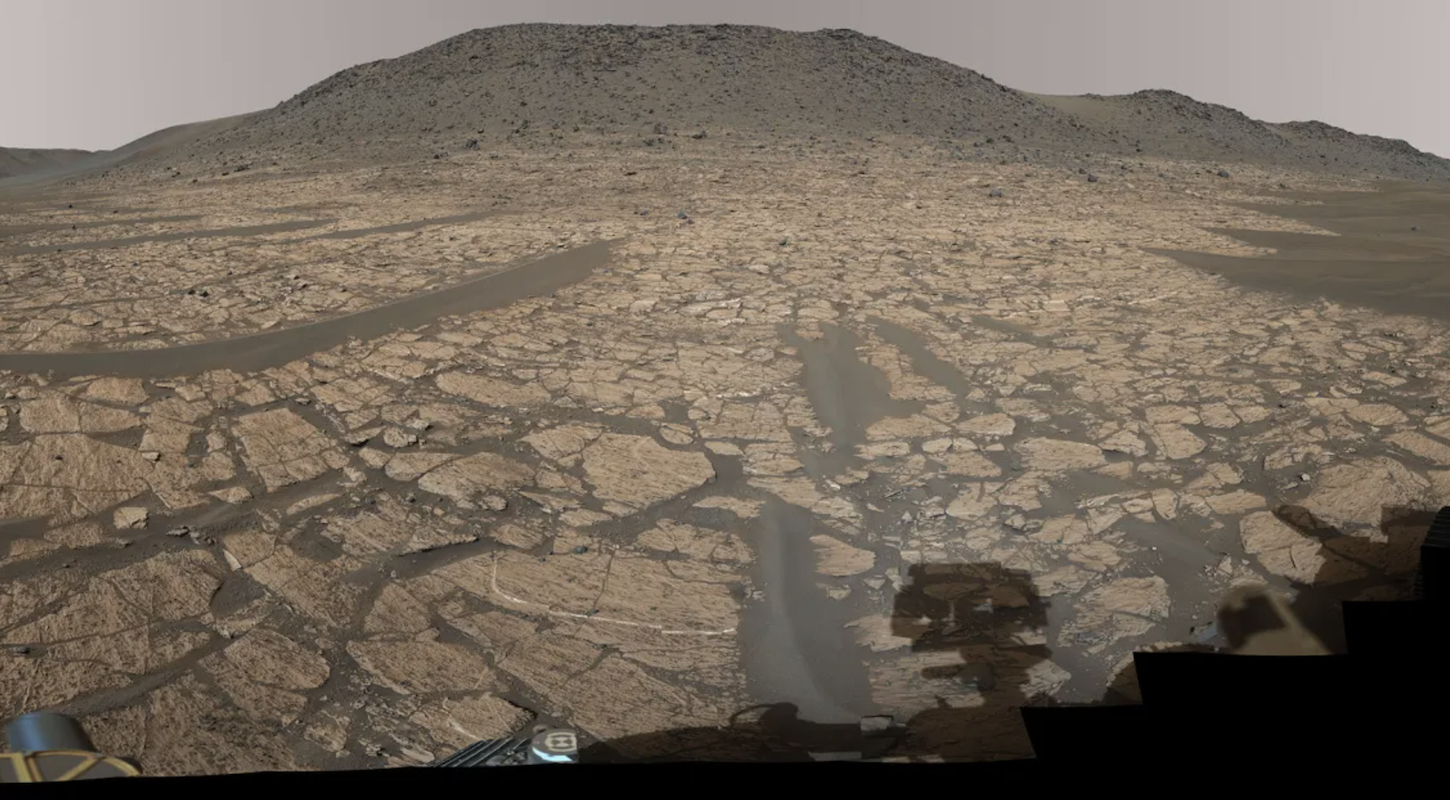
Mars does not have a magnetosphere. Any discussion of humans ever settling the red planet can stop right there, but of course it never does. Do you have a low-cost plan for, uh, creating a gigantic active dynamo at Mars's dead core? No? Well. It's fine. I'm sure you have some other workable, sustainable plan for shielding live Mars inhabitants from deadly solar and cosmic radiation, forever. No? Huh. Well then let's discuss something else equally realistic, like your plan to build a condo complex in Middle Earth.

OK, so you still want to talk about Mars. Fine. Let's imagine that Mars's lack of a magnetic field somehow is not an issue. Would you like to try to simulate what life on Mars would be like? Step one is to clear out your freezer. Step two is to lock yourself inside of it. (You can bring your phone, if you like!) When you get desperately hungry, your loved ones on the outside may deliver some food to you no sooner than nine months after you ask for it. This nine-month wait will also apply when you start banging on the inside of the freezer, begging to be let out.

Congratulations: You have now simulated—you have now died, horribly, within a day or two, while simulating—what life on Mars might be like, once you solve the problem of it not having even one gasp worth of breathable air, anywhere on the entire planet. We will never live on Mars.

More:

 
I hear Stabuck's is planning their first location on Rigel 7 by 2050.
 
We are not prepared for the Vogon fleet destroying the Earth to make way for an intergalactic highway.
 
As a species were just aren't ready for interstellar travel. We cant even figure out how to live together on our planet let alone try and interact with other species in our own galaxy.
 
As a teen I loved, lived, Sci-Fi books. I'm a retired aerospace engineer. I have an innate predisposition to want to support space exploration. And I do think there are positives to pushing ourselves into orbit, and (at least for a trial) the moon. A challenge like that drives innovation, and produces products that positively affect our lives on earth. But a colony on Mars? Doesn't make sense - at least not at this time. Let's see if we can colonize the moon (which I doubt, unless a giant discovery of some product needed on earth is made) and resolve those numerous technical problems first.

At the same time, colonizing the poles of the earth, or deep undersea, would be far less difficult, and might teach us other lessons.

Doing a trip to Mars? - maybe (if someone wants to fund it, I don't). A colony on Mars? It's simply stupid (at this point). It's getting way too far forward of our skis.
 
No clue as to the veracity of this.

What If We’re Stuck Down Here?​

We are.

Part of our limitations. We're suited for life here. NOT on a planet without life.

A LARGE part of the problem is the dependence on supply chains

....on OTHERS.

A high-trust situation.

Have we forgotten the circle-jerk with the stranded Space-Station astronauts? HAVE WE FORGOTTEN...that the Brandon puppetmasters were PERFECTLY SUITED to just leave them DIE...after DEI-Boeing failed in several rescue-rocket attempts?

And we know how Kameltoe would have left it. JUST AS THE PUPPETMASTERS WANT.

So. We've had a revolution - the supremacy of idiocy. From medicine and science, to the average moron on the street...our brains and sense have been muted down.

So we sent a crew to Mars, and we have this kind of revolution - and alluva sudden, importing d@rkies from Africa and martyrs from Iran, is more attractive to the imbeciles of the Elite Class...then just spending money to send rockets to places they cannot ever see?

Sorry. My opinion is, we need to knock off this mental masturbation. We went to the moon (save me the Fake-Nooze arguments) and what did we gain from it? NOTHING.

NO

THING.

We have to rebuild our modern society HERE. Now, if we're to just send the Elites to a retirement on Mars...THAT I could get into.

But I'm not willing to spend money on any flippin' supply lines.
 
No clue as to the veracity of this.

What If We’re Stuck Down Here?​


If I'm to be honest, I believe in a future of space colonization because I want to believe in it. It's romantic. It's adventurous. It's cool! It's also, in a worst-case scenario, the way to preserve the species in the event we ruin the Earth—a deus ex humana to bail ourselves out even if under those circumstances we wouldn't, perhaps, deserve it. I root hard for the Artemis missions and the Gateway project, which could begin construction on a lunar-orbit space station by the end of the decade, and a crewed mission to Mars in my lifetime. I dream of what's beyond that, because it's good and healthy to dream. In the way are innumerable technological hurdles, which are worth tackling for their own sake: We progress scientifically by determining which challenges can be overcome.

But what if certain challenges are not hurdles but roadblocks, and not technological but biological? If the problem is not what we can build, but what we are? It would be a huge blow to future hopes of a cosmic diaspora if the obstructions were not about time and distance, but about the fundamental weaknesses of the human body. We've long known of the deleterious effects spaceflight can have on the human body: bone loss, anemia, weakened immune systems, higher cancer risks, the list goes on. Some issues are caused by microgravity; others by the background radiation of space—NASA estimates that astronauts are exposed to the equivalent of up to 6,000 chest X-rays. Astronauts in low Earth orbit, where the International Space Station hangs out, are partially shielded from this radiation by Earth's magnetosphere, but even they suffer the effects.

More:



Is that what happened to Katy Perry? First, she goes up in space and becomes an "astronaut". Next thing you know, she's dating Justin Trudeau.


Moral of this story - space flight turns women into lesbians.
 
We gotta plan, I tell ya, a PLAN!
A starship to … somewhere?

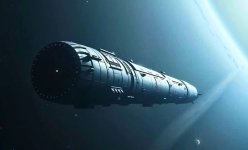
Chrysalis, the 36 Mile Starship Built to Carry 1,000 Humans Away From Earth… Forever​

36 Mile Vessel.jpg

DailyGalaxy

It would carry people across 400 years to another star. It would generate its own gravity, grow its own food, and preserve a civilization across generations. It would need to generate its own gravity, grow its own food, recycle every molecule of water and air, and preserve enough technical and cultural knowledge across 16 generations to complete a voyage no human has ever attempted.

The Chrysalis design assumes fusion power for propulsion and shipboard energy. The team specified a Direct Fusion Drive using helium-3 and deuterium, with one year of acceleration to reach cruising speed, 400 years of coasting, and a final year of deceleration. No operational fusion reactor suitable for spacecraft propulsion exists as of early 2026.

Ship Const.JPG
The Chrysalis team arrived at a 58-kilometer structure with nested cylinders rotating in opposite directions. The outermost layers produce centrifugal force equivalent to 0.9 times Earth’s gravity. Inner shells rotate counter to the outer ones, a configuration intended to reduce structural perturbations that could propagate through the vessel.
 
Back
Top Bottom