
Just think of the markets and some big money trying to steal as much money as possible from the casino. You'll understand its moves much better.

Welcome to the PMBug forums - a community supported watering hole for folks interested in gold, silver, precious metals, sound money, investing, market and economic news, central bank monetary policies, politics and more.
Register a free account to join the discussions. When you register an account and log in, you may enjoy additional benefits including access to market data/charts and additional members only rooms (including one for trade/barter with the community).


 www.zerohedge.com

pmbug said:Free float gold stock (ie. actually available - not owned by ETFs or the Bank of England) in the LBMA + COMEX vaults as of the end of July was only ~2,375 metric tons. At $4,500/ozt, that's ~$344B. A rotation of just ~0.1% of that $350T would be enough to wipe out the entire available inventory of currently vaulted Good Delivery gold bars in Western markets.
The math is even more striking with silver (it's a much smaller market). Free float silver stock in the LBMA + COMEX vaults as of the end of July was only ~15,330 metric tons. At $80/ozt, that's $39.4B (10x smaller than gold). Just 0.01% of the $350T would wipe out available inventory of currently vaulted Good Delivery silver bars in Western markets.

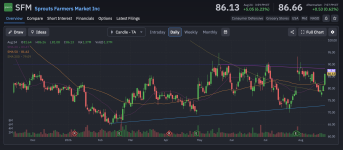
We have Sprouts stores in my area. They have decent merchandise and they are proud of it.
pmbug said:LBMA gold and silver supply is likely shrinking as spot prices are rising relative to COMEX futures.
EFP spreads (COMEX futures price - LBMA spot price) for August & September contracts continued to drop this morning with silver's Sep COMEX contract EFP spread flipping negative and gold's Aug COMEX contract EFP spread at >$5 below LBMA spot - the most it's been since early July.
LBMA prices are rising relative to COMEX futures. It's likely, IMO, that this is reflecting shrinking supply of available metal in the LBMA vaults (ie. free float vault stock). This would make sense as ETFs, China and India are all reporting increasing vault stocks. The ETF's gains are the LBMA's drains.
China and India could possibly be sourcing their inflows from somewhere other than the LBMA, but it's pretty safe to say they aren't sourcing from the COMEX directly (as COMEX withdrawals are low for August). The LBMA is the most likely venue (especially for India as that has been their preferred venue in the recent past).
I think there is a good chance the LBMA gets squeezed again before the end of this year if the current trend continues.

 macrogertjan.substack.com
The repeated redemption pressure at Blackstone’s flagship private credit fund is less about an immediate liquidity crisis and more about a growing mismatch between the liquidity investors expect and the liquidity the underlying assets can actually provide, because BCRED is designed to allow only limited quarterly withdrawals while its loans are fundamentally long-dated and illiquid, so when redemption requests remain near 10 percent for multiple quarters against a 5 percent repurchase cap, unmet requests begin to roll forward and create a persistent liquidity queue. The more important signal is that this is happening alongside rising markdowns and higher non-accrual rates across parts of private credit, especially in leveraged software, which means investor demand for liquidity is increasing at the same time asset quality is becoming somewhat weaker, making the structure more vulnerable if inflows slow or credit losses accelerate.
This does not mean private credit is breaking, because large managers such as Blackstone still have substantial liquidity buffers and the redemption cap is part of the fund structure rather than an emergency measure, but it does show that the semi-liquid private credit model is entering a more difficult test than during the easy-money period, particularly among wealthy individual investors who were attracted by high yields but may not have fully appreciated how limited liquidity becomes when many investors want to exit at the same time. If similar redemption pressure spreads across other large evergreen funds, managers could become more conservative in new lending, raise cash balances, or eventually sell assets at discounts, which would tighten credit conditions for highly leveraged borrowers even without a formal financial crisis.
Personal View
I see this as an early warning on liquidity rather than a systemic private credit crisis, because the real problem starts only if persistent redemption queues meet worsening credit quality and weaker new inflows at the same time. For now, Blackstone can manage the withdrawals because the fund still has significant liquidity and the 5 percent cap was already embedded in the structure, but if investors continue asking for around 10 percent every quarter while loan markdowns and defaults rise, the pressure can compound quickly because private credit cannot liquidate assets as easily as public bond funds, so this is something worth watching closely as a potential transmission channel from private markets into broader credit conditions.
 The world's largest wealth fund may dump $80 BILLION of U.S Treasuries
It's just a flesh wound...
"May" being the operative word here...
Norway's fund has proposed slashing U.S government bond exposure from 34% to 22% of its bond portfolio.
The official reasoning is "diversification." Truthfully, decade-high yields and a $40 trillion debt pile doesn’t scream "safe haven" like it used to.
Norway’s wealth fund owns on average 1.5% of all listed companies globally.
Source: CNBC / Writers: Bri, Ian

