Artificial Intelligence (AI) news and discussion

Welcome to the Precious Metals Bug Forums

Welcome to the PMBug forums - a community supported watering hole for folks interested in gold, silver, precious metals, sound money, investing, market and economic news, central bank monetary policies, politics and more.

Register a free account to join the discussions. When you register an account and log in, you may enjoy additional benefits including access to market data/charts and additional members only rooms (including one for trade/barter with the community).

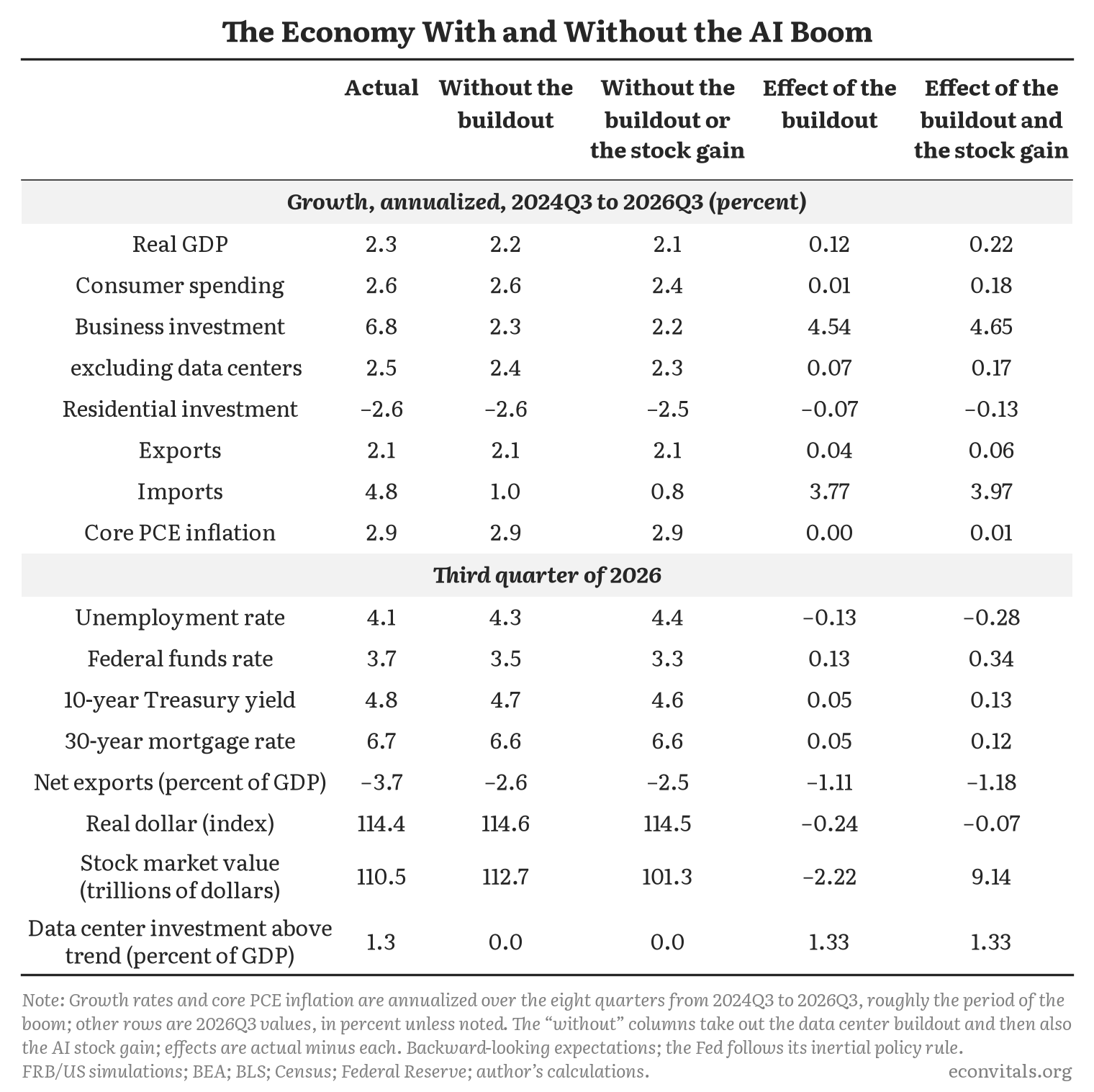
What is going to happen when AI stocks crash? Chinese AI is open source and free. US AI companies expanded way beyond profitable ROI.

You don't need a master's degree in finance to know what is on the way. Add a romantic fling between the most powerful man in the world in semiconductors iwith a Chinese spy. What do you think is going to happen shortly?
 

When AI Invents Facts, Whose Fault Is It?​

In February, 2024, Air Canada made an unusual argument before a Canadian tribunal: Its website chatbot, which gave a grieving customer incorrect information about bereavement fares, was responsible for its own mistakes.

The tribunal wasn't convinced. Tribunal member Christopher Rivers called it "a remarkable submission" and wrote that Air Canada was responsible for all the information on its website, whether it came from a static page or a chatbot. The airline was ordered to pay damages for failing to take reasonable care to ensure the chatbot's information was accurate.

The amount was modest, but the principle wasn't. Companies are publishing more artificial intelligence-generated content than ever, including web copy, blog posts, comparison pages and sales collateral, and when that content is wrong, "the AI did it" doesn't hold up as a defense.

More:

 
Related

Inside the global transformer shortage | Transforming business

Nov 14, 2026 #airevolution #electricity #transformer
The AI revolution needs electricity. And electricity needs transformers. But the world is running short of them. Delivery times have stretched to several years, raw material costs are rising, and the explosive growth of data centers is putting unprecedented pressure on the industry. The consequences range from delayed renewable energy projects to bottlenecks in the expansion of AI infrastructure. Why are transformers in short supply? Who stands to benefit from the boom? What role does China play? And can power grids keep pace with the rapid growth of clean energy and artificial intelligence?In this episode of Transforming Business, we visit Siemens Energy, one of the world's leading transformer manufacturers, speak with industry experts, and reveal why an often-overlooked piece of technology has become one of the most critical building blocks of the 21st century.


13:23


Grok


The Current AI “Investments” Are Turning into a Bubble​

There’s no question that we are presently living through a time of major technological upheaval and advancement. I’m somewhere between the extremes when it comes to long-term views—I’m not convinced that AI will kill us all, nor am I convinced that AI will usher in some new post-scarcity utopia.

I’m more confident about the shorter run: we are in a big AI bubble.

There has been a huge boom in the industry in the last few years. The question is whether that boom is sustainable or whether it will turn to bust.

More:

 
>Anthropic just hired Kristina Shacke ahead of their IPO lunch for communications. She previously served as Special Assistant to President Barack Obama.

>Anthropic hired Sarah Heck as Anthropic's Head of Public Policy. Heck previously served on the National Security Council during the Obama administration and worked as an advisor to the Obama Foundation.

>Anthropic hired Christopher Fonzone as Anthropic's National Security and Public Sector Advisory Council. Fonzone previously served as Deputy Assistant to Obama, Deputy White House Counsel, and National Security Council Legal Adviser during the Obama administration.

>Dario Amodei published his essay on demanding AI regulations two days after Barack Obama spoke to him and Democrat leaders about this same subject.

>Dario Amodei is a major donor to Barack Obama and prominent Democrats.

They aren’t pushing for regulations. They are actively concentrating power and Jensen’s removal was part of the plan. Wake up.


You wanted disclosure? You got it.

How the Anthropic Money Network Got Behind the Jensen Huang Pile-On

Two receipts per name: the money they took, and the words they said.

1. Kevin Roose and Casey Newton

The money: $480,000 from Tarbell for their new NPR show.

The words: Newton said Huang's resignation "feels like a proper end to the 'lol nothing matters' era." Roose said Huang "had to go."

On air, the credits thank Tarbell. On X, where 400,000 followers actually read them, it's just "with @NPR."

In October, Roose was "thrilled to be a Tarbell grantee." He said it to the funder. Not to his readers.

2. Alec Stapp, Institute for Progress (an AI policy think tank)

The money: more than $21 million from Coefficient Giving, including $10.5 million this July. His co-founder now runs Coefficient's public policy, and sits on IFP's board.

The words: four posts in two days. "Chinese spy." "Blackmail." Huang's "cover-up." And what investigators would find "once they start issuing subpoenas."

Coefficient didn't come up once.

3. Shakeel Hashim, Transformer

The money: "primarily funded by Coefficient Giving" (formerly Open Philanthropy), whose money comes from Anthropic investor Dustin Moskovitz.

The words: he demanded Huang disclose his conflicts of interest. He didn't mention his own.

His own About page promises: "In stories where we report on our funders or interview someone who works there, we will disclose the relationship."

That's a standard he apparently drops when pushing the exact regulatory agenda those funders bankroll. His rule, not mine.

4. Kelsey Piper, The Argument

The money: $1,000,000 from Open Philanthropy, June 2025.

The words: in 2019 she said Vox's Future Perfect section "probably would not take funding" straight from Open Philanthropy. This fall she wrote two big pieces on Anthropic. Neither mentions the million.

2019 Kelsey had a rule. 2025 Kelsey had a grant.

5. Sigal Samuel, Vox

The money: her earlier Anthropic pieces carried a note that her section gets money from a foundation "whose major funder was also an early investor in Anthropic."

The words: on November 14, Huang week, she wrote about Anthropic's "$1.4 trillion IPO."

The note is gone.

6. Zvi Mowshowitz

The money: a $200,000 "unconditional gift" from Jaan Tallinn, who led Anthropic's first funding round.

The words: anyone who thinks Effective Altruism and Anthropic took Huang down has "Anthropic Derangement Syndrome."

Calling it paranoia while cashing the check. There's a syndrome for that too.

7. The newsrooms

Tarbell pays $75,000 to $135,000 to place AI reporters inside newsrooms.

NBC, Fortune, CNBC, The Verge and The Guardian all ran stories this month by reporters it pays, current or former. None said so in the stories.

NBC added a note only after OpenAI complained. Fortune put a line on an author page, because that's all Tarbell's own rule requires: the one page nobody clicks.

The Dispatch put it right with the story. See? It's not hard.

Where Tarbell's money comes from: $23,100,930 from Coefficient to date. More from Jaan Tallinn's fund. And a speaker for its fellows: Jack Clark, co-founder of Anthropic.

8. The rest of the chorus

Rob Wiblin, 80,000 Hours ($7.7 million from Coefficient):
"His mistress's firm ended up with ~$5b worth… WITAF is this."

Miles Brundage, AVERI ($5 million from Coefficient):
"Everyone paying attention knew that NVIDIA captured Commerce long ago."

Peter Wildeford, co-founder and board member of IAPS (an AI policy institute; $34 million from Coefficient):
"NVIDIA as a whole has been nothing but ruthless and dishonorable."

Ryan Fedasiuk, Foundation for American Innovation (backed by Jaan Tallinn and Dustin Moskovitz, both Anthropic investors):
"An abject governance and national security failure."

Nathan Calvin, Encode ($516,000 recommended from Tallinn's fund):
Huang's conduct should "irrevocably call Jensen's judgement into question."

Jordan Schneider, ChinaTalk ($3 million from Coefficient):
"How did the CFO not know…"

Different logos. Same checkbook. Not one of them mentioned it.

t's the standard they just demanded from Jensen Huang.

One reporter forgets? Coincidence.

Megaphones, newsrooms, think tanks, one funding network, one target, one week, in the middle of Anthropic's IPO

One detail they left out: Anthropic formally launched its IPO on October 26, filing publicly with the SEC.
Just a coincidence.?

I'm just grading them on their own homework.

Rules for thee. Grants for me.

You wanted disclosure? You got it.

 
You know...it's a serious day and this is a serious topic...with this "company" (CIA front, probably) going public.

But I find it hard to take it so, given the whole atmosphere around this industry, this business model...even before they find a market, they're working to dig a regulatory moat.

And their public face is fitting. Anyone here ever read Kurt Vonnegut's Breakfast of Champions? Claude's logo is exactly Kurt Vonnegut's comical drawing of a bodily orifice, shared by all, viewed negatively.

claude-logo-2026-03-26-09-40-04.png
 
"Guys, this is very serious and you have to read this right now. The Riemann Hypothesis may have just been solved, and if the claim holds, it's an insane achievement.

In mathematics there is a famous problem called the Riemann Hypothesis, and it's about prime numbers. Primes are numbers like 2, 3, 5 and 7 that can only be divided by 1 and themselves. Every other number is built by multiplying them together, so they're the building blocks of all numbers. You can never tell exactly where the next prime will show up, but if you step back, there's a pattern.

Around 1,000, about 1 in 7 numbers is prime. Around a million, about 1 in 14. Around a billion, about 1 in 21. Primes get rarer at a steady, predictable pace.

Because of that pattern, mathematicians can estimate how many primes there are below any number. But the estimate is never exactly right. It's always a little off, and the big question is how far off it can get. Think of flipping a coin 1,000 times. You expect 500 heads, but you'll get something like 480 or 520. It's a little off, but never wildly, and you can predict how far off it will be.

In 1859 a mathematician named Bernhard Riemann found that the prime estimate's error isn't random. It's controlled by a hidden set of special numbers. Where those numbers sit decides how big the error gets. Riemann guessed that every single one of them sits on one straight line. If he's right, the error always stays small, just like the coin, and primes are as orderly as they could possibly be. If even one of those numbers is off the line, the error can grow much bigger, and primes are far messier than we think.

So far computers have found trillions of these special numbers, and every single one is on the line. But there are infinitely many, so checking will never be enough. You need a proof that covers all of them at once. For 167 years nobody has found one. It's one of the seven hardest unsolved problems in mathematics, with a million dollar prize attached.

Now a mathematician has posted a note saying that, working with Claude, he believes he has that proof. He says a computer has already checked every step, and that Claude raced ahead of him near the end. Experts still need to confirm it, but this isn't a random internet claim.

If it holds, it doesn't mean we can predict every prime. It means we finally know the pattern can never go wildly wrong. Thousands of math papers that begin "assuming the Riemann Hypothesis is true" become proven fact overnight. We'd also get firm limits on how far apart primes can be, and a guarantee that a fast method for testing whether a huge number is prime always works. And no, your bank account isn't in danger. Online security depends on how hard it is to break a huge number into its prime factors, and this proof doesn't make that any easier. If anything, it gives the math behind encryption a stronger foundation.

If it holds, this is bigger than one math problem. A question that beat the greatest minds in history for 167 years would have been cracked by a human and an AI in a matter of weeks. If AI can find answers and computers can check them, the limit on science is no longer how smart we are. It's how many good questions we can ask."

 
I'm smelling a Narrative Construct with that one.

I don't know maffs. I failed Algebra 2 in community college (back when you could fail courses; before koledge became a four-year summer camp). I can't follow even the problem...

...but Claude has been all over as such a wonderful dood, and really needing regulatory protecting to keep those monstrous lethal AIs from eating Claude and then all of us.

Not buying it.
 
Hummmm…
numbers extend to infinity, i.e.: no end.
So prime numbers must go on to infinity, right?
So how is this a solution? There might still be a prime number off 'the line' out there somewhere in infinity.
The explanation seems to be for someone above my pay grade.
 
Back
Top Bottom