
You are using an out of date browser. It may not display this or other websites correctly.
You should upgrade or use an alternative browser.
You should upgrade or use an alternative browser.
Tracking Trump's Tariffs and Turbulent Trade Talks
- Thread starter searcher
- Start date
Welcome to the Precious Metals Bug Forums
Welcome to the PMBug forums - a community supported watering hole for folks interested in gold, silver, precious metals, sound money, investing, market and economic news, central bank monetary policies, politics and more.
Register a free account to join the discussions. When you register an account and log in, you may enjoy additional benefits including access to market data/charts and additional members only rooms (including one for trade/barter with the community).

- Messages
- 22,646
- Reaction score
- 12,717
- Points
- 288
Knowing Trump - this is exactly what he did...
I keep telling people that everything has changed and nothing can stop what’s coming.
The Supreme Court just “helped” Trump and most people can’t see it.
They struck down tariffs based on the IEEPA law, that has been abused by past presidents, especially Obama, as I just laid out in a two part thread.
That law is so broad, that it actually endangers America, when used by a corrupt president like Obama.
And this ruling did nothing to stop Trump from imposing tariffs.
Trump immediately declared that he would restore the tariffs struck down because of the IEEPA law.
How?
NATIONAL SECURITY.
And here’s what most people are missing in this Supreme Court decision.
The Supreme Court did not give a remedy.
They didn’t demand that the tariffs be given back or how.
Why?
I would argue that they knew what was coming.
The Supreme Court did not throw out the tariffs that Trump placed on countries because of “national security.”
Why?
The Constitution gives the president “plenary power” over “national security.”
The Supreme Court knew that was coming.
They literally DISTINGUISHED what tariffs are legal and what tariffs aren’t.
That’s a great PRECEDENT for the future.
Clear law instead of purposely ambiguous law, that allows for future abuse.
Trump just exposed the corrupt IEEPA law in order to set the table to get rid of it.
And trust me.
Go read my 2 Part on this Supreme Court decision.
Obama and Brennan just shit a brick.
I keep telling people that everything has changed and nothing can stop what’s coming.
The Supreme Court just “helped” Trump and most people can’t see it.
They struck down tariffs based on the IEEPA law, that has been abused by past presidents, especially Obama, as I just laid out in a two part thread.
That law is so broad, that it actually endangers America, when used by a corrupt president like Obama.
And this ruling did nothing to stop Trump from imposing tariffs.
Trump immediately declared that he would restore the tariffs struck down because of the IEEPA law.
How?
NATIONAL SECURITY.
And here’s what most people are missing in this Supreme Court decision.
The Supreme Court did not give a remedy.
They didn’t demand that the tariffs be given back or how.
Why?
I would argue that they knew what was coming.
The Supreme Court did not throw out the tariffs that Trump placed on countries because of “national security.”
Why?
The Constitution gives the president “plenary power” over “national security.”
The Supreme Court knew that was coming.
They literally DISTINGUISHED what tariffs are legal and what tariffs aren’t.
That’s a great PRECEDENT for the future.
Clear law instead of purposely ambiguous law, that allows for future abuse.
Trump just exposed the corrupt IEEPA law in order to set the table to get rid of it.
And trust me.
Go read my 2 Part
on this Supreme Court decision.Obama and Brennan just shit a brick.
- Messages
- 22,646
- Reaction score
- 12,717
- Points
- 288
GROK
The IEEPA, or International Emergency Economic Powers Act, is a United States federal law enacted in 1977 (Title II of Pub. L. 95–223, signed by President Jimmy Carter on December 28, 1977). It is codified at 50 U.S.C. §§ 1701–1707.This statute grants the President broad authority to regulate international economic transactions and commerce during a declared national emergency. Specifically, it allows the President to address any "unusual and extraordinary threat" to the national security, foreign policy, or economy of the United States, provided the threat originates in whole or substantial part outside the country.Key Provisions and PowersThe President must first declare a national emergency under the National Emergencies Act with respect to the specific threat.
Once declared, the President can (under 50 U.S.C. § 1702) investigate, regulate, block, prohibit, or compel various actions related to property in which a foreign country or foreign national has an interest. This commonly includes:Freezing (blocking) assets.
Prohibiting or restricting financial transactions.
Regulating importation or exportation.
Imposing economic sanctions on countries, entities, or individuals.
The law requires periodic reporting to Congress (every 6 months) on the emergency, the threat, and actions taken.
In cases of actual armed attack on the U.S., additional powers (like confiscation of certain property) may apply.
IEEPA was created to limit and clarify the broader peacetime emergency powers previously available under the Trading with the Enemy Act of 1917 (TWEA), restricting them more narrowly (e.g., excluding purely domestic transactions in many cases and requiring a foreign-source threat).
Typical UsesPresidents have frequently invoked IEEPA to implement economic sanctions programs (administered primarily by the Treasury Department's Office of Foreign Assets Control, or OFAC). Examples include sanctions on Iran (starting with the 1979 hostage crisis), Russia, North Korea, certain terrorist organizations, and various other foreign actors or regimes.Recent Developments (as of February 20, 2026)On this date, the U.S. Supreme Court ruled in cases such as Learning Resources, Inc. v. Trump (and consolidated cases) that IEEPA does not authorize the President to unilaterally impose tariffs (import duties/taxes). In a 6-3 decision, the Court held that while IEEPA allows regulation of "importation" (e.g., blocking or prohibiting imports), it does not extend to imposing tariffs, which are a form of taxation constitutionally reserved to Congress under Article I. The ruling struck down broad tariffs imposed under IEEPA (including so-called "reciprocal" and "drug-trafficking" tariffs), though it does not affect tariffs imposed under other statutes (e.g., Section 232 or Section 301 authorities). This has significant implications for ongoing trade policy and potential refunds of previously collected duties.For the full statutory text, see the U.S. Code at sites like Cornell's Legal Information Institute or official government sources.
The IEEPA, or International Emergency Economic Powers Act, is a United States federal law enacted in 1977 (Title II of Pub. L. 95–223, signed by President Jimmy Carter on December 28, 1977). It is codified at 50 U.S.C. §§ 1701–1707.This statute grants the President broad authority to regulate international economic transactions and commerce during a declared national emergency. Specifically, it allows the President to address any "unusual and extraordinary threat" to the national security, foreign policy, or economy of the United States, provided the threat originates in whole or substantial part outside the country.Key Provisions and PowersThe President must first declare a national emergency under the National Emergencies Act with respect to the specific threat.
Once declared, the President can (under 50 U.S.C. § 1702) investigate, regulate, block, prohibit, or compel various actions related to property in which a foreign country or foreign national has an interest. This commonly includes:Freezing (blocking) assets.
Prohibiting or restricting financial transactions.
Regulating importation or exportation.
Imposing economic sanctions on countries, entities, or individuals.
The law requires periodic reporting to Congress (every 6 months) on the emergency, the threat, and actions taken.
In cases of actual armed attack on the U.S., additional powers (like confiscation of certain property) may apply.
IEEPA was created to limit and clarify the broader peacetime emergency powers previously available under the Trading with the Enemy Act of 1917 (TWEA), restricting them more narrowly (e.g., excluding purely domestic transactions in many cases and requiring a foreign-source threat).
Typical UsesPresidents have frequently invoked IEEPA to implement economic sanctions programs (administered primarily by the Treasury Department's Office of Foreign Assets Control, or OFAC). Examples include sanctions on Iran (starting with the 1979 hostage crisis), Russia, North Korea, certain terrorist organizations, and various other foreign actors or regimes.Recent Developments (as of February 20, 2026)On this date, the U.S. Supreme Court ruled in cases such as Learning Resources, Inc. v. Trump (and consolidated cases) that IEEPA does not authorize the President to unilaterally impose tariffs (import duties/taxes). In a 6-3 decision, the Court held that while IEEPA allows regulation of "importation" (e.g., blocking or prohibiting imports), it does not extend to imposing tariffs, which are a form of taxation constitutionally reserved to Congress under Article I. The ruling struck down broad tariffs imposed under IEEPA (including so-called "reciprocal" and "drug-trafficking" tariffs), though it does not affect tariffs imposed under other statutes (e.g., Section 232 or Section 301 authorities). This has significant implications for ongoing trade policy and potential refunds of previously collected duties.For the full statutory text, see the U.S. Code at sites like Cornell's Legal Information Institute or official government sources.
- Messages
- 22,646
- Reaction score
- 12,717
- Points
- 288
GROK: Explain the Supreme Court ruling in detail
Introduction to the Ruling
On February 20, 2026, the U.S. Supreme Court issued a 6-3 decision in the consolidated cases of Learning Resources, Inc. v. Trump (No. 24–1287) and Trump v. V.O.S. Selections, Inc. (No. 25–250). The Court held that the International Emergency Economic Powers Act (IEEPA), codified at 50 U.S.C. §§ 1701 et seq., does not authorize the President to impose tariffs. The judgment in Learning Resources was vacated and remanded with instructions to dismiss for lack of jurisdiction, while the judgment in V.O.S. Selections was affirmed. This ruling struck down broad tariffs imposed by President Donald Trump under IEEPA, emphasizing that tariffs constitute a form of taxation constitutionally reserved to Congress under Article I, Section 8, and that IEEPA's language does not clearly delegate such authority to the executive branch.The majority opinion was authored by Chief Justice John Roberts, with partial joins by other justices, leading to a splintered decision. The ruling applied both textual statutory interpretation and the major questions doctrine to conclude that IEEPA's grant of power to "regulate... importation or exportation" (50 U.S.C. § 1702(a)(1)(B)) does not encompass the imposition of tariffs, which are unbounded in scope, amount, and duration. The Court did not address the issue of refunds for the estimated $200 billion in tariffs collected in 2025, leaving that to lower courts or potential congressional action.
Background and Context
Shortly after taking office for his second term, President Trump declared national emergencies under IEEPA to address two perceived foreign threats: (1) the influx of illegal drugs, particularly fentanyl, from Canada, Mexico, and China, which he deemed a public health crisis; and (2) "large and persistent" trade deficits that had "hollowed out" American manufacturing and undermined critical supply chains. Invoking IEEPA's authority, he issued executive orders imposing:
Procedural History in Lower Courts
Majority Opinion (Chief Justice Roberts)
The opinion was divided into parts, with varying joins reflecting divisions over the role of the major questions doctrine versus pure textualism.
The majority was supported by concurrences that highlighted different interpretive approaches.
Dissents
The dissenters argued for a broader reading of IEEPA, emphasizing historical practice and foreign affairs deference.
Implications
The ruling reinforces congressional primacy over tariffs, limiting executive overreach in economic policy. It expands the major questions doctrine's application, potentially constraining future delegations in foreign affairs or emergencies. Tariffs imposed under IEEPA are invalid, but the decision does not preclude using other statutes (e.g., Section 232 or 301) with procedural safeguards. Unresolved issues include refunds for importers (who may have passed costs to consumers) and potential disruptions to trade agreements worth trillions. The splintered opinions highlight ongoing debates over interpretive tools like the major questions doctrine versus textualism in high-stakes cases.
Introduction to the Ruling
On February 20, 2026, the U.S. Supreme Court issued a 6-3 decision in the consolidated cases of Learning Resources, Inc. v. Trump (No. 24–1287) and Trump v. V.O.S. Selections, Inc. (No. 25–250). The Court held that the International Emergency Economic Powers Act (IEEPA), codified at 50 U.S.C. §§ 1701 et seq., does not authorize the President to impose tariffs. The judgment in Learning Resources was vacated and remanded with instructions to dismiss for lack of jurisdiction, while the judgment in V.O.S. Selections was affirmed. This ruling struck down broad tariffs imposed by President Donald Trump under IEEPA, emphasizing that tariffs constitute a form of taxation constitutionally reserved to Congress under Article I, Section 8, and that IEEPA's language does not clearly delegate such authority to the executive branch.The majority opinion was authored by Chief Justice John Roberts, with partial joins by other justices, leading to a splintered decision. The ruling applied both textual statutory interpretation and the major questions doctrine to conclude that IEEPA's grant of power to "regulate... importation or exportation" (50 U.S.C. § 1702(a)(1)(B)) does not encompass the imposition of tariffs, which are unbounded in scope, amount, and duration. The Court did not address the issue of refunds for the estimated $200 billion in tariffs collected in 2025, leaving that to lower courts or potential congressional action.
Background and Context
Shortly after taking office for his second term, President Trump declared national emergencies under IEEPA to address two perceived foreign threats: (1) the influx of illegal drugs, particularly fentanyl, from Canada, Mexico, and China, which he deemed a public health crisis; and (2) "large and persistent" trade deficits that had "hollowed out" American manufacturing and undermined critical supply chains. Invoking IEEPA's authority, he issued executive orders imposing:
- Drug-trafficking tariffs: A 25% duty on most imports from Canada and Mexico, and a 10% duty on most imports from China.
- Reciprocal tariffs: At least a 10% duty on all imports from all trading partners, with higher rates for dozens of nations, aimed at reducing trade deficits.
Procedural History in Lower Courts
- In Learning Resources, the D.C. District Court denied the government's motion to transfer the case to the CIT and granted a preliminary injunction, holding that IEEPA did not authorize tariffs.
- In V.O.S. Selections, the CIT granted summary judgment for the plaintiffs. The Federal Circuit, sitting en banc, affirmed in relevant part, concluding that IEEPA's authority to "regulate... importation" did not extend to tariffs that were "unbounded in scope, amount, and duration" (149 F. 4th 1312, 1338).
- The Supreme Court granted certiorari in V.O.S. Selections and certiorari before judgment in Learning Resources, consolidating the cases. Oral arguments were held on November 5, 2025.
Majority Opinion (Chief Justice Roberts)
The opinion was divided into parts, with varying joins reflecting divisions over the role of the major questions doctrine versus pure textualism.
- Part I (Background): Outlined the facts, tariffs, and lower court proceedings, citing precedents like Gibbons v. Ogden (9 Wheat. 1, 201) on the importance of congressional taxing power.
- Part II-A-1 (Constitutional and Statutory Context): Emphasized that Article I, §8 vests Congress alone with the power to lay taxes, duties, imposts, and excises, including tariffs. The executive has no inherent peacetime authority to impose tariffs (Nicol v. Ames, 173 U.S. 509, 515). The government conceded this, relying solely on IEEPA as a delegation.
- Part II-A-2 (Major Questions Doctrine): Applied the doctrine from West Virginia v. EPA (597 U.S. 697, 723), requiring clear congressional authorization for delegations of "vast economic and political significance." Tariffs under IEEPA would allow unbounded presidential power, transforming executive authority without limits (e.g., no caps, durations, or procedures, unlike other tariff statutes like 19 U.S.C. §§ 1338, 2132). The stakes were enormous, potentially reducing $4 trillion in deficits and affecting $15 trillion in trade deals, dwarfing cases like Biden v. Nebraska (600 U.S. 477). No exception for emergencies or foreign affairs when the power is congressionally derived. Key quote: "We claim no special competence in matters of economics or foreign affairs. We claim only... the limited role assigned to us by Article III."
- Part II-B (Statutory Interpretation): Even without the doctrine, ordinary interpretation shows IEEPA does not authorize tariffs. The text lists powers like "investigate, block, regulate importation/exportation" but omits "tariffs" or "duties," unlike explicit tariff statutes. "Regulate" means to control or adjust (Black’s Law Dictionary), not to tax. Taxes may regulate indirectly, but regulation does not imply taxation (Sonzinsky v. United States, 300 U.S. 506, 513). Neighboring verbs (e.g., "block/prohibit") are non-revenue focused. No presidential precedent for IEEPA tariffs in 50 years; other statutes were used instead. Rejects government analogies to Commerce Clause cases or wartime powers. Key quote: "IEEPA contains no reference to tariffs or duties. The Government points to no statute in which Congress used the word 'regulate' to authorize taxation."
The majority was supported by concurrences that highlighted different interpretive approaches.
| Justice(s) | Key Points and Quotes |
|---|---|
| Gorsuch (concurring in full) | Defended the major questions doctrine as a pro-Congress tool rooted in historical clear-statement rules (e.g., Entick v. Carrington). It prevents executive accretion and is not anti-administrative. No foreign affairs exception. Quote: "The doctrine is not novel... it mirrors historical canons." |
| Kagan (joined by Sotomayor and Jackson; concurring in judgment, joining Parts I, II-A-1, II-B) | No need for major questions; textualism suffices. "Regulate" = control by rule, not levy taxes (Gibbons v. Ogden). Congress uses specific terms for tariffs; IEEPA fits with "block/prohibit" for transactions, not revenue. No prior use (1977–2024). Legislative history supports control/freezing, not taxing. Quote: "Read text in context, scheme, common sense." |
| Jackson (concurring in judgment, joining Parts I, II-A-1, II-B) | Legislative history (e.g., S. Rep. No. 95–466) shows intent for "control/freeze property transactions," not tariffs. Verbs enable freezing, not taxing. Courts must effectuate Congress's will (United States v. American Trucking Assns., 310 U.S. 534). |
| Barrett (aligning with Gorsuch) | Doctrine uses context (structure, common sense) for natural meaning. Rejects as "clarity tax"; less obvious clues suffice if supported (Biden v. Nebraska). Not outcome-shaping. |
Dissents
The dissenters argued for a broader reading of IEEPA, emphasizing historical practice and foreign affairs deference.
| Justice(s) | Key Points and Quotes |
|---|---|
| Kavanaugh (joined by Thomas and Alito) | "Regulate importation" includes tariffs as a traditional tool (dictionaries, precedents like Algonquin SNG, Inc. v. FERC, 426 U.S. 548). Historical use (Nixon's 1971 tariffs under TWEA; Ford's under §232). Major questions inapplicable in foreign affairs (United States v. Curtiss-Wright Export Corp., 299 U.S. 304). Presidents need flexibility; doctrine adds "thumb on scale" against executive. Practical impacts: refunds, trade uncertainty. Quote: "Interpret statute as written, not with thumb on scale." |
| Thomas (joining Kavanaugh) | Nondelegation doctrine forbids core legislative powers (e.g., rules on private conduct), but foreign commerce/tariffs are delegable privileges (Dept. of Transportation v. Assn. of American Railroads, 575 U.S. 43). Historical delegations (1790s acts). Tariffs external power (Locke, Blackstone). Quote: "Power to impose duties... does not implicate constitutional foundations." |
Implications
The ruling reinforces congressional primacy over tariffs, limiting executive overreach in economic policy. It expands the major questions doctrine's application, potentially constraining future delegations in foreign affairs or emergencies. Tariffs imposed under IEEPA are invalid, but the decision does not preclude using other statutes (e.g., Section 232 or 301) with procedural safeguards. Unresolved issues include refunds for importers (who may have passed costs to consumers) and potential disruptions to trade agreements worth trillions. The splintered opinions highlight ongoing debates over interpretive tools like the major questions doctrine versus textualism in high-stakes cases.

So the law doesn't allow these tariffs.GROK: Explain the Supreme Court ruling in detail
What law allowed pResident Autopen to bring in FORTY MILLION UNVETTED ALIENS without identity, without application, without any sort of order or even registration?
WHY WAS THIS KOURT OF KANGAROOS NOT OPPOSED TO THAT.
The answer is obvious - they're OWNED.
By the Globalist cadre. Probably through Epstein; perhaps indirectly. I understand the herd instinct in power circles - the higher up they are, the more juvenile and craven they become; but are they THAT desperate to be accepted by the Kool Kids who are working with Davos Man to destroy us, that they'll just do their bidding?
Was it challenged in court?What law allowed pResident Autopen to bring in FORTY MILLION UNVETTED ALIENS without identity, without application, without any sort of order or even registration?
WHY WAS THIS KOURT OF KANGAROOS NOT OPPOSED TO THAT.
Was ANYONE allowed STANDING to challenge it?Was it challenged in court?

- Messages
- 47,792
- Reaction score
- 7,919
- Points
- 288
The $134-billion question: Who will get a tariff refund?
The battle is just starting for the 300,000 businesses that want $134 billion in tariffs refunded.
As it turns out, convincing six Supreme Court justices that President Donald Trump overstepped his authority in imposing sweeping tariffs relying on emergency economic powers was the easy part. The hard part: Getting a clear answer on what happens to the tens of billions of dollars that US companies forked over after Trump jacked up tariffs on every global partner last year.
The Trump administration — both formally and informally — has promised to refund duties collected if the Supreme Court issued a ruling against them. But neither the administration nor any of the justices have specified exactly how it would work.
In his dissenting opinion, Justice Brett Kavanaugh wrote, “Refunds of billions of dollars would have significant consequences for the US Treasury.”
More:
https://www.msn.com/en-us/news/poli...-a-tariff-refund/ar-AA1WLuSh?ocid=socialshare
- Messages
- 47,792
- Reaction score
- 7,919
- Points
- 288
While corporate America stayed silent, a small wine importer risked his business to challenge Trump’s tariffs
When President Donald Trump announced plans to raise the nation’s effective tariff rate to levels not seen since 1930 last year, most CEOs were silent. They’d seen how opposing the president’s ambitions – let alone his signature economic policy – could prove even more costly than the policies he enacted.With billions in annual revenue at stake, the leaders of multinational corporations generally stood still. But Victor Schwartz, the owner of small New York-based wine importer VOS Selections, took a giant step up.
Schwartz became the face of the fight to overturn Trump’s most sweeping tariffs — and he won, in a case that was decided by the Supreme Court on Friday.
More:
https://www.msn.com/en-us/news/poli...-trump-s-tariffs/ar-AA1WMRHi?ocid=socialshare
- Messages
- 47,792
- Reaction score
- 7,919
- Points
- 288

Why ships could be Trump's not-so-secret tariff weapon
Trump could leverage fees on container imports to raise revenue after the Supreme Court declared his emergency tariffs illegal.
 www.freightwaves.com
I don't recall a LOT of things we needed to know.What I'm asking is, did anyone even try?
I don't recall hearing about any legal challenges filed in court about stopping Biden's border and immigration policies.
The dishonest, controlled, monolithic Nooze Mediuh HIDES AND SPIKES information that goes against the Narrative.
We didn't hear anything about the MILLIONS coming in on commercial flights, either. Did we.
Planes, and even NGO funding trails, are easier to track than legal cases.
Of course you are.I'm wondering if any of us will see a check for the extra money the tariffs cost us to buy necessities?
Just kidding. We ain't gonna get squadouche.
They'll just be rebranded.
Seriously. Ask yourself: Would those tariffs have balanced the budget, in that there is a REAL surplus in there?
...no? Then where was this "Tariff Dividend" coming from?
Maybe from, where other red-ink projects come from?
So. The purpose of that stupid stunt would have been to BUY VOTES. That need continues.
So...we get money fer nuffin; he gets votes fer free.
He, and his corrupt Epstein advisors, tell us.
I'm guessing Trump can't admit to himself the election system is SO corrupted. Of the dozen or so House members who got in without true majorities. Senate as well.
Judas. You can't fix stupid; and Trump is coming off like either a dementia patient, or an idiot savant who got lucky in his business.
Squadouche is familar....where did it come from....yes, I agree.I'm wondering if any of us will see a check for the extra money the tariffs cost us to buy necessities?
Just kidding. We ain't gonna get squadouche.
- Messages
- 47,792
- Reaction score
- 7,919
- Points
- 288
Squadouche is familar....where did it come from.

Urban Dictionary: squadouche
squadouche: Squadouche means zero, zip, nada, nothing, perhaps even less than nothing.
 www.urbandictionary.com
Isn't Gavin Pondscum the nephew of Vodka Nan?
Isn't Psychological Projection UNIVERSAL among the Circle-D j@ck@sses?
Isn't Vodka Nan so obviously guilty of corruption, insider trading, and TREASON, it's amazing she hasn't been tried and executed already?
- Messages
- 47,792
- Reaction score
- 7,919
- Points
- 288

Europe hits back at 'pure tariff chaos' from the U.S., warning trade deals are at risk
European officials have reacted with disbelief to President Donald Trump's latest tariff policy, warning that trade deals could be at risk.
- Messages
- 47,792
- Reaction score
- 7,919
- Points
- 288
Xi gains the upper hand as Trump’s trade war is plunged into chaos
As Chinese citizens enjoyed their Lunar New Year holiday festivities over the weekend, officials in Beijing had even more reason to celebrate.A US Supreme Court ruling on Friday dealt a major setback to Donald Trump’s trade war, severely weakening one of his favourite methods of piling pressure on China.
Coming weeks before Trump is scheduled to meet Xi Jinping, the country’s leader, in Beijing, it could dramatically shift the power balance of that meeting.
By a majority of six to three, America’s highest court found that the White House’s imposition of duties on foreign countries, allies and enemies alike, was unlawful.
More:
https://www.msn.com/en-us/news/worl...unged-into-chaos/ar-AA1WS6AV?ocid=socialshare
- Messages
- 47,792
- Reaction score
- 7,919
- Points
- 288
Tariff costs and refunds take the spotlight as Home Depot, TJX and other retailers report earnings this week
Friday’s Supreme Court ruling against President Donald Trump’s emergency-use tariffs has landed just in time for quarterly results this week from some of the nation’s largest retailers, who will likely address the decision’s impact in some form with Wall Street analysts.Home Depot reports results on Tuesday, followed by rival Lowe’s a day later. Discounter TJX which runs TJ Maxx and Marshalls, also reports Wednesday, while results from Urban Outfitters and shoe designer Steve Madden round out the week.
More:
https://www.msn.com/en-us/money/com...rnings-this-week/ar-AA1WQmgl?ocid=socialshare


- Messages
- 47,792
- Reaction score
- 7,919
- Points
- 288
Trump tariff turmoil clouds transpacific contracting season - Splash247
Tariffs are back at the top of the shipping news agenda once again, creating confusion just as the transpacific contracting season gets underway. On Friday, the US Supreme Court ruled that president Donald Trump violated federal law by using the International Emergency Economic Powers Act...
 splash247.com
- Messages
- 47,792
- Reaction score
- 7,919
- Points
- 288
The Deeper Dive: Tariff Turmoil and Tantrums
The Supreme Court finally got up the courage to tell the wannabe emperor he cannot declare fake emergencies and use those fakes to seize power that is not his to take.
 goldseek.com

Viking
Yellow Jacket
- Messages
- 47,792
- Reaction score
- 7,919
- Points
- 288

U.S. has breached trade deal and Europe is ready to retaliate, top trade lawmaker tells CNBC
The U.S. has breached the terms of its trade deal with the European Union "several times," top EU trade lawmaker Bernd Lange told CNBC.
- Messages
- 47,792
- Reaction score
- 7,919
- Points
- 288
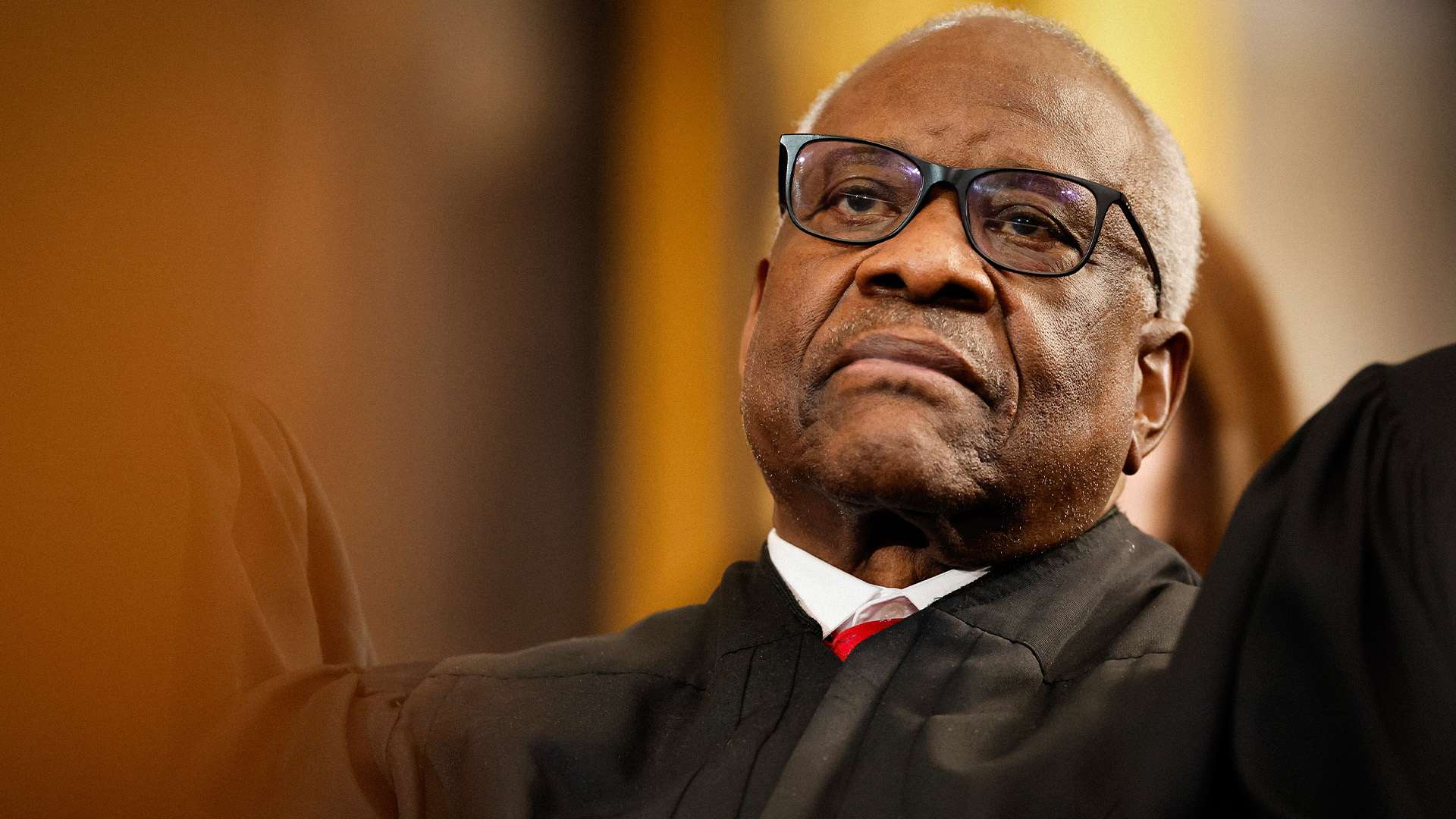
In tariffs dissent, Clarence Thomas embraced a dangerous theory of executive power
The conservative justice’s regrettable opinion in 'Learning Resources v. Trump'.
 reason.com
- Messages
- 47,792
- Reaction score
- 7,919
- Points
- 288

Customer sues FedEx for refund after Supreme Court rejects Trump tariffs
A shipper has sued FedEx for repayment of tariffs collected on small parcels after the Supreme Court said the Trump administration was wrong to use emergency authority to impose the import fees.
www.freightwaves.com
- Messages
- 47,792
- Reaction score
- 7,919
- Points
- 288

Trump’s new tariffs are just as illegal as his old tariffs
Numerous media outlets are spreading false information about the law — and Trump is benefiting.
 popular.info
- Messages
- 47,792
- Reaction score
- 7,919
- Points
- 288
Trump's tariffs are not going to eliminate the income tax
And that's especially true if the tariffs are illegal.
reason.com