
You are using an out of date browser. It may not display this or other websites correctly.
You should upgrade or use an alternative browser.
You should upgrade or use an alternative browser.
Motor Heads: Cars, Trucks, Tractors & Hvy Equip.
Welcome to the Precious Metals Bug Forums
Welcome to the PMBug forums - a community supported watering hole for folks interested in gold, silver, precious metals, sound money, investing, market and economic news, central bank monetary policies, politics and more.
Register a free account to join the discussions. When you register an account and log in, you may enjoy additional benefits including access to market data/charts and additional members only rooms (including one for trade/barter with the community).

You used to be able to get that green glow in older cars by just popping in a green-coated instrument-panel light bulb.
Today, if there were any demand for it, you'd be able to use an LED. But since most instrument panels are either LED-lit characters, or LCD displays, no need.
Of course back then you could just remove the cluster by pulling four Phillips screws. Whole thing would pop out. If you were so inclined, you could easily remove the odometer drum and roll back the miles...or, at least, leave the speedo unplugged from its drive-cable.
(That was something a LOT of new-car dealers did, when transporting cars, doing trades with other dealers, etc. Illegal, but they did it regularly. We bought one car that still had the cable disconnected...OOPS! And yes, the car turned into a lemon. Probably had run tens of thousands of miles before sale...there's reasons for believing this...and it wasn't broken in properly.)
Working on cars, back then, was easy, cheap, and often fun. It was a great way to stretch your budget. I've done timing belts, fuel pumps, starters, driveshaft u-joints, all with cheap tools and a set of ramps.
Today, if there were any demand for it, you'd be able to use an LED. But since most instrument panels are either LED-lit characters, or LCD displays, no need.
Of course back then you could just remove the cluster by pulling four Phillips screws. Whole thing would pop out. If you were so inclined, you could easily remove the odometer drum and roll back the miles...or, at least, leave the speedo unplugged from its drive-cable.
(That was something a LOT of new-car dealers did, when transporting cars, doing trades with other dealers, etc. Illegal, but they did it regularly. We bought one car that still had the cable disconnected...OOPS! And yes, the car turned into a lemon. Probably had run tens of thousands of miles before sale...there's reasons for believing this...and it wasn't broken in properly.)
Working on cars, back then, was easy, cheap, and often fun. It was a great way to stretch your budget. I've done timing belts, fuel pumps, starters, driveshaft u-joints, all with cheap tools and a set of ramps.

Ford's Mustang Cobra Jet sets a new EV quarter mile record at 6.87 seconds
Engadget
Ford Racing's Mustang Cobra Jet 2200 just ran a quarter mile in 6.87 seconds at 221 mph at an NHRA event in Charlotte, setting a new world record for an EV. As the name suggests, Ford's Cobra Jet 2200 puts a massive 2,200 horsepower to the wheels thanks to a newly designed electric motor and inverter combo. Ford elected to use two motors and inverters instead of four of each as before to reduce complexity and boost efficiency to 98 percent. Overall power is up by 600 horsepower, but the motors and inverters weigh half as much as before. Everything runs on a 900-volt architecture and 32 kWh battery that charges in 20 minutes.

- Messages
- 46,397
- Reaction score
- 7,787
- Points
- 288
METALLICA STAR'S Custom Creation | James Hetfield's "Aquarius"
Apr 28, 2026Welcome back to the Petersen Automotive Museum! In part two of our James Hetfield (yes, of Metallica fame!) Collection deep dives, we explore Aquarius—a stunning custom build that blends 1930s French Art Deco design with 1950s American hot rod style.
Donated by the Hetfield family in 2019, this one-of-a-kind car features flowing fenders, bold sculptural details, and a modern LS3 V8 under the hood. Built by Rick Dore Customs with hand-shaped aluminum bodywork, Aquarius is a perfect mix of vintage inspiration and modern performance.
Thanks for watching—stay tuned for more from the Hetfield collection!
Missed Pt. 1 of our Hetfield Deep Dives? Click to learn about the Black Pearl:
 • Metallica Meets Motors: Hetfield's Custom ...
 5:30
- Messages
- 46,397
- Reaction score
- 7,787
- Points
- 288
How do you rent a $4 million Bugatti for $750???
Apr 28, 2026 #VINwiki #BugattiChiron #HamiltonCollectionBreck Kennedy tells us about his amazing experience renting @TheHamiltonCollection Bugatti Chiron Super Sport.
7:13
- Messages
- 46,397
- Reaction score
- 7,787
- Points
- 288
Auto Micromanagement: The GM Cadet XP-79 Microcar!
May 2, 2026A classic car connoisseur tells the story of a secret project within the styling studio of General Motors, the Cadet / XP-79 microcar. American car companies aren't exactly known for making ultra small cars, so what moved GM to work on this little fella? And would this be a competitor to the upcoming Chevrolet Corvair? Or even better, fight the microcars in Europe, like the Isetta?
15:52
- Messages
- 46,397
- Reaction score
- 7,787
- Points
- 288
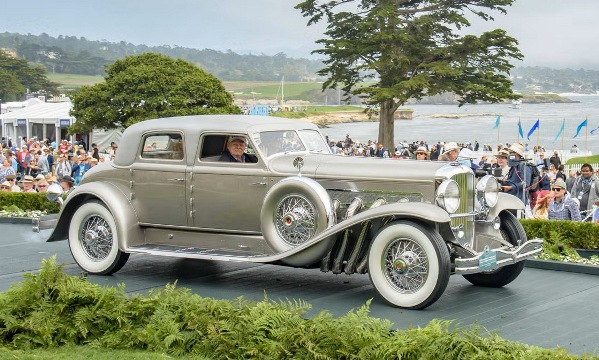
MCG Executive Briefing for May 1, 2026 - Mac's Motor City Garage.com
For its 75th anniversary celebration, the Pebble Beach Concours will host four famous cars from the 1933 Chicago World’s Fair. Get all the latest auto industry news in the Executive Briefing. Today’s headlines: + Carmakers including General Motors, Ford, … Continue reading →
 macsmotorcitygarage.com
Auto Micromanagement: The GM Cadet XP-79 Microcar!
May 2, 2026
A classic car connoisseur tells the story of a secret project within the styling studio of General Motors, the Cadet / XP-79 microcar. American car companies aren't exactly known for making ultra small cars, so what moved GM to work on this little fella? And would this be a competitor to the upcoming Chevrolet Corvair? Or even better, fight the microcars in Europe, like the Isetta?
15:52
That looks far different from the prototype Cadet that had been published years ago...which looked like a Ford "Shoebox" melted in the rear.
And it wasn't just a spitball styling option, either. Stylists working on it, in the stuff I'd read, wanted that as a theme. Nobody, in the era the Cadet was being considered, had conceived of a roofline like that of the later Camaro, shown on that thumbnail.
Be that as it may...while small cars were about to have a brief rebirth in popularity (Nash Rambler) it would have probably been better for GM to have stayed clear of them. GM was even then a huge organization, slow and rigid in changing. The Corvair, later, showed what happens when even a small team within is given the latitude to move. Feathers are ruffled; enemies try to paint it as a failure. Forces outside (like Nader) try to attack it, for fame and profit, and the enemies within the company glom onto that, run with it. The careers of the innovators are destroyed, and the Status Quo protected.
The Corvair showed what would have happened to the Cadet, a few years earlier. Just as what happened to Saturn, later...much-less innovative, but still, ruffling feathers. Killed from within, by withholding funds to update. ONLY those projects that kept the power-group entrenched, would have support.
This is why the growth of ANY industry absolutely depends on outsiders coming in with innovation and new ideas. And in a healthy structure, sometimes destroying the entrenched Old Guard.
Today, with regulatory moats, the entrenched forces face no challenge. How's that working out? Are cars better, cheaper, any different in design (other than fragile weight-reduction and government emissions crap) than they were 50 years ago? Actually, yeah. Now we have aluminum-bodied hulking four-door pickup trucks, so delicate you can break an axle off on a large pothole.
- Messages
- 46,397
- Reaction score
- 7,787
- Points
- 288
Ken Magee's Taco Mini Bike Collection is Insane!
Take a tour of Ken Magee’s amazing Taco minibike collection as he shows off his vintage minibikes, classic bikes, and go-karts. In this video, Kenny breaks down the history of Taco minibikes and shares insight into some of the rare and iconic machines in his collection. This is a must-watch for minibike fans, vintage minibike collectors, and anyone interested in minibike history!14:35
- Messages
- 46,397
- Reaction score
- 7,787
- Points
- 288
Was Your Car this Cool? Check out these vintage photos of 1950s & 1960s automobiles set to music!
May 4, 2026 CALIFORNIARemember the era of the 1950s and 1960s when cars were "cool"? We sure do! Enjoy this collection of vintage photos over 100 cars and trucks from the greatest time period in automotive history for styling and nostalgia.
How many vehicles do you recognize? See anyone famous? Do you recall any of the venues shown in the photos? Let us know in the comments!
Check out this video of classic cars and trucks from the greatest era of automotive history, and let us know your memories in the comments! We have many vintage photos of wonderful cars, trucks, places, and people of the time period, and it's all set to music. Enjoy!
The 1950s and 1960s were two of the best decades of automotive styling and innovative features. There were so many different makes and models that were easy to spot! How many vehicles in this video do you recognize? Let us know in the comments.
12:30
- Messages
- 46,397
- Reaction score
- 7,787
- Points
- 288

MCG Executive Briefing for May 8, 2026 - Mac's Motor City Garage.com
Audi has recreated the Auto Union Lucca, a 16-cylinder record car that ran 203 mph in 1935.Get all the latest auto industry news in the Executive Briefing. Today’s headlines: + The jump in diesel fuel prices triggered by the … Continue reading →
macsmotorcitygarage.com
Was Your Car this Cool? Check out these vintage photos of 1950s & 1960s automobiles set to music!
12:30
Thirty seconds in, and I'm calling Bovine Scat.
That photo of a row of cars at a Chevrolet-Pontiac dealership...on the extreme left...is a "ute" - a coupe utility, like the El Camino. Except the El Camino first came out in 1959, with a far more modern body. I'm not sure GM even made them in Australia, where they found a home, until later. Certainly never sold as Chevrolets - Holden was the GM brand there.
So it's not just AI narration (probably; I had the sound off) but AI hallucination, too.
(EDIT: I see they had a Holden sign before the others; I guess it was a Holden dealer. Didn't know Chevy and Poncho were sold in Aussieland, ever. BUT...two later photos show the Chrysler Turbine experimental cars in some sort of street race. Those aren't cool; those are rare museum pieces. Only fifty were made and most destroyed after testing).
That said...the photos before...I have some awareness of those cars. The Tri-Fives weren't cool until about when I got into high school. Prior to that, they were just old Chevrolets. A friend's mother had one; dad was climbing the corporate ladder and while he had a nice new Pontiac (1964) company car (they could use when he was at home), they couldn't afford a good car of their own. Or chose not to - they had a nice home and put a lot of improvement into it. We had newish cars; they had whole-house air-conditioning.
But she hated that rusty 1956. When finally she was allowed a newer car, a 1963 Ford Fairlane (a stripper, and used, but not rusty) she was overjoyed.
Others saw those cars the same. Just appliances. No one thought of them as anything special (beyond the Nomad wagon model) until they were mostly gone.
And that's how it is. We had a 1968 Wagoneer. It was my father's car; but for dirty jobs like getting a Christmas tree or getting mulch, my mother would use it. OH, how she hated that car...admittedly, it was a lemon. Kaiser had problems in those years - a small plant and demand for the J-Series (Wagoneer and Gladiator pickup) was exploding. And company owner Henry Kaiser had just died; no one knew what the future was. The IRS could have wound up owning the company for taxes. So they weren't going to expand the factory and they just sped up the line. The 1967-69s were the worst-assembled years.
But today it would be worth six figures. Back then...for five dollars my mother would have cheerfully burned it in the center of the city park.
Not just my own experiences. On an old-car site I used to frequent, we were discussing the last of the old-school Dodge/Plymouths, the Gran Fury and Diplomat. Those were the long-running last holdouts of the pre-Iaccoa years. The site owner put up a photo of one near his home, said it belonged to a neighbor. It had been Grandma's car, and now the teen girl in the family was taking it to school (2010; things are different today, of course).
I remarked that she probably hated it, felt it demeaning. I know I hated those things as taxis. If someone had given me my grandmother's brother's Ambassador as a school car, I'd have REALLY not been grateful.
I was quickly corrected. She loved the car, said the owner-poster. The kids all thought it was "ironic" and kewel - the boxy look, the four square headlamps, the bench seats.
It just shows how tastes change. Unpredictably.
Last edited:
- Messages
- 46,397
- Reaction score
- 7,787
- Points
- 288
They Built the World’s First Aluminum V16 Automotive Engine… Then Vanished - The Marmon Story
They Built the World’s First Aluminum V16 Automotive
Howard Carpenter Marmon - Wikipedia

Marmon Motor Car Company - Wikipedia
Marmon continued as a truck manufacturer, and then a specialty parts and adaption company.They Built the World’s First Aluminum V16 Automotive Engine… Then Vanished - The Marmon Story
They Built the World’s First Aluminum V16 Automotive
Howard Carpenter Marmon - Wikipedia
en.wikipedia.org
Marmon Motor Car Company - Wikipedia
Marmon made the Ford and GMC/Chevrolet pickup conversions to four-wheel-drive until about 1960.
Which was a niche market, and with increased demand for 4x4 trucks, manufacture, of the components and complete trucks, was moved in-house.
It's a common end to a small maker...everything from Winton Motor Car Company (became the Winton Engine Company and finally, EMD, of railroad locomotives) to Checker Motors, which, after ceasing taxicab manufacture, continued to do component manufacture for GM for another 28 years. It took the GFC to kill Checker, finally.
As to aluminum engines: They were a loser, until the brilliant Japanese engineers ironed out the many bugs. Buick, with its small aluminum V8 in 1962; Chevrolet, with its failed Vega engine, American Motors, with its attempt to convert the old boat-anchor Nash engine to aluminum to lighten the weight...all of those were failures. Only the Corvair aluminum engine succeeded, and only because it was, basically, a beta-test involving consumers. It was over-engineered and then drew lawsuits from Lawfare specialists like Nadar. The headache wasn't worth it, which was why the plug got pulled on that one.
Had not Marmon pulled out of the car market, we'd today be reading about what a failure THAT aluminum engine was, also.
- Messages
- 46,397
- Reaction score
- 7,787
- Points
- 288
US woman purchased lifetime warranties on all her 1964 Mercury Comet's parts so she could keep it running at over 500,000 miles for free
A woman purchased lifetime warranties on all of her 1964 Mercury Comet’s parts, and she kept it running at more than 500,000 miles.Rachel Veitch owned her car for more than nearly 50 years.
Named Chariot, this 1964 Mercury Comet Caliente was originally picked up for $3,289.
Knowing she’d have Chariot for the long haul, Veitch purchased lifetime warranties for the parts, and it was evidently a sound investment.
More:
https://www.msn.com/en-us/money/oth...0-miles-for-free/ar-AA23vT7z?ocid=socialshare
- Messages
- 46,397
- Reaction score
- 7,787
- Points
- 288
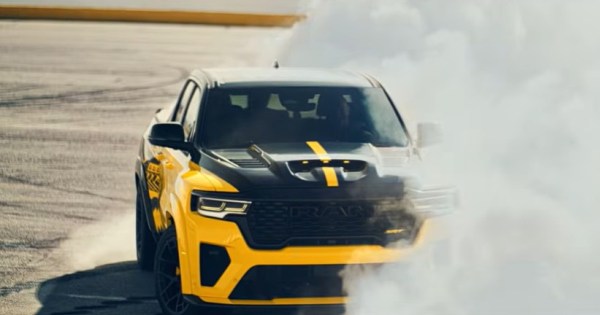
MCG Executive Briefing for May 18, 2026 - Mac's Motor City Garage.com
Ram is teasing the return of the Rumble Bee muscle truck, but there’s no official confirmation yet. Get all the latest auto industry news in the Executive Briefing. Today’s headlines: + Toyota has filed for approval of an expansion … Continue reading →
macsmotorcitygarage.com
There were no, or very few, lifetime warranties on parts in 1964.US woman purchased lifetime warranties on all her 1964 Mercury Comet's parts so she could keep it running at over 500,000 miles for free
A woman purchased lifetime warranties on all of her 1964 Mercury Comet’s parts, and she kept it running at more than 500,000 miles.
Rachel Veitch owned her car for more than nearly 50 years.
Named Chariot, this 1964 Mercury Comet Caliente was originally picked up for $3,289.
Knowing she’d have Chariot for the long haul, Veitch purchased lifetime warranties for the parts, and it was evidently a sound investment.
More:
https://www.msn.com/en-us/money/oth...0-miles-for-free/ar-AA23vT7z?ocid=socialshare
You couldn't "buy" and extended warranty on a car. If your muffler rotted off - which frequently happened - Midas would provide a lifetime warranty on a replacement.
The Midas exhaust was better, but not a miracle solution. It, too, would eventually rust off, and you could get your warranty replacement.
ONCE. The replacement muffler would come with no paperwork - and they'd collect the original warranty work.
Ziebart would warrant their rust-proofing system - yeah, body-rust was a problem back then - but when the car DID rust out, as it would, just more slowly...they'd have caps on repair cost. You'd get your money back, plus, in repair costs at a contracted shop.
But nobody was selling these "extended warranties" until the 1980s, when cars suddenly became more complex than owners could understand. I had bought one of the first, for my ex's VW, in 1988. I have no idea how that worked; I wasn't long for her world myself.
But that was a new idea, back then.
This caught my eye:

 www.cnbc.com
The article is unremarkable, except for its headline content. Stellantis, winning the race to the bottom...they aimed for mediocrity, and they got moar, so much moar. Engineering of the quality that made sure Italian cars never sold outside Italy...except to over-moneyed playboys. Marketing - they abandoned mass-appeal vehicles and brands, reducing Chrysler's brand line-up to one obsolete, European-designed minivan that only sells to rental companies. They focused on resurrecting Lancia, an obscure Euro brand, and pushing Alfa-Romeo, a line that nobody knows anything about, except that it's priced beyond value delivery. AND...Maserati, who even the moneyed-class, may only buy once. Never again.
Then their targeting. They took Jeep from a utility line of light trucks, into a cosplay array of European cars with all-wheel-drive hacked in; and an ungodly-expensive, fragile line that LOOKS a little like Wranglers of 25 years ago. Which at least, then, were as tough as army M38A1s, if not as small.
Chrysler had the Eagle brand, sold alongside Jeep, to sell captive-import and imported-design cars. The Eagle Premier was a Renault, designed by AMC's masters, just before the sudden sale to Chrysler. So, Stellantis could dig that page out of the company's history, and put their Italian-American junk-food cars (not unlike Beefaroni, say) under the Eagle nameplate, and continue to make Jeeps as tough work vehicles.
Nope. We specialize in MEDIOCRACY, at Stellantis. We're based in BELGIUM! Ground Zero of European mediocrity! We offer poor value, poor marketing, ridiculous pricing, and endless recalls! Who needs Chrysler's engineering tradition? We're EUROPEANS!
This latest is the natural end-game. Stellantis wants to become the automotive Drop-Shipping champs - taking orders for, and shipping, Chinese cars they neither design nor test, but are happy to sell. To unwary Canadians and Mexicans, for the moment.
This is not gonna end well. And I'll shed no tears when it finally takes down that misbegotten amalgamation of Euro garbage brands, plus what was once Chrysler. GIVEN to Fiat by Vodka Nan - who promised a tiny car sold here. Fiat delivered; buyers didn't exist, and that put Fiat into a death spiral that led them to being taken over by Peugeot.
I guess China will soon not only make the cheap cars, but will wind up owning Stellantis. Also, cheaply.
Stellantis CEO sees opportunity in growing partnerships, bringing China-branded vehicles to North America
Stellantis CEO Antonio Filosa said there could be an opportunity to bring Chinese-branded vehicles into Mexico and potentially Canada, but not the U.S.
The article is unremarkable, except for its headline content. Stellantis, winning the race to the bottom...they aimed for mediocrity, and they got moar, so much moar. Engineering of the quality that made sure Italian cars never sold outside Italy...except to over-moneyed playboys. Marketing - they abandoned mass-appeal vehicles and brands, reducing Chrysler's brand line-up to one obsolete, European-designed minivan that only sells to rental companies. They focused on resurrecting Lancia, an obscure Euro brand, and pushing Alfa-Romeo, a line that nobody knows anything about, except that it's priced beyond value delivery. AND...Maserati, who even the moneyed-class, may only buy once. Never again.
Then their targeting. They took Jeep from a utility line of light trucks, into a cosplay array of European cars with all-wheel-drive hacked in; and an ungodly-expensive, fragile line that LOOKS a little like Wranglers of 25 years ago. Which at least, then, were as tough as army M38A1s, if not as small.
Chrysler had the Eagle brand, sold alongside Jeep, to sell captive-import and imported-design cars. The Eagle Premier was a Renault, designed by AMC's masters, just before the sudden sale to Chrysler. So, Stellantis could dig that page out of the company's history, and put their Italian-American junk-food cars (not unlike Beefaroni, say) under the Eagle nameplate, and continue to make Jeeps as tough work vehicles.
Nope. We specialize in MEDIOCRACY, at Stellantis. We're based in BELGIUM! Ground Zero of European mediocrity! We offer poor value, poor marketing, ridiculous pricing, and endless recalls! Who needs Chrysler's engineering tradition? We're EUROPEANS!
This latest is the natural end-game. Stellantis wants to become the automotive Drop-Shipping champs - taking orders for, and shipping, Chinese cars they neither design nor test, but are happy to sell. To unwary Canadians and Mexicans, for the moment.
This is not gonna end well. And I'll shed no tears when it finally takes down that misbegotten amalgamation of Euro garbage brands, plus what was once Chrysler. GIVEN to Fiat by Vodka Nan - who promised a tiny car sold here. Fiat delivered; buyers didn't exist, and that put Fiat into a death spiral that led them to being taken over by Peugeot.
I guess China will soon not only make the cheap cars, but will wind up owning Stellantis. Also, cheaply.
- Messages
- 46,397
- Reaction score
- 7,787
- Points
- 288

MCG Executive Briefing for May 22, 2026 - Mac's Motor City Garage.com
This 1963 Ferrari 250 GT SWB California Spyder brought $18.15 million at the annual Mecum Auctions Spring Classic. Get all the latest auto industry news in the Executive Briefing. Today’s headlines: + Stellantis announced a $70 billion turnaround strategy … Continue reading →
macsmotorcitygarage.com
- Messages
- 46,397
- Reaction score
- 7,787
- Points
- 288
How Prohibition Accidentally Invented Muscle Cars, NASCAR, and the Getaway Car
May 22, 2026 #classiccars #automobile #vintagecarsWhen America banned alcohol in 1920, nobody expected it to reshape the automobile forever. But that's exactly what happened.
In this first deep-dive episode, Dan and Bobby trace how Prohibition turned ordinary drivers into bootleggers, bootleggers into legends, and legends into the foundation of NASCAR, muscle cars, and modern car modification culture. From gutted trunks and booze-filled tires to the Ford Flathead V8 that powered both rum runners and the cops chasing them — this is the story of how an attempt to make America "dry" ended up giving us the getaway car, the police interceptor, and Bonnie and Clyde's ride of choice.
We cover:
• Why Prohibition created the first real car mod culture
• The birth of the sleeper build and the getaway car
• How the 1932 Ford Flathead V8 changed everything
• The direct line from rum runners to NASCAR
• Why bootleggers and police were buying the same engines
• Bonnie and Clyde, dirty cops, and the Stutz that didn't make it
Filmed at the Fountainhead Antique Auto Museum.
13:56
- Messages
- 46,397
- Reaction score
- 7,787
- Points
- 288
Saving Grandad's Tractor! This Allis Chalmers WC Has Been In the Family Since 1942!
Saving Grandad's Tractor! This Allis Chalmers WC Has Been In the Family Since
Saving Grandad's Tractor! This Allis Chalmers WC Has Been In the Family Since
Nice theory. I don't buy it.How Prohibition Accidentally Invented Muscle Cars, NASCAR, and the Getaway Car
You could as well blame the Depression (the yakkers apparently do touch on Bonnie and Clyde) with its widespread desperation and emergent crimes against banks.
You could also blame the decentralized nature of American government. In Europe, for example, you couldn't race to a state line and have the pursuing LE suddenly drop off, as happened prior to reciprocal agreements between states. You'd race to a national border and be met with armed guards. You'd escape arrest and prison for being shot dead.
You could even blame the nascent postwar turnpike movement - the PA turnpike, and its immediate imitators in Ohio, NY, NJ. All based on the Autobahn...hey, you could blame the Need for Speed on the Nazis!
While Prohibition bootlegging did lead to interest in cars faster than what Revenooers had, it wasn't, IMHO, the driving force.
They mention the Ford V-8. Let's not forget, it was - aside from its revolutionary design, a one-piece casting - it was a pretty lame product. In early stock form it only generated about 40 hp - and plenty of heat and noise, more than either the cooling system nor the occupants could put up with.
Yeah, I know, the hot-rod culture. ("Hot rod" referred to connecting-rod failure from overheating and insufficient lubrication, common in Ford flatheads with splash lubrication setups). The Ford was available for very little money. And could be boosted to about 140 hp. (Which was less than my Jeep 2.5 four made).
But the next large breakthrough...remember it? The Chevrolet Small Block (later so named, when larger bores got larger blocks). THAT came out in 1954, for the new '55 models. Prohibition was just a bad memory by then, and so were train robbers, organized bank robbers, and easy flights over interstate borders. The SBC had it all OVER anything Ford had ever made - even its Y-block, contemporary to the SBC, had design problems in just staying in operating temperatures.
I guess you could say that bootlegging (which continued into the 1960s, with high likker taxes and Dry Counties in the South) drove the INTEREST in fast cars...but the really fast ones came much later.
The runners' cars just had to be faster than those of the po-leece.


^^^
"Honest" like everything ELSE on the InterWebZ. Paid huckstering.
I HAD a Chinese motorcycle. The paint was lousy; the steel quality of the frame, just as bad.
The engine was a Yamaha clone...made with POT METAL. Not hardened alloys. The camshaft sprocket rounded and then slipped, bending valves.
I got 2600 miles out of it before it blew up - and no, I was not abusing it.
China doesn't work because THEY DO NOT BUILD FOR THE CONSUMER. They build to MEET ORDERED TARGETS - and their marketing fronts, do what they can to SELL.
Thinking the sale is the end. The idea of repeat sales, has never occurred to them - UNLIKE Japanese makers, who see a purchase as a long-term commitment with many future repeats.
"Honest" like everything ELSE on the InterWebZ. Paid huckstering.
I HAD a Chinese motorcycle. The paint was lousy; the steel quality of the frame, just as bad.
The engine was a Yamaha clone...made with POT METAL. Not hardened alloys. The camshaft sprocket rounded and then slipped, bending valves.
I got 2600 miles out of it before it blew up - and no, I was not abusing it.
China doesn't work because THEY DO NOT BUILD FOR THE CONSUMER. They build to MEET ORDERED TARGETS - and their marketing fronts, do what they can to SELL.
Thinking the sale is the end. The idea of repeat sales, has never occurred to them - UNLIKE Japanese makers, who see a purchase as a long-term commitment with many future repeats.
- Messages
- 46,397
- Reaction score
- 7,787
- Points
- 288
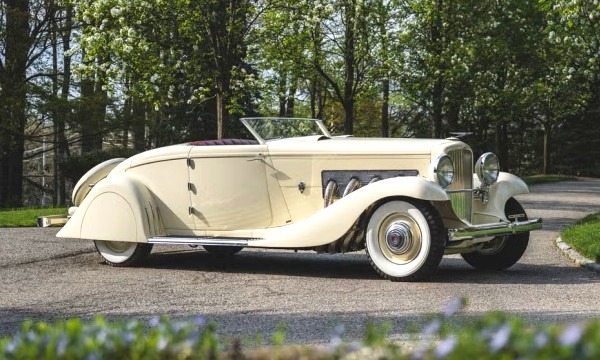
MCG Executive Briefing for June 5, 2026 - Mac's Motor City Garage.com
Clark Gable’s 1935 Duesenberg JN Convertible Coupe will be featured at the RM Sotheby’s Monterey sale. Get all the latest auto industry news in the Executive Briefing. Today’s headlines: + Ford reported a 13.6 percent decline in U.S. sales in … Continue reading →
macsmotorcitygarage.com
- Messages
- 46,397
- Reaction score
- 7,787
- Points
- 288
Swiss Miss: The Weird and Wild Monteverdi Cars!
Jun 8, 2026A classic car connoisseur tells the story of Montverdi, the Swiss automotive success story. In the 1960's Monteverdi built a series of beautiful grand tourers, combining American power with Italian style, by Frua and Fissore. After the High Speed model series, Monteverdi moved on to boutique cars, such as the luxury SUV's and reworked Plymouths and Mercedes's, called the Sierra and Tiara.
19:50
- Messages
- 46,397
- Reaction score
- 7,787
- Points
- 288
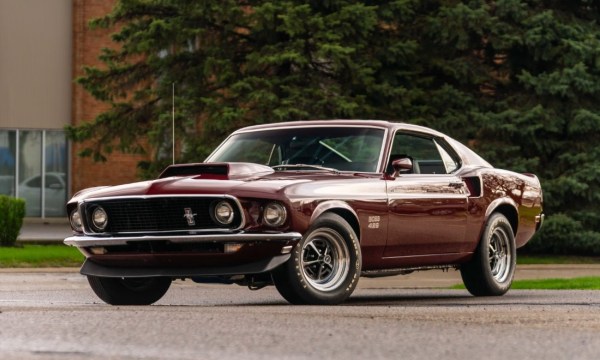
MCG Executive Briefing for June 12, 2026 - Mac's Motor City Garage.com
This 1969 Mustang Boss 429 from the Jack Roush collection will be offered at the Mecum Nashville sale. Get all the latest auto industry news in the Executive Briefing. Today’s headlines: + Inflation surged to a 3-year high of … Continue reading →
macsmotorcitygarage.com
- Messages
- 46,397
- Reaction score
- 7,787
- Points
- 288
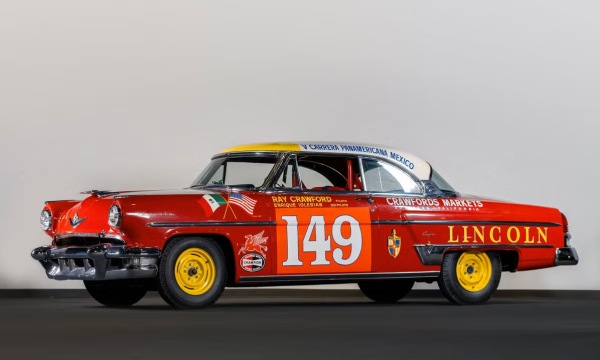
MCG Executive Briefing for June 19, 2026 - Mac's Motor City Garage.com
This 1954 Lincoln, a Carrera Panamerica veteran, sold for $117,000 at the National Auto Museum auction. Get all the latest auto industry news in the Executive Briefing. Today’s headlines: + CEO Antonio Filosa says Stellantis is holding talks with … Continue reading →
macsmotorcitygarage.com
Stellantis is selling off Maserati.MCG Executive Briefing for June 19, 2026 - Mac's Motor City Garage.com
This 1954 Lincoln, a Carrera Panamerica veteran, sold for $117,000 at the National Auto Museum auction. Get all the latest auto industry news in the Executive Briefing. Today’s headlines: + CEO Antonio Filosa says Stellantis is holding talks with … Continue reading →
What cataclysm led them to start talking about THAT! Maserati and Alfa Romeo, were to be the core brands, in Test-Driver Tavares' brilliant plan to phase out Chrysler and Dodge, make Jeep into a luxury brand, make RAM a cash-cow ($115 four-door pick-em-ups, now) and generally, emphasize the flashy, the shoddy, the gee-whiz, the Influencer promotion, and Chinese manufacture. He was astounded that Alfa Romeo sales weren't just launching.
The current placeholder CEO, Antonio Filosa, who got the job because his family owns a large block of (soon to be, worthless) Stellantis stock...is fumbling. He's no auto guy. He's not even a money guy. He's an Italian playboy of rich parents.
Just looking back twenty years...even after eight years of Daimler-Benz looting the company, Chrysler still had the core of what it had been. Engineering was in the product. Jeep had kept its traditions, mostly, in spite of D-B not understanding it. It was supposed to be a work vehicle descended from the original Army recon vehicle.
Not a tinfoil Fiat with a minivan engine, for cosplaying boss-grrllz who wanted to be tuff.
Fiat gently gelded the former standalone company (even as an AMC property, Jeep Corporation was a subsidiary, not a division) and then the Peugeot people came in after the last merger, and shot the eunuch product in the gut. Formerly the best of Toledo and Kenosha, it became a brand to slap on Italian and French cute-ute models that had run their course in the Old Country.
I'd rather they go bust than see this continue. Even Chinese ownership wouldn't be as bad as this.
- Messages
- 46,397
- Reaction score
- 7,787
- Points
- 288
Million Dollar Cars On Rodeo In Beverly Hills
Jun 26, 2026Bigherc916 explores a prestigious car show on Rodeo Drive in Beverly Hills during Father's Day. The collection features rare vintage automobiles, high-performance supercars, and unique prototypes from around the world, offering an up-close look at the engineering and history behind these exceptional vehicles.
18:59
- Messages
- 46,397
- Reaction score
- 7,787
- Points
- 288
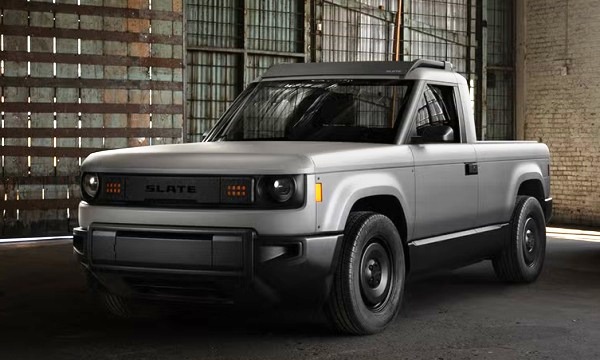
MCG Executive Briefing for June 26, 2026 - Mac's Motor City Garage.com
EV startup Slate has set the base price of the bare-bones Blank Slate electric pickup at $24,995. Get all the latest auto industry news in the Executive Briefing. Today’s headlines: + The China-made Polestar EV brand is leaving the … Continue reading →
macsmotorcitygarage.com
- Messages
- 46,397
- Reaction score
- 7,787
- Points
- 288
We take you inside the gates of Ferrari Heaven in Modena
Jun 23, 2026The world of Ferrari collectors is famously private. Yet even within this exclusive circle, there is one event that stands apart: the Cavallino Classic in Modena, the home of Enzo Ferrari and one of the most glamorous gatherings on the Ferrari calendar. This year, Classic Driver's CEO J.P. Rathgen was invited to peak behind the gates — so join us as we step inside one of the most exclusive Ferrari garden parties in the world. And to introduce us to this extraordinary celebration of Ferrari heritage, we found the perfect guide — a true gentleman whose name and family legacy are deeply connected with the history of the Prancing Horse, Mr. Enzo Mattilioni Ferrari.
In our latest feature film, we explore Ferrari’s supercar legacy, from the groundbreaking 288 GTO and F40 of the 1980s through to Maranello’s latest game-changing hypercar, the F80. Along the way, we meet the owners of extraordinary classic Ferraris, including the Daytona and the one-off 375 MM designed by Ghia. The journey culminates in a drive in a Ferrari 250 Pininfarina Coupe, joining a parade of concours cars through Enzo Ferrari’s hometown of Modena.
26:30
If I could cross-link...this, IMHO, might need some exploration.
Why, in this era of the impoverished former Middle Class, do so few want an affordable basic car?
It's as if our brains are as damaged as our economy and our money. That, like Idiocracy, like stupid people who wanna be rich...so many, sign these unpayable auto loan papers, and wind up destroyed.
The basic car has disappeared - the Toyota Tercel/Echo/Yaris, the Mitsubishi Mirage, the Ford Focus...
Why, in this era of the impoverished former Middle Class, do so few want an affordable basic car?

I just keep wondering why the basic car, which helped MAKE modern America...the Model T, then the Volkswagen...why there's no interest in it anymore, even as we're forced into destitution.Recommendations for much older cars are all over YT. The less crap they put in the better.
It's as if our brains are as damaged as our economy and our money. That, like Idiocracy, like stupid people who wanna be rich...so many, sign these unpayable auto loan papers, and wind up destroyed.
The basic car has disappeared - the Toyota Tercel/Echo/Yaris, the Mitsubishi Mirage, the Ford Focus...
- Messages
- 46,397
- Reaction score
- 7,787
- Points
- 288
Mel Bernstein - Wikipedia
Dragonman’s Hot Rod Garage
Jun 28, 2026You can see parts of the hot rod museum every Wednesday, Friday and Sunday at 10 AM for a two hour guided museum tour. The hot rod portion is towards the end of the tour
8:41
Channel:

Dragonman's
Full autos, military memorabilia, hot rods, firearms, paintball, dirt-bike riding, fire breathing motorcycles.. Just another beautiful day at Dragonman’s
 www.youtube.com
- Messages
- 46,397
- Reaction score
- 7,787
- Points
- 288
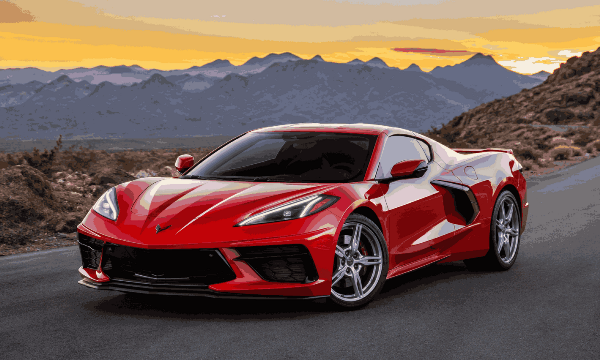
MCG Executive Briefing for July 3, 2026 - Mac's Motor City Garage.com
With a 40 hp bump in output, the base model 2027 Corvette Stingray is capable of 200 mph. Get all the latest auto industry news in the Executive Briefing. Today’s headlines: + U.S. Trade Representative Jamieson Greer confirmed that … Continue reading →
macsmotorcitygarage.com