
You are using an out of date browser. It may not display this or other websites correctly.
You should upgrade or use an alternative browser.
You should upgrade or use an alternative browser.
Tracking Trump's Tariffs and Turbulent Trade Talks
- Thread starter searcher
- Start date
Welcome to the Precious Metals Bug Forums
Welcome to the PMBug forums - a community supported watering hole for folks interested in gold, silver, precious metals, sound money, investing, market and economic news, central bank monetary policies, politics and more.
Register a free account to join the discussions. When you register an account and log in, you may enjoy additional benefits including access to market data/charts and additional members only rooms (including one for trade/barter with the community).


- Messages
- 47,792
- Reaction score
- 7,919
- Points
- 288
Terminal Tariffs: Modeling the Final Destination of Trump’s Trade War
(Bloomberg) -- President Donald Trump’s return to the White House has thrown the global trade system into disarray. Leaders have rushed to secure deals with Washington. Average US tariffs have leaped from 2% last year to close to 16%, a level last seen in the 1930s. The new regime will create many losers, few winners.Further seismic shifts are possible. We consider three scenarios: a détente with China, an all-against-China alliance and the emergence of “Fortress North America.” For each we assess how small open economies—the orphaned children of the rules-based trade order—can navigate a path through the great-power rivalries that threaten their prosperity.
Read the rest here:
https://www.msn.com/en-us/money/mar...rump-s-trade-war/ar-AA1QHo80?ocid=socialshare
- Messages
- 47,792
- Reaction score
- 7,919
- Points
- 288
Why Trump’s tariff rollback won’t lower grocery prices right away
- President Donald Trump is rolling back tariffs on some imported food items, but that won’t lower grocery prices right away.
- Inventories of food and commodities that were purchased at higher prices due to tariffs are beginning to hit store shelves, raising costs for consumers.
- Economists caution there is no guarantee that prices will return to previous lower levels even after inventories are exhausted and replenished.
Consumer price relief will take time, according to supply chain management data and history.
The reason: inventories.
More:
- Messages
- 47,792
- Reaction score
- 7,919
- Points
- 288
Neat trade stuff
 atlas.hks.harvard.edu

The Atlas of Economic Complexity by @HarvardGrwthLab
Visualize global trade data and economic growth opportunities for every country
atlas.hks.harvard.edu
- Messages
- 47,792
- Reaction score
- 7,919
- Points
- 288
Talking about beef...............
Tyson to close Nebraska beef plant with 3,200 workers
Nebraska representatives react to Tyson Foods Lexington Plant closure
hayspost.com
- Messages
- 47,792
- Reaction score
- 7,919
- Points
- 288

Swiss gold and Rolex gifts to Trump arouse ‘disgust’ in Europe
Billionaires gave desk clock and engraved gold bar weeks before Trump slashed tariffs on imports from Switzerland
- Messages
- 47,792
- Reaction score
- 7,919
- Points
- 288
Tariffs Could Inch Lower in 2026. But Another Ticking Time Bomb for Trade Is Looming
Consumer angst about rising prices could open the door for tariffs to inch down further in coming months. But analysts say trade volatility will persist as the U.S. tackles its relationship with its two biggest trading partners: Canada and Mexico.The Trump administration has already been dialing the needle back elsewhere. Earlier this month, the administration rolled back tariffs on coffee, bananas, beef, and other food items, including many of the 50% punitive tariffs it had put on Brazil for the treatment of Trump ally and former President Jair Bolsonaro.
Read the whole thing here:
https://www.msn.com/en-us/money/mar...trade-is-looming/ar-AA1R9aTY?ocid=socialshare
- Messages
- 47,792
- Reaction score
- 7,919
- Points
- 288

How Tariffs Are Straining Budgets at Thanksgiving
According to one analysis, a full Thanksgiving meal is nearly 10% more expensive in 2025 compared to last year, with the cost of some staples rising by more than 20%.
www.supplychainbrain.com
- Messages
- 47,792
- Reaction score
- 7,919
- Points
- 288
Tariffs trickle into cost of Thanksgiving dinner, jilting consumers and farmers
TOPEKA — Collin Tuthill, president of one of the country’s largest canned and frozen food importers and distributors, said the current state of the U.S. food industry is “like we live in some kind of alternate universe.”The most efficient industry is being hit the hardest by tariff policies and rising costs, he said Tuesday during a video call with reporters.
“The folks that are taking the punches are the ones that can’t really afford to take the punches,” said Tuthill, president of Royal Food Import, a North Carolina-based company that distributes food to hospitals, food banks, schools and prisons.
More:
- Messages
- 47,792
- Reaction score
- 7,919
- Points
- 288

Trump policies ignore basic business principles, threaten U.S. economy
Steve Corbin: Leaders of Fortune 500 companies have been alarmed by how Trump and his appointees ignore basic business principles.
www.bleedingheartland.com
Bought some Italian pasta yesterday. Possibly for the first time. I never really paid any attention to where my pasta is made. LolThe U.S. Commerce Department has proposed a 92% tariff on 13 Italian pasta brands due to an anti-dumping investigation, which could be combined with a 15% baseline tariff on EU goods, raising the total cost of imports to over 107%. This could make the pasta significantly more expensive for American consumers and potentially lead to some brands leaving the U.S. market entirely, though some companies like Barilla have pasta production facilities in the U.S. and are evaluating their options. The final decision is expected in January 2026, and Italian officials are considering trade complaints.
Anyways, went to buy some regular elbow macaroni, but the pasta area almost looked like the toilet paper aisle during the coof.
All that was left was lasagne spaghetti and bow ties. Was also something called radiatori pasta made in Italy that I ended up getting.
The tariffs were terrible on it. Box of the stuff cost me a whole $2 and change.
I think it'll be the only kind I'll buy from now on. It's good. I like it a lot.
Italian pasta tends to be made from Duram wheat... Pasta in Italy may be easier on your stomach due to a combination of factors, including the use of different wheat varieties, traditional slow-drying methods, and the common practice of cooking it al dente. Additionally, stricter regulations in Italy ban certain pesticides and additives that are common in U.S. food production, and the more relaxed travel mindset can also play a role.Bought some Italian pasta yesterday. Possibly for the first time. I never really paid any attention to where my pasta is made. Lol
Anyways, went to buy some regular elbow macaroni, but the pasta area almost looked like the toilet paper aisle during the coof.
All that was left was lasagne spaghetti and bow ties. Was also something called radiatori pasta made in Italy that I ended up getting.
The tariffs were terrible on it. Box of the stuff cost me a whole $2 and change.
I think it'll be the only kind I'll buy from now on. It's good. I like it a lot.
If Durum wasn’t spelled odd id think AI wrote that. Polished. I brought pasta from Turkey as a healthy souvenir (pesticides, fertilizers)Italian pasta tends to be made from Duram wheat... Pasta in Italy may be easier on your stomach due to a combination of factors, including the use of different wheat varieties, traditional slow-drying methods, and the common practice of cooking it al dente. Additionally, stricter regulations in Italy ban certain pesticides and additives that are common in U.S. food production, and the more relaxed travel mindset can also play a role.
Bariilla paid a fine for misleading customers to think all their products were italian. In Turkey this month i bought a 500g bag of nice Ankara branded pasta for 66 cents/28 lire. The Turkish factory Barilla brand was 75 cents more. Pretty fun learning about durum wheat. It is durable, but vitreous. It’s vitreosity makes the kernel shatter rather than crush. Changes its water absorption, and thereby its gluten formation. Makes classic pasta. Fun
- Messages
- 47,792
- Reaction score
- 7,919
- Points
- 288
Costco sues Trump admin seeking tariff refunds before Supreme Court rules if they’re illegal
- Costco filed a lawsuit asking for a full refund of tariffs the warehouse club giant has paid since President Donald Trump imposed “reciprocal” and “fentanyl” tariffs earlier this year.
- Costco’s suit in the U.S. Court of International Trade notes that it might not be able to get the refunds later, even if the Supreme Court upholds lower court rulings that the tariffs are illegal.
- Trump invoked the International Emergency Economic Powers Act to impose those often high tariffs on imports from most of the world’s nations.
In the suit filed Friday, Costco said that it risks losing the money it has already paid to satisfy the tariffs even if the Supreme Court eventually upholds earlier lower court rulings that found President Donald Trump did not have the legal power to impose those duties.
More:
- Messages
- 47,792
- Reaction score
- 7,919
- Points
- 288

UK and US agree on zero-tariff pharma deal after months of tensions
London and Washington have found a compromise that would avoid US tariffs on British medicines — but only after the UK agreed to pay more for cutting-edge drugs.
 www.euronews.com
- Messages
- 47,792
- Reaction score
- 7,919
- Points
- 288
Delayed tariff impact starting to hit, could cause companies to reduce head count in 2026
- Tariffs aimed at reshoring U.S. jobs lost to overseas manufacturing could end up lowering head count instead, according to statements from corporate executives and economic forecasters.
- Respondents to the Institute for Supply Management’s November survey of factory conditions expressed elevated levels of worry.
- A report Tuesday from the OECD indicated that tariffs have yet to bite the global economy but warned that the full impact could be still to come.
With the labor market already on its heels in a no-fire, no-hire climate, concerns are rising that the duties on U.S. imports will raise operating costs and force companies to start paring their employment rolls.
For instance, respondents to the Institute for Supply Management’s November survey of factory conditions expressed elevated levels of worry.
More:
- Messages
- 47,792
- Reaction score
- 7,919
- Points
- 288
Brace for a slowdown: 3 calls for global trade
Global trade is set to slow significantly in 2026
 think.ing.com
- Messages
- 47,792
- Reaction score
- 7,919
- Points
- 288

US demand keeps Swiss watch sales ticking despite hefty tariffs
Despite US duties reaching up to 39% on Swiss goods, watches of Switzerland posted higher sales and profits, insisting that demand for top-end watches and jewellery remains resilient.
www.euronews.com
- Messages
- 47,792
- Reaction score
- 7,919
- Points
- 288
Trump’s trade war shift away from Chinese manufacturing has reached tipping point
- The proportion of supplier volume from manufacturing in China, Hong Kong, and Korea has declined from 90% to 50% over the past decade, according to Wells Fargo data.
- Indonesia, Vietnam, Thailand and India have all benefited from the longer-term diversification of supply chains that picked up during the first Trump administration and initial trade war and has intensified since.
- Even with a potential Supreme Court ruling against President Donald Trump’s tariffs possible, in the short-term, importers are facing a cash crunch as inventories frontloaded in 2025 run low and tariffs hit balance sheets.
“From 2018 to 2020, the supplier diversification away from China nearly doubled after the first tariff actions,” said Jeremy Jansen, head of global originations at Wells Fargo Supply Chain Finance.
He said since the first trade war, the gradual increase in supply chain diversification away from China to the South Asia Pacific region has steadily grown.
More:

So moving ur supply chain from 1 Asian country to another Asian country strengthens ur supply chain HOW ?He said since the first trade war, the gradual increase in supply chain diversification away from China to the South Asia Pacific region has steadily grown.
Ohh, now I see. The move from a powerfully positioned Asian country ( China ) to smaller weaker Asian countries that u can easier Bully is the strength bit


- Messages
- 47,792
- Reaction score
- 7,919
- Points
- 288
Global brands fight legality of Trump’s 'Liberation Day' tariffs
A number of well-known consumer and industrial groups — including Costco, Revlon, Kawasaki Motors, and Bumble Bee Foods — are mounting a wave of legal challenges to Donald Trump’s sweeping “Liberation Day” tariffs. The goal is to seek refunds for the duties they have paid so far and prevent further costs.Court records from the US Court of International Trade show that more than 70 companies have now filed lawsuits asking judges to declare the tariffs unlawful, order refunds, and block the administration from levying the duties in the future.
More:
- Messages
- 47,792
- Reaction score
- 7,919
- Points
- 288
smaller weaker Asian countries that u can easier
I consider a lot of the things T does to be extortion.
"Bring me gold - frankincense and myrrh, sing my praises, bow your head to me and we're good. Otherwise it's off with your head!"
I'd love to hear what world leaders really think about him. Betcha it ain't what he thinks it is. Our king is mad.
jm2c (I may be the only one here who believes this)
You are not alone....I consider a lot of the things T does to be extortion.
"Bring me gold - frankincense and myrrh, sing my praises, bow your head to me and we're good. Otherwise it's off with your head!"
I'd love to hear what world leaders really think about him. Betcha it ain't what he thinks it is. Our king is mad.
jm2c (I may be the only one here who believes this)
- Messages
- 47,792
- Reaction score
- 7,919
- Points
- 288
Trump unveils $12 billion aid package for farmers hit by trade war
- $11 billion aid for row crop farmers, $1 billion for other crops
- Farmers face higher costs, seek aid for seeds and fertilizer
- Trump plans to cut farm machinery costs by reducing regulations
Farm groups and Republican farm-state lawmakers have sought the aid in part to support farmers with purchases of seeds, fertilizer and other expenses for next year's growing season.
The aid package aims to support a loyal voting bloc that has largely stood by Trump despite facing billions in lost sales from his trade war with China.
More:
- Messages
- 47,792
- Reaction score
- 7,919
- Points
- 288
Trump trade rep changes China soybean purchase timeline, cites ‘discrepancy’
- U.S. Trade Representative Jamieson Greer said the deadline for China to buy 12 million metric tons of soybeans from American farmers is the end of the “growing season,” not the end of the calendar year.
- A fact sheet issued by the White House says the deadline for the purchases, pursuant to China’s recent trade agreement with President Trump, is the end of December.
- Greer said there was a “discrepancy” between the fact sheet and the actual deadline.
Greer’s comment at the hearing came on the heels of a report by NBC News showing that the pace of China’s purchase of soybeans in recent weeks was well short of reaching the agreed amount by the end of the calendar year.
China, which in October agreed to end its monthslong boycott of American soybeans amid a trade war, to date has bought only about 3 million metric tons, the trade representative told members of the Agriculture, Rural Development, Food and Drug Administration, and Related Agencies subcommittee.
- Messages
- 47,792
- Reaction score
- 7,919
- Points
- 288
How will China’s $1 trillion trade surplus change the world economy?
President Donald Trump’s tariff-driven trade war is not slowing down China’s export economy. Beijing this week reported a record $1 trillion trade surplus with the rest of the world in 2025, raising concerns about “growing imbalances” in the global economy.The trillion-dollar milestone puts China’s well-known “dominance” of world trade “into even starker relief,” said The Wall Street Journal. While Trump’s tariffs have limited the country’s exports to the United States this year — plunging nearly a third in November compared to last year — China’s exports to Africa, Southeast Asia and Latin America have “surged” significantly. The trend has “raised alarms around the world, especially in Europe,” whose automotive and luxury goods sectors find themselves threatened by “nimble Chinese competitors.”
More:
https://www.msn.com/en-us/money/mar...he-world-economy/ar-AA1S6MVs?ocid=socialshare


Mexico’s Congress approved Wednesday most of the tariff increases proposed by the government on more than 1,400 products imported from China and other countries that do not have free trade agreements with Mexico.
...
Analysts say the real motivation is ongoing negotiations with Washington, Mexico’s most important trading partner. Sheinbaum has been trying to find relief from remaining tariffs imposed on Mexican imports by the Trump administration, which has accused China of using Mexico as a backdoor into the U.S. market.
Tariff increases of as much as 50% will affect textiles, shoes, appliances, cars and auto parts among other things beginning in January.
China will be the most affected as Mexico imported $130 billion worth of products from the country in 2024, second only to the what Mexico bought from the United States. ...
Mexico's Congress approves tariff hikes on imports from China and others
Mexico's Congress has approved tariff increases on over 1,400 products from China and other countries without free trade agreements.
 apnews.com
- Messages
- 47,792
- Reaction score
- 7,919
- Points
- 288
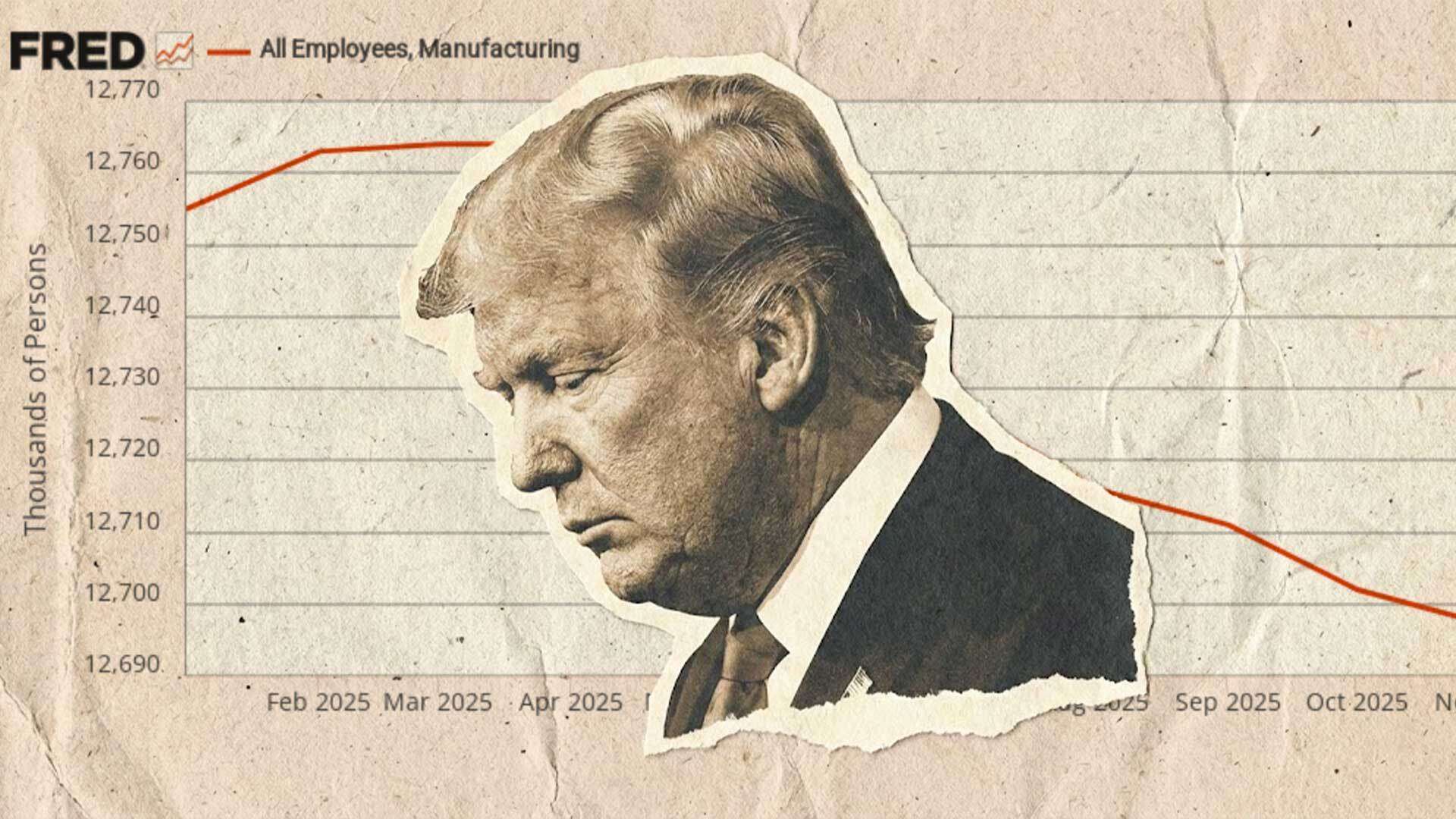
Trump said his tariffs would reduce the trade deficit and bring back manufacturing. Here's what the data show.
These metrics are bad proxies for prosperity, but they reveal just how flawed the president's arguments have been.
 reason.com
- Messages
- 47,792
- Reaction score
- 7,919
- Points
- 288
Canada and the US to launch formal talks to review their free trade agreement in mid-January
TORONTO (AP) — Canada and the U.S. will launch formal discussions to review their free trade agreement in mid-January, the office of Canadian Prime Minister Mark Carney said.The prime minister confirmed to provincial leaders that Dominic LeBlanc, the country’s point person for U.S-Canada trade relations, “will meet with U.S. counterparts in mid-January to launch formal discussions," Carney’s office said in a statement late Thursday.
More:
https://www.msn.com/en-us/money/com...t-in-mid-january/ar-AA1SDUgC?ocid=socialshare
- Messages
- 47,792
- Reaction score
- 7,919
- Points
- 288
Meet the Louisiana Farmer Who Put a Human Face on the Farm Crisis, Capturing Trump's Ear
Dec 19, 2025
It's a captivating look behind-the-scenes. At a White House roundtable with farmers, a rice producer’s candid message stole the spotlight. Meet Meryl Kennedy, the rice producer who had a powerful message for President Trump last week.
8:33