
You are using an out of date browser. It may not display this or other websites correctly.
You should upgrade or use an alternative browser.
You should upgrade or use an alternative browser.
Privacy, encryption vs. Surveillance state
- Thread starter pmbug
- Start date
Welcome to the Precious Metals Bug Forums
Welcome to the PMBug forums - a community supported watering hole for folks interested in gold, silver, precious metals, sound money, investing, market and economic news, central bank monetary policies, politics and more.
Register a free account to join the discussions. When you register an account and log in, you may enjoy additional benefits including access to market data/charts and additional members only rooms (including one for trade/barter with the community).
SilverStacker
Ground Beetle
- Messages
- 673
- Reaction score
- 487
- Points
- 133
I dont trust Gubmint. Never really did. Wear a blue uniform and they get to screw you for free. Thats what people dont understand, they think the Police get away with shit but thats only the clouted few. The rest of us ? The unwashed masses ? We catch it right up the wazoo when the Gubmint feels heat. Stick it up our azz'z and it makes everyone feel good again and Gubmint can get back to stealing from us.
Ok. Just seemed like the sentence continued.Joe, bug quoted the ENTIRE text above the graphic.
bf
I'm not an X member and they it difficult for people who just want to read or watch a vid on there.
I can't do that because I am not an X member. They used to let people read all of someone's posts, but no more.Above the embedded tweet is a quote box with a link at the bottom that says "Click to expand.." . Click that and you can read the entire text.


Joe, my post contains a QUOTE in this forum's quote tags
edit:
positioned above the X embed. Do you not see it?like this text
edit:
I do now.Joe, my post contains a QUOTE in this forum's quote tagspositioned above the X embed. Do you not see it?
edit:
View attachment 20782
When I first read your post I did not expand the quote. I read past it as I just thought you were quoting another post in the thread I didn't pay attention enough to see that it wasn't. My bad.
Thx.

- Messages
- 47,928
- Reaction score
- 7,941
- Points
- 288
Related

 www.techdirt.com

 www.wired.com
ICE Illegally Scooped Up Medicaid Data, Then Shared It With Palantir
The Trump administration’s continual trend towards maximum awfulness means that every report seems to be “I’ve got bad news and I’ve got worse news.” What was already …
www.techdirt.com
ICE Collected Nearly 1 Million People’s DNA Last Year—Including Young Children
Internal documents show ICE's DNA collection has skyrocketed in the second Trump administration. Now hundreds of thousands of people never convicted of a crime are in an FBI criminal database forever.
...
Privacy and legal experts say Flock’s tools already raise serious constitutional concerns by giving police broad, often warrantless access to a vast record of people’s movement. But the prompts WIRED examined go further, turning a tool for finding a known vehicle into one that casts suspicion on drivers based on where and how often they drive, regardless of whether they are wanted for a crime.
Flock built its business on a simple transaction: A camera photographs a passing car, converts the plate to text, and checks it against a list of vehicles police are looking for. (Cars that are not on the list are recorded and otherwise ignored.) OS Investigate’s preloaded prompts describe an inversion of that arrangement. An officer no longer needs a plate, a name, or a crime to begin: They supply a place, a stretch of time, and a pattern of behavior, and the system is designed to hand back the people who fit.
...
Chad Marlow, an attorney who runs the ACLU’s “Get The Flock Out” campaign, says that is where the danger lies. “The difference between a police officer saying, ‘Do you see any criminal patterns’ or ‘Find me criminal patterns’ is going to produce two different things,” he says. “And I think the fact that they don’t seem to have any limitations on the prompts enables the police to almost lead the AI in what it does.”
Marlow says his worry is the officer who asks an AI which people it considers most likely to be committing crimes. “It’s going to develop not a legal standard of criminal suspicion, but whatever that AI standard is.”
...
More:

Flock Has a Powerful New AI Tool for Police. We Got Its Code
Flock’s surveillance cameras have already sparked outrage. WIRED reconstructed its next-generation AI system, already in use by some police, to confirm it goes much further than tracking license plates.
h/t:
Look at the code WIRED pulled from Flock’s own servers. Flock built an AI tool called OS Investigate.
It accesses "commercial databases that contain Social Security numbers, dates of birth, phone numbers, email addresses, relatives and associates." It also accesses "police case files, 911 dispatch logs, and commercial identity records." The prompts can generate dossiers ("workups") on people based purely on driving patterns, without a crime, a plate, or a name. It Can identify drivers, track patterns, find "witnesses," generate suspicion based on behavior without a target. Code was found publicly on Flock's website.
Flock is performing automated, suspicionless background checks (pulling SSNs, DOBs, relatives) using commercial databases on citizens who have committed no crime, have no warrant, and are not named in any case file. The trigger is purely an AI algorithm flagging their driving pattern.
NO officer initiates the search for the suspect, Flock's AI essentially acting as the investigator, but doing so through commercial data brokers. Flock pulls consumer reports without a permissible purpose.
Why did Flock build OS Investigate? Because selling LPR cameras is a hardware game with limits. Selling an "AI investigator" is a high-margin SaaS play. To justify the valuation ($1B+), they need to monopolize the investigative workflow. To do that, they fused LPR data (which they hold) with police records (CJI) and commercial data (SSNs).
Why are they doing this? Because Flock’s hardware is a commodity. The cameras are just metal on a pole. The real valuation the nearly $1 billion in venture capital is in their proprietary datasets. To justify that valuation, they have to build a total surveillance map of America that links physical movement to full digital and financial identities. They cannot legally buy that data on the open market because of the FCRA. So they built an AI to force the police to pull it for them. Flock gets the fused data, the police get the dossier, and Flock gets to declare the new AI-generated identity maps as "Flock Property" under their contracts.
Flock is using the police as a legal shield to run unauthorized mass identity resolution queries for their own proprietary training and profit. The "perpetual license" terms gives Flock ownership of these AI-generated dossiers. They are building a national private surveillance database of SSNs linked to movement patterns, bypassing the FCRA by routing the queries through police terminals.
Now look at their new August 2026 "Trust" updates. They announced a reduction in data retention to 7 days, but they created an exception called "Evidence Mode" where searched data is preserved instead of aging out.
Here is the trap. If they actually deleted data in 7 days, their AI prompts which ask for people "arrested more than twice in two years" would not function.
The AI needs a multi-year historical window to track patterns. "Evidence Mode" is the backdoor they built to force all searched data into permanent retention so their AI can keep running. The 7-day retention is theater for the city councils. The permanent retention is the actual product.
And the Audit Assistance" they say is to catch police misuse? It is a complete deception. The audit logs track the police officer. But the AI generates the lead before the officer interacts with the system. The AI does the suspicionless searching in the backend. The officer just clicks the prewritten prompt. The audit log captures the officer clicking a button, but it does not capture the unauthorized API calls Flock’s AI is making to the commercial databases to pull the SSNs. They built the logging system to cover their own corporate trail.


^^^^^
"Flock built its business on a simple transaction: A camera photographs a passing car, converts the plate to text, and checks it against a list of vehicles police are looking for."
If that's ALL it was ever used for, as well as using it to see which way kidnappers, murderers and armed robbers went, I think the vast majority of people would be ok with 'em.
....but I also think that it's natural (human nature) for people making and using such systems to see more ways to use such a system.
The police have always sought to use every tool they've been provided to its fullest possible extent until ordered by a court not use it In such a way. Until then, they see everything as fair game.
It'd sure be nice if everyone in government sought to uphold and protect everyone's Rights as their job #1 and where they sought to make sure their departments and agencies always did too.
As opposed to how it is now where they see every new tech as an unrestricted tool for side stepping our Rights and prying into everyone's lives just because they think they might possibly find some detail of someone's life being amiss.
If we want the Constitution to be able to work, we all need to apply it's principles in our daily lives. Both personally and professionally.
"Flock built its business on a simple transaction: A camera photographs a passing car, converts the plate to text, and checks it against a list of vehicles police are looking for."
If that's ALL it was ever used for, as well as using it to see which way kidnappers, murderers and armed robbers went, I think the vast majority of people would be ok with 'em.
....but I also think that it's natural (human nature) for people making and using such systems to see more ways to use such a system.
The police have always sought to use every tool they've been provided to its fullest possible extent until ordered by a court not use it In such a way. Until then, they see everything as fair game.
It'd sure be nice if everyone in government sought to uphold and protect everyone's Rights as their job #1 and where they sought to make sure their departments and agencies always did too.
As opposed to how it is now where they see every new tech as an unrestricted tool for side stepping our Rights and prying into everyone's lives just because they think they might possibly find some detail of someone's life being amiss.
If we want the Constitution to be able to work, we all need to apply it's principles in our daily lives. Both personally and professionally.
- Messages
- 47,928
- Reaction score
- 7,941
- Points
- 288
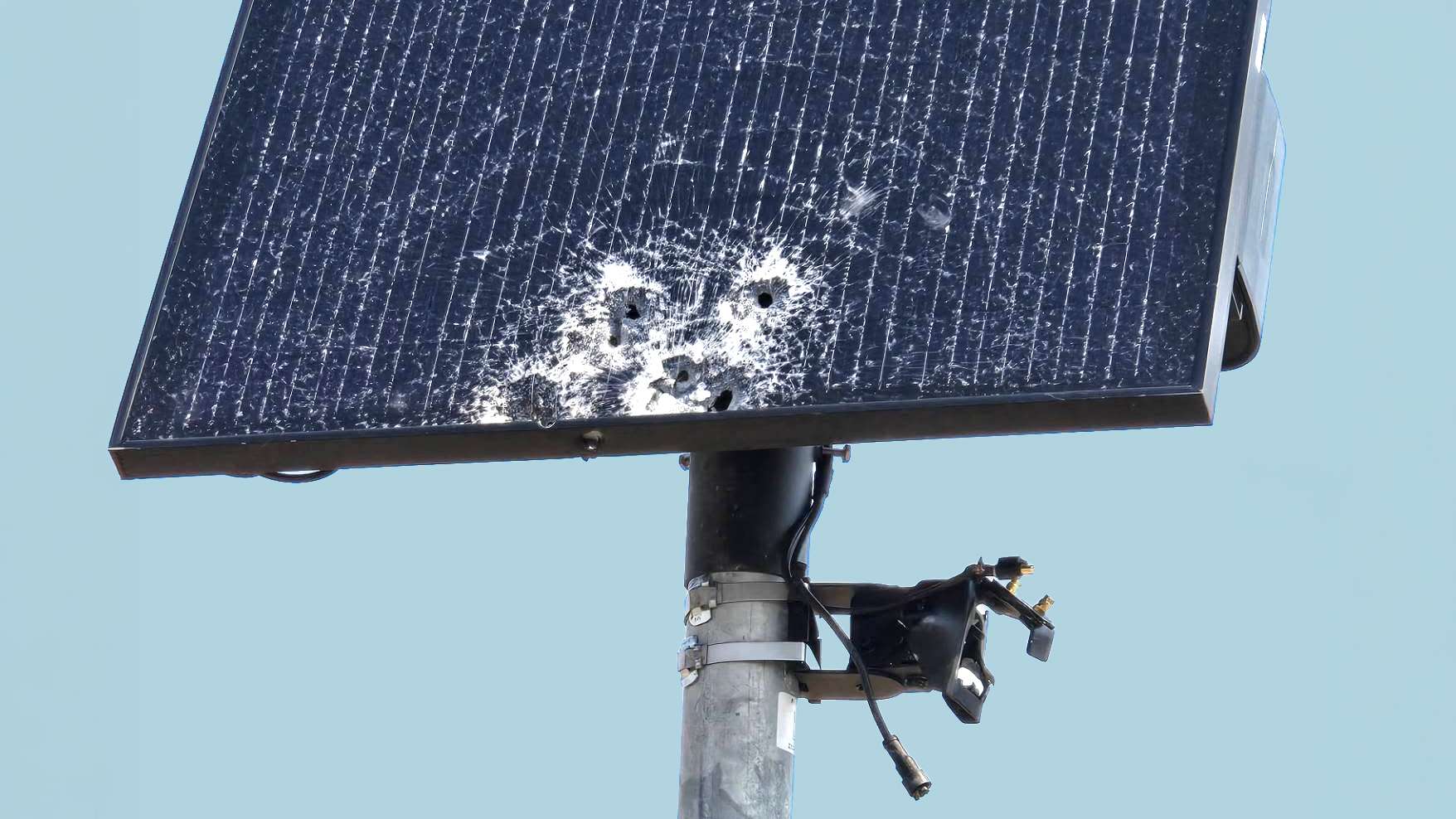
Surveillance camera saboteurs are getting government officials' attention
Sometimes direct action is the only way to get politicians to consider civil liberties.
 reason.com
Knox County just held its long-awaited Flock workshop on 8/24. The Flock CEO was supposed to show up and answer questions. He didn’t.
Their people called it a “miscommunication.”
Commissioners spent over two hours going through the details with the sheriff’s office and Flock reps. One detail came out clear: the sheriff’s office has been buying these cameras for years in batches priced at $24,990 — just $10 under the threshold that would have required mayoral review. They kept it under the radar that way.
Mayor Glenn Jacobs isn’t playing along.
He sent Flock a letter on August 12 saying he doesn’t even believe their contract with the county is valid. According to him, the total spent under that original 2020 deal blew past the limits that should have gone through full Commission approval. He’s treating it like there’s no real agreement in place. There’s already about 140 of these cameras under the sheriff’s office.
The big expansion of 270 more is still paused. Next real move is August 31. Commissioner Larsen Jay is amending an emergency ordinance that could order every one of them taken down within 30 days.
...
A police chief in Oshkosh, Wisconsin caught Flock lying to his city council, and killed the $8 billion surveillance company's contract less than a day after the council had approved it.
Here's how it happened.
The night before, Oshkosh's council was set to renew its deal with Flock Safety, the license plate camera company backed by a16z and Tiger Global.
One council member asked the Flock rep a plain yes-or-no question. Does this system build a heat map of everywhere a specific car travels over time?
Flock's rep said no.
The council believed him and voted 5 to 2 to renew. By the next morning, Chief Dean Smith's own officers had told him that answer was false.
So he pulled up the system himself. He watched it generate the exact heat map Flock had just sworn it couldn't make.
Then he walked into an emergency meeting and said it out loud: "Because of this misrepresentation, I can no longer recommend Flock."
Understand what a heat map is, because it's the whole trick.
Flock sells cities a tidy little story. A car drives by, we snap a photo, we read the plate, that's all it is.
But the same system can quietly average out where your car goes day after day and paint your routine onto a map.
Not one snapshot at one corner. Your pattern. Where you sleep, where you work, where you keep going back and how often.
A Flock employee later admitted on the record that the software does exactly that.
So the pitch and the product are two different things. The company wins the contract selling a plate reader, then sits on a moving map of your life.
The only reason Oshkosh caught it was one skeptical question and a police chief who bothered to check the answer.
The vote to rescind was 7 to 0. Unanimous.
Flock called the whole thing "one small misconception" from a long meeting and said it was disappointed nobody let it explain.
A surveillance company worth eight billion dollars got caught lying about whether it maps where you drive. Its defense was that the lie was small.
Oshkosh got one honest answer by accident. Congress can make it the rule.
But the same system can quietly average out where your car goes day after day and paint your routine onto a map.
Not one snapshot at one corner. Your pattern. Where you sleep, where you work, where you keep going back and how often.
A Flock employee later admitted on the record that the software does exactly that.
Is there anyone with a pulse who didn't think that that's how it worked?
Local LEOs and city councils apparently.Is there anyone with a pulse who didn't think that that's how it worked?

- Messages
- 47,928
- Reaction score
- 7,941
- Points
- 288

The Right to Be Left Alone | Tenth Amendment Center
The rapid spread of public surveillance cameras represents something far more consequential than a new piece of police technology. It represents a fundamental change in the relationship between the individual and the state.
 tenthamendmentcenter.com
He mentions Krogers loyalty program (other stores have that too) tracking what people buy?
There's a fix for that. Just get a new card from them each time you shop there.
I've used a bunch of different cards there myself, and none of them had my actual info tied to them. The cards work at the cash register without having to fill out the info asked for on the card.
Ie: you still get any savings the card offers and they don't get your data.
Easy peasy!
With other stores, just don't install their f'ing app. If you need to see something online, use their website anonymously.
It's the majority of people's own misplaced desire for the perception of convenience that is driving all this BS.

The two places I regularly shop for "food" are, WinCo and Walmart.
WinCo is a regional warehouse-style store...they do not take credit cards. They have no Frequent Pfukkee card. You go in and you pay.
Walmart...as much as I hate that den of vipers, at least (up to now) the price shown is the price. Not magic cards. Not cash/credit. Not Blue Light Scams. Package/Money/Done.
Yeah, I know they're now using facial recognition data. Unfortunately I have to keep on eating...but it's still better than guessing which card, what day, what Sanctioned Group (65++ versus Veteran) I need belong to at this moment.
WinCo is a regional warehouse-style store...they do not take credit cards. They have no Frequent Pfukkee card. You go in and you pay.
Walmart...as much as I hate that den of vipers, at least (up to now) the price shown is the price. Not magic cards. Not cash/credit. Not Blue Light Scams. Package/Money/Done.
Yeah, I know they're now using facial recognition data. Unfortunately I have to keep on eating...but it's still better than guessing which card, what day, what Sanctioned Group (65++ versus Veteran) I need belong to at this moment.
I was running errands earlier and had to stop the car to get out and take a picture:
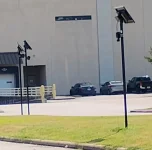
Congrats to anyone staying the night at Tru by Hilton or Holiday Inn Express. Your car is triple safe in their parking lots thanks to Flock.
Congrats to anyone staying the night at Tru by Hilton or Holiday Inn Express. Your car is triple safe in their parking lots thanks to Flock.
Regarding Kroger, the only grocery store in our town (besides WalMart which stinks.)He mentions Krogers loyalty program (other stores have that too) tracking what people buy?
Your loyalty card is linked to your phone number, so I enter a phone number rather than scan a Kroger Card at check-out. Normally, I use my mother-in-law's old phone number. She died in 2010. The phone number still works in their system.
Occasionally, I enter an elderly cousin's home phone number (he is 82 years old.) I told him that I do this and he does not care. Kroger may earn lots of money selling data, but much of it is incorrect regarding who buys what at their stores.
That'll work.Regarding Kroger, the only grocery store in our town (besides WalMart which stinks.)
Your loyalty card is linked to your phone number, so I enter a phone number rather than scan a Kroger Card at check-out. Normally, I use my mother-in-law's old phone number. She died in 2010. The phone number still works in their system.
Occasionally, I enter an elderly cousin's home phone number (he is 82 years old.) I told him that I do this and he does not care. Kroger may earn lots of money selling data, but much of it is incorrect regarding who buys what at their stores.
The Kroger by me will just give a card to anyone who asks. Dont even need to fill out the information card that comes with it. Just scan at the cash register and it works.
Then I throw it away right there at the cash register and get another one next time.
....but having it use someone else's card isn't a bad idea either, as that let's them get the fuel reward points.

- Messages
- 858
- Reaction score
- 711
- Points
- 268
I remember some guy who posted a bar code from his loyalty card for others to stick on their cards so it looked like this one guy was shopping at dozens or hundreds of stores all the time. The statistics must have been hilarious.
That'd be good if points are earned from its use that can then get a discount on gas. That's the way Krogers cards work. (at least in my area) For each $100 spent, you get ten cents off per gallon at their pumps.I remember some guy who posted a bar code from his loyalty card for others to stick on their cards so it looked like this one guy was shopping at dozens or hundreds of stores all the time. The statistics must have been hilarious.
Hedgie said:Pflugerville, Texas just killed its Flock Safety contract unanimously after a resident filed a public records request and found 459 outside law enforcement agencies had run 1.6 million searches on the city's 28 cameras in six months. Local police ran 5,078. That's 315 outside searches for every one by Pflugerville PD. The city had told residents nationwide data sharing was turned off. The city manager ordered the lenses physically covered before the council even voted. Pflugerville joins 56 municipalities that have cut ties with Flock in 2026.
My Take
One resident with a public records form did what the city, the police department, and Flock either couldn't or didn't want to do. That's how thin the oversight was on a system searching 1.6 million plates. Nobody was auditing this. Nobody was checking whether the assurances they gave residents were true. It took a guy filing paperwork to find out.
56 cities have walked away from Flock this year and I think that number accelerates once other communities realize they can file the same request. Flock has $500 million in VC money and contracts in 4,000 cities, and civil liberties groups say under 1% of scanned plates ever connect to a crime. Pflugerville's police chief looked at his own data and wouldn't recommend keeping the contract. Every city still running these cameras is one records request away from finding out what their own ratio looks like, and most of them haven't asked yet.
Edit: News source
...
According to the Pflugerville Police Department (PPD), an issue was discovered in the Flock operating system that permitted non-partner law enforcement agencies to access the city’s Flock data.
...
On Tuesday, Mayor Weiss addressed council members and the public, saying the city realized Monday that Flock may not have maintained the level of data security they expected, despite city staff configuring the system correctly.
“It’s definitely a violation of trust. As such, since we are already out of contract with this vendor this afternoon, I asked the city manager to bag and tag the cameras around town,” Weiss said.
Ahead of the vote, council member Rudy Metayer argued that simply covering the cameras was not enough.
“It’s a disservice, not only to our citizens, but to our police force,” Metayer said. “We need to get them the hell out of here.”
“We need to not pay Flock another penny of our money. We need to cancel all of the other contracts that we have with them,” Council member Jonathan Coffman said. “There are plenty of vendors that can provide us a secure, non-shared surveillance camera for the security that we legitimately need in our parks, the library, et cetera.”
...
So they will be looking to replace Flock with a different surveillance system. I would be looking to replace the city council members like Jonathan Coffman.
Last edited:
- Messages
- 47,928
- Reaction score
- 7,941
- Points
- 288
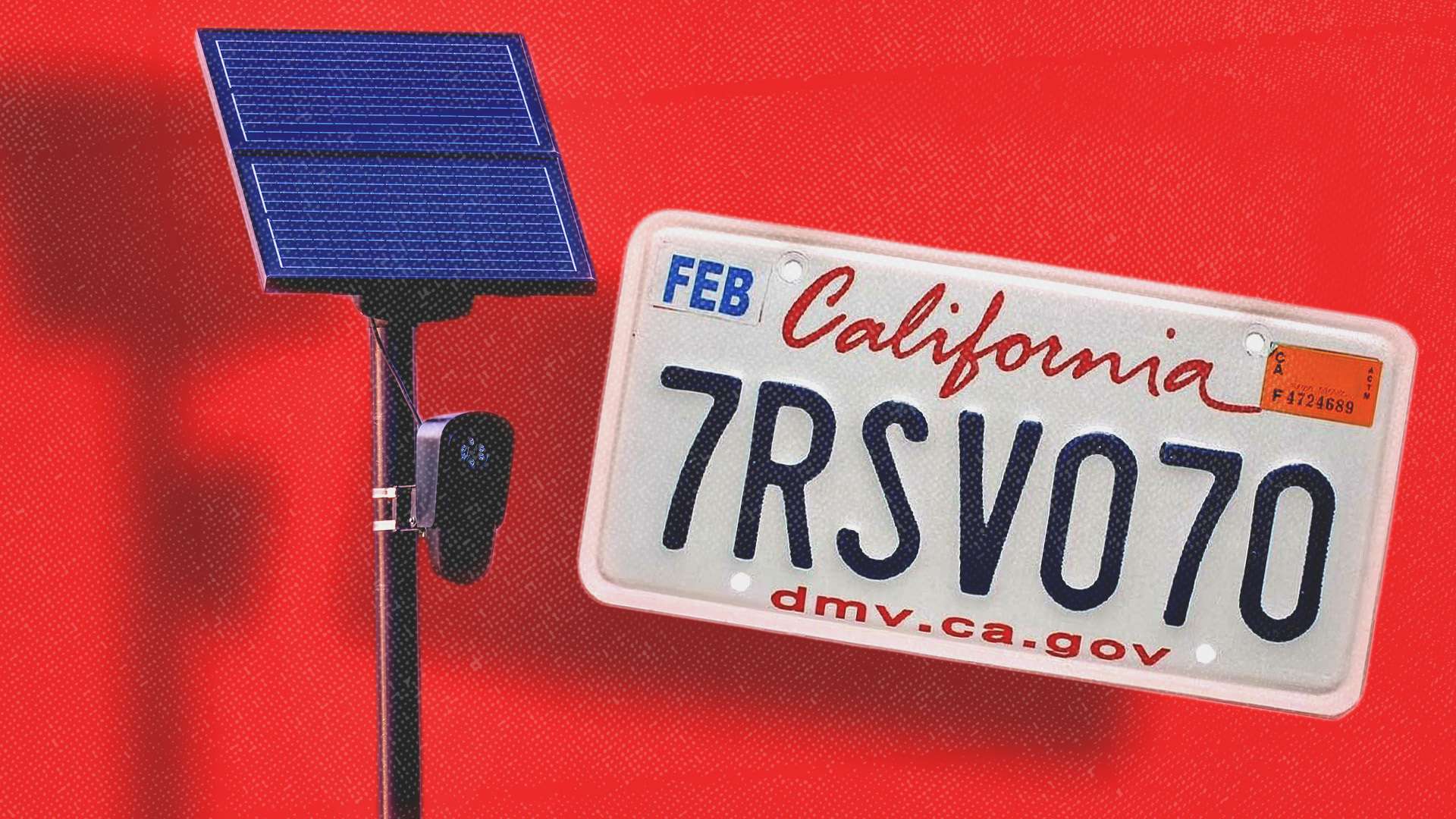
Getting rid of Flock isn't enough to solve America's surveillance problem
Civil liberties advocates warn that Americans’ privacy and surveillance concerns won’t be solved without strong legal protections.
 reason.com
State Rep Brian Harrison said:...
Just days after I publicly and repeatedly demanded Texas stop funding FLOCK/ALPRs (and after filing legislation to fight them for years), Gov @GregAbbott_TX ordered state agencies to clarify that local governments can’t use grant money for FLOCK!!
I will be asking if this prohibition also stops DPS from spending millions on FLOCK cameras… that must also happen!
THANK YOU to everyone who melted the phones and emails demanding action!!
More on the Texas Flock issue:
More:

 www.texastribune.org
Looks like Gov. Abbott woke up on the issue after his election opponent made it a campaign issue.
Gov. Greg Abbott has ordered all state agencies to pause funding for Flock cameras as scrutiny over the AI-powered surveillance devices has mounted.
The order came as The Texas Tribune was preparing to publish an investigation detailing how a state agency has devoted at least $30 million to building up the state’s Flock surveillance network by providing grants to local police departments.
Abbott gave the order Thursday night to halt state funding for Flock cameras, his spokesman confirmed Friday.
“To the extent that cities get any funding for those cameras, most of it comes from the federal government. To the extent any funding comes from Texas agencies, those agencies are clarifying that those funds cannot be used for Flock cameras,” Abbott spokesperson Andrew Mahaleris said in a statement shared first with the Tribune.
...
Earlier this week, Democratic gubernatorial candidate Rep. Gina Hinojosa released an ad blaming Abbott for the spread of Flock cameras across the state, calling the devices a method of “warrantless surveillance.” A social media post from Hinojosa asked Abbott to “stop turning Texas into a surveillance state.”
Democratic and Republican lawmakers have begun raising concerns about the broad scale of Flock’s network and the amount of data each camera captures. Law enforcement agencies that opt into Flock’s national lookup program can search each other’s data from anywhere in the country.
...
More:
Abbott blocks state agencies from spending money on Flock cameras
The order came as The Texas Tribune was preparing to publish an investigation detailing how a state agency has devoted at least $30 million to building the state’s Flock surveillance network.
www.texastribune.org
Looks like Gov. Abbott woke up on the issue after his election opponent made it a campaign issue.
I like this move, but does it really keep any of the locals from using the cams?Looks like Gov. Abbott woke up on the issue after his election opponent made it a campaign issue.
They just use other money for it, and use the State money for the other things.
Maybe. Not every jurisdiction has funds just lying around waiting to be spent. IMO, the bigger issue is the change in the political wind. The Gov's signalling should inform Mayors and city council peeps that have political aspirations for higher office (or good graces with the Texas GOP so as not to embarrass Abbott). We'll see how it plays out, but I think it's a positive development.
Of course. It's far better than had he said, "here's a bazillion dollars to help pay for 'em".I think it's a positive development.
I just wish the police could limit themselves to only using them in cases of serious crimes. Ie: murder, kidnapping, armed robbery, home invasions and burglaries etc.
....but the even bigger problem is the cam's own lack of accuracy in even reading plate numbers. The claimed 93% accuracy, if it's even that high, sucks.
They need an accuracy rate like good silver. Ie: four nines fine.
That's an interesting proposition.The problem with Flock (and Axon et al) is not just the police.
Men are not inherently moral. Often times, it's lack of opportunity, or the cost of the opportunity, that keeps them on the straight-and-narrow. Given the technology, and even the actual data, to gather surveillance info...they will do so.
As police have done with Asset Forfeiture. THAT law is wrong, but it didn't make good cops bad. It just made it very easy and beneficial to behave badly, to write up justifications for seizure of the property of clearly-innocent subjects.
We don't need this flocking schitt. And it's flat-out WRONG that they've sold these installations to cities and businesses, claiming it will reduce crime. Crime rates are exploding, not because we can't see crime - because of Soros prosecutors and Woke judges who will not prosecute, and will not impose punishment for even duly-convicted violators.
So, how do we get out of this? Let's get down to fundamentals. It ALL...comes DOWN to....MONEY.
Fiat to pay for these flockers, at three keystrokes CTRL+P. Soros money to buy turncoat prosecutors with the Fed money channeled into his various hedge-funds and his Open Society NGO. Again, through the magic of fiat.
Cops hired and trained to NOT follow the law, to impose different standards based on skin color. With White Males at the bottom of the scrotum pole.
This subversion COSTS, and the money-printers deliver.
Crash the dollar and MOST societal ills die of starvation.
What I meant is that cops aren't the only one with access to the database. Flock employees, 3 letter agencies, insurance companies and any public/private company willing to pay Flock's price have access. It's not just LEOs. Same will be true for Axon et al.
Government should not be funding the development of these networks. That seems a very clear violation of the 4th Amendment's restriction. But we saw how government reacted to the Snowden revelations, so we already know these surveillance systems are deep state projects. Flock didn't go from zero to 100 overnight by coincidence.
Government should not be funding the development of these networks. That seems a very clear violation of the 4th Amendment's restriction. But we saw how government reacted to the Snowden revelations, so we already know these surveillance systems are deep state projects. Flock didn't go from zero to 100 overnight by coincidence.
The merger of corporate and governance.
That is...what? The Italians had a name for it...
But it's where we're at, now. Where we have a world where successful corporate leaders now have money beyond what Midas dreamed of; but still, limits on their personal power...meaning, POWER OVER OTHERS...they will set out to change that, or be open to changes that give opportunities.
Yup. Fascism. It's IMHO why Musk suddenly found Trump so likeable. Why a deviant money-changer like Scotty Bissent so eagerly joins the bureaucracy.
It's why these motherflockers with cameras are eager to grab both corporate and government money, giving each group different Narratives on why these tools of Satan will benefit each.
Bruce Springsteen said it best:
...All men wanna be rich;
Rich men wanna be kings.
An' a king ain't satisfied, no, he wants every thing....
That is...what? The Italians had a name for it...
But it's where we're at, now. Where we have a world where successful corporate leaders now have money beyond what Midas dreamed of; but still, limits on their personal power...meaning, POWER OVER OTHERS...they will set out to change that, or be open to changes that give opportunities.
Yup. Fascism. It's IMHO why Musk suddenly found Trump so likeable. Why a deviant money-changer like Scotty Bissent so eagerly joins the bureaucracy.
It's why these motherflockers with cameras are eager to grab both corporate and government money, giving each group different Narratives on why these tools of Satan will benefit each.
Bruce Springsteen said it best:
...All men wanna be rich;
Rich men wanna be kings.
An' a king ain't satisfied, no, he wants every thing....